
The moment a roofing lead comes in, reply within minutes with a short acknowledgement and a booking link. That single habit, backed by a planned sequence of several touchpoints over a few weeks, is what separates roofing firms that convert enquiries from those that watch them go cold. An AI receptionist such as Talk2Aiva can handle that first reply around the clock, so no lead waits.
TL;DR:
- Respond to leads within minutes using automated acknowledgment messages and route high-priority inquiries directly to sales teams.
- Follow a structured, five-step sequence over several weeks with varied channels to maximize engagement and prevent leads from going cold.
- Use automation and CRM tracking to optimize response times, contact rates, and conversion metrics, reviewing performance biweekly.
- Implement compliance protocols for GDPR and PECR, including recording consent and providing easy opt-out options, to avoid fines.
- Deploy a guided AI receptionist to manage ongoing follow-up, freeing teams from manual effort and ensuring consistent lead nurturing.
Table of Contents
- The five-stage follow-up sequence and exact timing to adopt today
- Speed-to-lead tactics: routing, automation and fallback to get a reply in minutes
- Channel-by-channel scripts and templates you can copy and adapt
- UK compliance: PECR and GDPR checklist for calls, SMS and email follow-up
- Measure and optimise: KPIs, tracking and small tests that move the needle
- Operationalising follow-up with a guided AI receptionist
- Why systemising follow-up beats ad-hoc effort
- Turning this playbook into something that runs itself
- FAQ
- Sources
The five-stage follow-up sequence and exact timing to adopt today
Most roofing leads die from silence, not rejection. A finite, pre-planned sequence fixes that because every touch has a job to do and a deadline attached to it. Sales leaders generally recommend a cadence of roughly several touchpoints over a few weeks, with a defined final contact rather than an open-ended trickle of calls.
Here is a sequence you can put into your CRM today:
- Step 0, 0 to 5 minutes: an automated SMS or email acknowledgement goes out the second the enquiry lands, paired with a short call attempt.
- Step 1, same day within 24 hours: a qualification call or message with one clear question (roof type, job size, urgency) plus a calendar link for booking a survey.
- Step 2, day 3: a follow-up on a different channel, for example an email with photos of similar completed jobs.
- Step 3, day 7: a check-in call or SMS offering a specific time slot rather than an open "give us a call".
- Step 4, day 14: a final, lower-pressure message that leaves the door open, something like confirming you will close the file unless they want to proceed.
A handful of rules make this stick:
- Automate the first two touches so no rep has to remember to send them.
- Vary the channel at each stage; repeating the same message by the same route reads as a script, not a conversation.
- Record the outcome of every touch in the CRM so the sequence pauses automatically once someone books or opts out.
Leads that go quiet after touch five are not dead. Our guide to property follow-up systems covers re-entry rules in more depth, but the short version is: park them, then re-market at the 90 day mark if they have not opted out, treating them as a fresh enquiry rather than a chase.
Pro Tip: Put a hard stop date on every sequence. An endless drip feels like nagging; a finite one feels like good service.

Speed-to-lead tactics: routing, automation and fallback to get a reply in minutes
Response speed decides more deals than price does. A lead who hears nothing for an hour has usually filled in two other quote forms by the time you call back, so the goal is a reply measured in minutes, not hours.
Start by sorting leads the instant they arrive. Fields such as job size, emergency repair flags, insurance claim status and postcode distance can trigger automatic priority routing, pushing storm damage or large re-roof enquiries straight to the top of the queue while smaller jobs follow a standard path.
A few automations do most of the heavy lifting: see how Service Automations | Real Studios can streamline your service workflows and integrations.
- An instant SMS or email acknowledgement with a booking link, sent the moment the form is submitted.
- A callback task created automatically for the assigned rep, with a countdown rather than a vague "follow up soon" note.
- A live-answer or AI receptionist fallback that picks up calls and webchat outside office hours, so evening and weekend enquiries, which are common for roofing, never go to voicemail.
Calendar integration removes a surprising amount of friction. When the booking link opens straight into available survey slots rather than asking someone to call and arrange a time, more people actually book rather than drifting off to compare quotes elsewhere, a pattern HubSpot's small business guidance also points to for first-reply messages.
Our piece on automated lead follow-up walks through the workflow side of this in more detail, and our lead routing automation guide covers how assignment rules can run in seconds rather than sitting in an inbox.
Pro Tip: If a human cannot answer within five minutes during business hours, route the call to an AI receptionist rather than letting it ring out. A slightly less personal reply beats no reply at all.
Channel-by-channel scripts and templates you can copy and adapt
Every channel needs its own tone. A phone call can carry warmth and detail that a text message cannot, and a webchat message needs to get to the point faster than either.
Phone, first call:
- Greet by name, confirm the job type they enquired about.
- Ask one qualifying question: "Is this a full re-roof or a repair, and is it urgent?"
- Offer two specific survey slots rather than asking "when suits you?"
- Confirm the booking by text immediately after the call ends.
SMS templates:
- Acknowledgement: "Thanks for your enquiry about [job type]. We'll call within the hour. Reply STOP to opt out. Book a survey now: [link]"
- Follow-up: "Still thinking it over? Here's a slot for a free survey this week: [link]"
Email templates:
- Immediate reply: a short note confirming receipt, the next step, and the booking link.
- Social-proof follow-up (day 3): a couple of lines about similar completed jobs, with photos if you have them.
- Final re-engagement (day 14): a brief, polite message asking whether to close the file, with one last chance to book.
Webchat micro-script: greet, ask job type and postcode, then hand straight to a booking widget or an AI assistant that can capture details and confirm a slot without the visitor having to repeat themselves on a call.
Personalise by job size and circumstance. A storm-damage enquiry from an older or vulnerable resident warrants a phone call over a text, while a straightforward gutter repair quote can run almost entirely on automated messages. Our SMS guide for property follow-up and text messaging lead capture piece both carry more worked examples by scenario, and our five-stage follow-up template and checklist is worth bookmarking alongside your CRM sequence.
UK compliance: PECR and GDPR checklist for calls, SMS and email follow-up
Speed matters, but it cannot come at the cost of the rules governing how you contact people. Under the Gov, businesses normally need prior consent before sending direct marketing by email or SMS, though a "soft opt-in" exception applies when the details were collected during a sale or negotiation and the person was given a clear way to opt out at the time.
Calls carry their own rules. Regulation 21 of the Privacy and Electronic Communications (EC Directive) Regulations 2003 restricts unsolicited marketing calls and requires that caller identity is presented and that opt-out registers are respected.
A short operational checklist keeps you on the right side of this:
- Capture the method and date of consent at the point a lead is collected, stored as its own CRM field.
- Build opt-out handling into every SMS and email so a "STOP" reply or unsubscribe click removes the contact automatically.
- Keep records of consent and opt-outs for as long as you continue contacting someone.
- Separate transactional messages, such as appointment confirmations, from marketing messages in your templates and your record-keeping.
Non-compliance with marketing regulations can carry fines of up to £500,000 for unsolicited calls or faxes, which makes consent tracking worth building into the sequence from day one rather than bolting on afterwards. Our GDPR SMS consent checklist breaks the consent steps down further for SMS specifically.
Measure and optimise: KPIs, tracking and small tests that move the needle
You cannot improve what you do not log. Five metrics tell you almost everything about whether your follow-up process is working: median response time, contact rate, appointment conversion rate, job conversion rate and revenue per lead.
| Metric | What it tells you | Where to capture it |
|---|---|---|
| Median response time | How fast leads get a first reply | Timestamp on enquiry and first outbound message |
| Contact rate | Share of leads you actually reach | Call and message outcome logged per lead |
| Appointment conversion | Leads that become booked surveys | Booking status field in CRM |
| Job conversion | Appointments that become signed jobs | Deal stage at close |
| Revenue per lead | Average job value per enquiry source | Lead source tag linked to final invoice |
A handful of small CRM fields make this trackable without extra admin:
- Lead source (so you know which channels are worth the spend).
- First response time, logged automatically where possible.
- Contact outcome, a short tag such as booked, no answer, or declined.
Worth testing over a few weeks: the phrasing of your first message, the order in which channels are used, and whether a booking link outperforms a plain "call us back" offer. Review results every fortnight rather than waiting for a quarterly report, and set a concrete target, such as cutting median response time in half over 90 days. Our guides on following up property leads systematically and lead qualification to reduce wasted visits both offer further detail on what to tag and when to review it.
Operationalising follow-up with a guided AI receptionist
Everything above is a process. Turning it into something that runs without constant supervision is the harder part, and it is where Talk2Aiva fits.
We built Talk2Aiva to handle instant engagement, qualification, booking and follow-up across calls, SMS, webchat and social media, so a lead who messages at 11pm on a Sunday still gets a prompt reply and a booking link rather than silence until Monday.
- Onboarding includes AI training, workflow building and a live launch rather than a generic script.
- Ongoing optimisation and technical support are included, so the system keeps improving rather than drifting out of date.
- A unified inbox brings calls, texts, webchat and social messages into one place, which makes the KPI tracking above far easier to keep consistent.
Pro Tip: Whichever system you choose, measure it against the cadence in this article, not against doing nothing. The real competitor is silence.
As the author of this piece, I am happy to be contacted directly for questions on applying any of this to your own roofing business.
Why systemising follow-up beats ad-hoc effort
Most roofing businesses do not lose leads because their sales team is weak. They lose them because follow-up depends on someone remembering to do it between site visits, and memory is a poor system.
The firms that convert consistently treat follow-up as infrastructure: a fixed sequence, fixed scripts, fixed deadlines, reviewed and adjusted on data rather than gut feel. The common blockers are rarely about skill. They are routing gaps where nobody owns the lead for the first hour, and missing scripts that leave reps improvising on a call they were not ready for.
Fix the routing, write the scripts once, and the sequence runs itself. Pick one lead source this week and run the five-stage sequence on every new enquiry from it. You will know within a fortnight whether it is worth rolling out further.
— James Paul
Turning this playbook into something that runs itself
Reading a follow-up sequence is easy. Staffing it every evening, weekend and quiet Tuesday afternoon is the part that wears teams down.
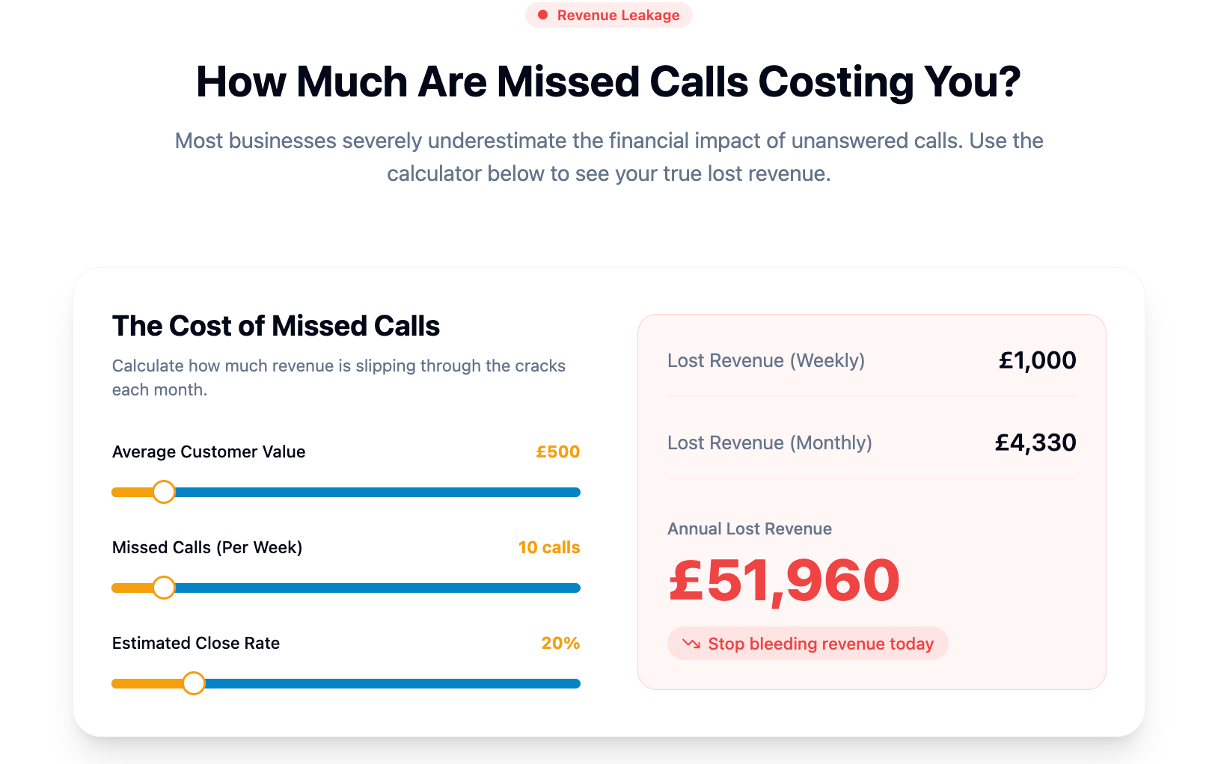
We built the system to run the tactics in this article without you having to supervise every message. It replies within minutes across calls, SMS, webchat and social, qualifies the lead with the right questions, books the survey straight into your calendar and keeps the follow-up sequence running until someone books or opts out.
- Guided setup and AI training done for you rather than left as a DIY project.
- Ongoing optimisation and technical support included.
- Pricing details are available on the provider's website.
If you want to see how it handles your own enquiry forms and calendar, visit the Talk2Aiva page and request a demo.
FAQ
How do I get more leads for my roofing business?
Consistent lead generation comes from a mix of local search visibility, referrals and targeted outreach to recent movers or storm-affected postcodes. Trade-specific tactics such as daily prospect lists, covered in Leadistry's guidance for trades, can complement your existing marketing without replacing fast follow-up once those leads arrive.
What does "follow up on leads" mean?
Following up on leads means running a planned sequence of contacts, by phone, SMS, email or chat, after someone enquires, rather than waiting for them to call back. A well-run sequence typically spans several touchpoints over a few weeks with a clear final contact.
What is the highest paid roofing job?
Pay varies by role, region and whether the work is specialist, such as slate or lead roofing, versus standard re-roofing, and this is not a figure we track or publish. Business owners and estimators generally see the highest earnings, reflecting the pricing and client relationship responsibilities those roles carry.
Is a roofing lead valuable?
A roofing lead's value depends heavily on job size and how quickly it gets a response, since even a strong enquiry cools rapidly without prompt contact. Treating every lead with a fast, structured follow-up sequence protects that value rather than leaving it to chance.
Sources
- Legislation
- How to follow up with a lead — Salesforce blog
- Lead generation for UK trades and construction — Leadistry