
Automated lead follow-up is the process of using software workflows, and sometimes AI, to contact new leads immediately after a trigger event and maintain scheduled follow-ups until they engage or are handed to sales. Tools such as Salesforce, HubSpot, and AI-powered autoresponders like Talk2Aiva make this possible by combining CRM integration, multi-channel messaging, and behaviour-based personalisation. The core value is speed and consistency. Contacting a lead within five minutes makes them 21 times more likely to qualify compared to waiting just 30 minutes. Most businesses respond in 47 hours. That gap is where revenue disappears.
What is automated lead follow-up and how does it work?
Automated lead follow-up uses software workflows to contact leads immediately after trigger events and maintain scheduled follow-ups until engagement or handoff. The process is not a single message. It is a structured sequence of touches across email, SMS, and chat, each triggered by specific lead actions and managed through a CRM.
Here is how a typical automated follow-up sequence operates from start to finish:
- Lead capture triggers the workflow. A prospect fills in a contact form, books a call, downloads a resource, or sends a message via social media. This action fires the automation.
- An instant response is sent. Within seconds, the lead receives a personalised message acknowledging their enquiry. This could be an SMS, email, or chatbot reply depending on the channel.
- A CRM record is created or updated. The lead's details, source, and behaviour are logged automatically. Salesforce describes how webinar sign-ups, ebook downloads, and page visits all update customer profiles in real time.
- A sequenced follow-up schedule begins. Messages are sent at defined intervals. A common structure runs across 21 to 30 days, with touches on day one, then days two, five, seven, fourteen, and twenty-one.
- Sales receives a routing alert. When a lead opens multiple emails, clicks a pricing link, or replies, the system flags them as warm and notifies the relevant sales person for direct outreach.
The technology components behind this include a CRM platform, a marketing automation tool, and increasingly an AI layer that handles real-time conversations. AI-powered autoresponders can qualify leads and book appointments 24 hours a day, including outside business hours, which is where most service businesses lose enquiries.
Pro Tip: Set your CRM to log the timestamp of the first qualifying action, not just lead creation. This gives you an accurate picture of your actual response speed.

What are the key benefits of automated lead follow-up?
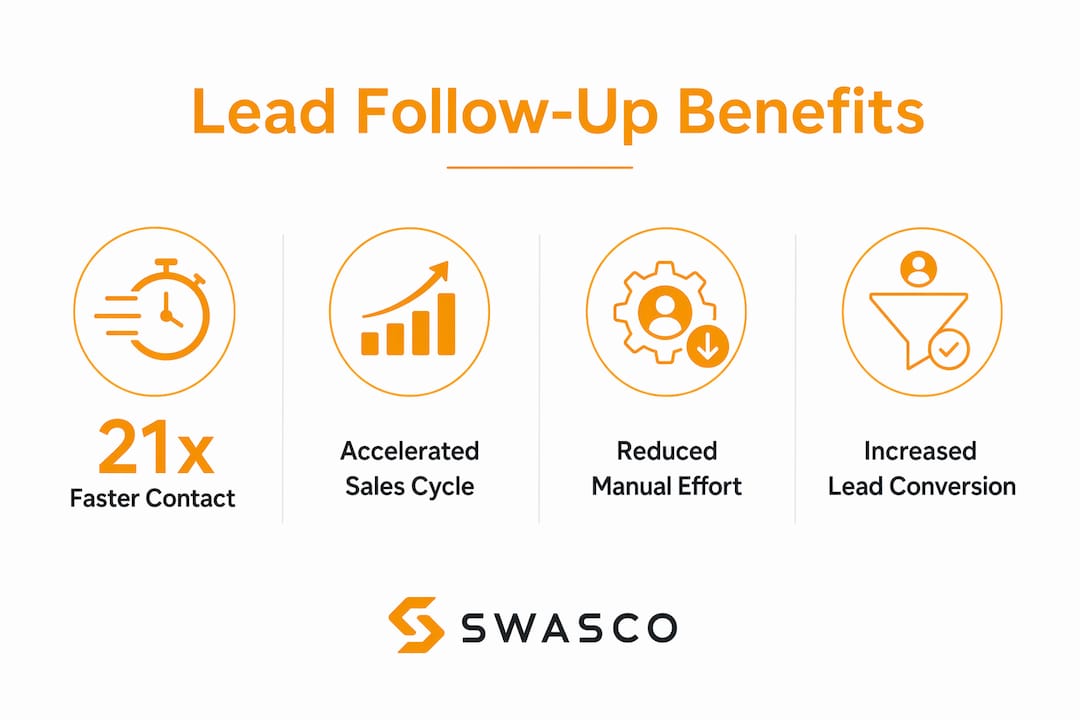
The most direct benefit is speed of engagement, and speed has a measurable impact on whether a lead converts at all. Beyond that, automation removes the inconsistency that kills conversion in manual processes.
- Higher qualification rates. Leads contacted within five minutes are 100 times more likely to be reached than those contacted after 30 minutes. Speed is not a nice-to-have. It is the single biggest lever in lead conversion.
- Consistent multi-touch coverage. A well-designed follow-up system tracks overdue touches, assigns ownership, and automates reminders so no lead slips through the gaps. Manual processes rely on memory and discipline. Automation does not.
- Personalisation at scale. Marketing automation combined with CRM data allows messages to be tailored by behaviour, source, and journey stage. A lead who visited your pricing page receives a different message than one who downloaded a beginner's guide.
- Freed-up team capacity. When routine follow-up is handled automatically, your sales team focuses on conversations with leads who have already shown genuine interest. This improves both morale and close rates.
- Fewer lost leads. Manual follow-up fails because people get busy. Automation does not get distracted. Every lead receives the same quality of attention regardless of how busy the business is.
Salesforce notes that automated lead nurturing reduces manual effort and accelerates sales cycles by guiding prospects progressively toward purchase with relevant content at each stage. That is the difference between a system that works and a pipeline that leaks.
Best practices and common pitfalls in automated lead follow-up
Building an effective automated follow-up sequence requires more than switching on a tool. The design decisions you make at the start determine whether the system converts leads or quietly damages your brand.
Contact speed is non-negotiable
The five-minute rule is not a guideline. It is a hard threshold. Waiting beyond 30 minutes drops your contact probability by a factor of 100. For service businesses that receive enquiries outside office hours, this means automation must be active around the clock. A human cannot do this. An AI system can.
Segment your sequences by lead source and intent
A lead from a Facebook ad has different expectations than one who found you through a Google search for pricing. Separate workflows for different lead sources improve engagement because the messaging matches the context. Generic sequences treat every lead the same and convert fewer of them.
| Lead source | Recommended sequence focus |
|---|---|
| Pricing page visitor | Direct value comparison, offer, and booking prompt |
| Webinar or event sign-up | Educational content, case study, then soft call to action |
| Social media enquiry | Fast acknowledgement, qualification questions, booking link |
| Referral or word of mouth | Trust-building message, testimonial, and direct contact offer |
Define your stop conditions before you launch
Continuing follow-ups after a lead has replied or booked is one of the most common and damaging mistakes in automated sales follow-up. It signals that your system is not paying attention, which erodes trust immediately. Every sequence must have clear stop conditions: reply received, meeting booked, or lead marked as unqualified.
Space your touches to maintain interest, not irritation
Effective sequences run over 21 to 30 days with deliberate gaps between messages. Sending five emails in three days is not persistence. It is spam. The goal is to stay present in the lead's mind without overwhelming their inbox.
Pro Tip: Always test your sequence as a lead before going live. Sign up through your own form and experience every message in real time. You will catch tone, timing, and stop-condition errors that are invisible from the back end.
How to measure and optimise your automated follow-up system
Measuring the effectiveness of automated lead follow-up requires tracking the right events. Most businesses make the mistake of measuring from lead creation rather than from the first qualifying action.
Measure from the right starting point
Response time reporting is only accurate when you timestamp the first qualifying engagement, such as the first email sent, call made, or booking confirmed, rather than when the lead record was created. HubSpot community data shows that inconsistent logging distorts perceived response speed significantly. This matters because you cannot improve what you are not measuring correctly.
Key metrics to track
- First response time. How quickly does your system send the first message after lead capture?
- Open and reply rates by sequence step. Which touch in your sequence gets the most engagement? Which one loses people?
- Lead drop-off points. Where in the sequence do leads go cold? This tells you where messaging or timing needs adjustment.
- Conversion rate by lead source. Are leads from one channel converting at a higher rate? Invest more there.
- Sequence completion rate. What percentage of leads reach the final touch without engaging? A high number here suggests your sequence is not compelling enough early on.
Lead scores within your CRM allow you to prioritise routing. A lead who has opened three emails and visited your booking page scores higher than one who opened a single message. Routing high-score leads to sales first means your team spends time where conversion probability is highest.
Continuous testing is the discipline that separates businesses that improve from those that plateau. Change one variable at a time, whether that is subject line, send time, or message length, and measure the impact before changing anything else.
Key takeaways
Automated lead follow-up works because speed, consistency, and personalisation together convert more leads than any manual process can sustain.
| Point | Details |
|---|---|
| Speed is the primary lever | Contacting leads within five minutes makes them 21 times more likely to qualify. |
| Segmentation improves results | Separate sequences by lead source and intent to match messaging to context. |
| Stop conditions protect trust | End sequences immediately when a lead replies or books to avoid damaging your brand. |
| Measure from first action | Track response time from first qualifying engagement, not lead creation, for accurate data. |
| AI extends coverage | AI-powered tools handle follow-up 24 hours a day, capturing leads that arrive outside business hours. |
Why most businesses underestimate what it takes to do this well
I have seen a lot of businesses switch on a CRM automation tool, build a three-step email sequence, and call it done. Six months later they wonder why conversion rates have not moved. The problem is almost never the technology. It is the design.
The businesses that get real results from automated lead follow-up treat it as an ongoing system, not a one-time setup. They review drop-off data monthly. They test subject lines. They rebuild sequences when lead sources change. They also know when to hand off to a human. Automation handles the first five to seven touches well. After that, a personal call or message from a real person often closes the deal that automation warmed up.
The emerging shift worth watching is context-aware AI follow-up. Rather than sending the same sequence to everyone who triggers a workflow, AI systems can now read the lead's previous interactions, adjust tone and content in real time, and even handle two-way conversations before routing to sales. This is not science fiction. Talk2Aiva already does this for service businesses across calls, SMS, and web chat.
My honest advice for business owners starting out: do not try to build the perfect system on day one. Start with a fast first response and a five-touch sequence. Measure it. Then improve it. The businesses that wait until everything is perfect never launch at all, and every day without automation is another day of leads going cold.
— James Paul
Stop losing leads while you sleep
If you recognise the problem of missed calls, slow responses, and leads going cold overnight, Talk2Aiva is built specifically to fix it. Talk2Aiva by SWASCO is a fully guided AI receptionist and revenue recovery system that engages, qualifies, and follows up with leads 24 hours a day across calls, SMS, website chat, and social media.
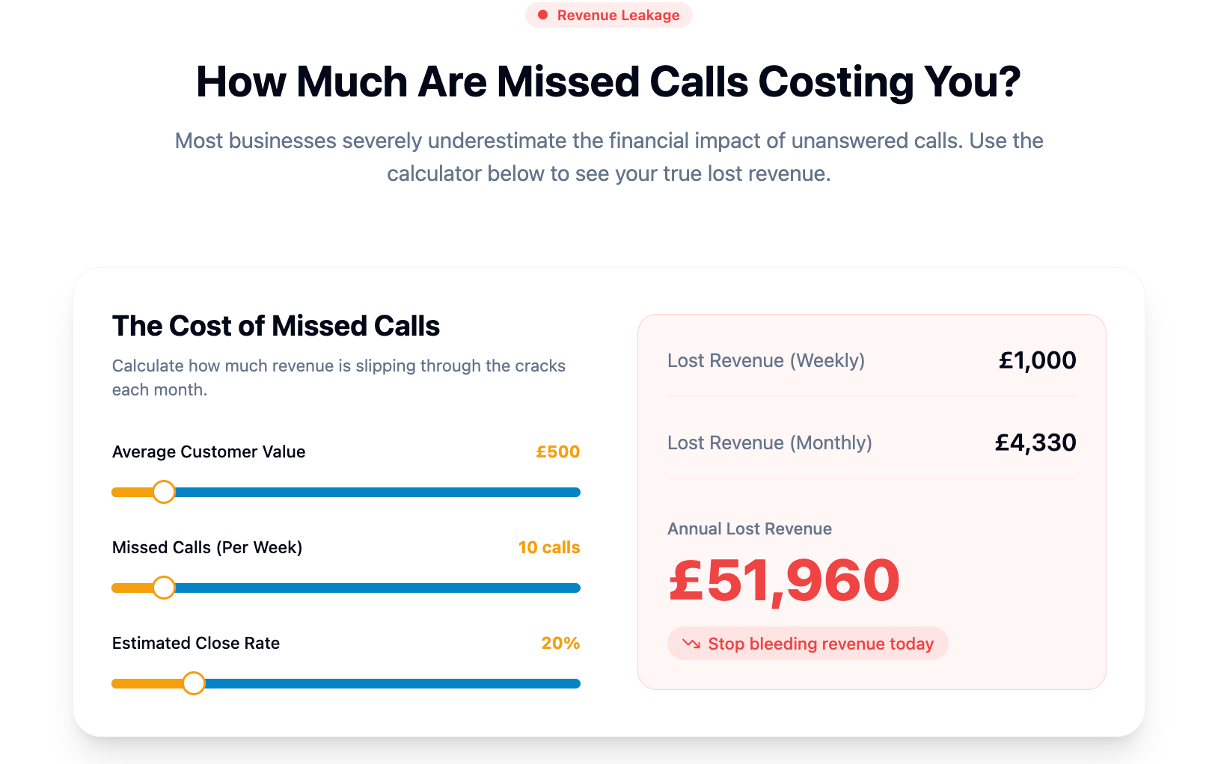
You get the full setup, AI training, workflow building, and ongoing technical support included. You do not need to figure out triggers, sequences, or CRM logic on your own. If you want to see how sales and marketing automation can work for your specific business, Talk2Aiva is the place to start. The leads are already coming in. The question is whether your system is catching them.
FAQ
What does automated follow-up mean for a small business?
Automated follow-up means using software to send messages to new leads automatically, without manual effort, based on triggers such as form submissions or missed calls. For small businesses, this replaces the need for a dedicated person to chase every enquiry.
How quickly should the first automated message be sent?
The first message should be sent within five minutes of lead capture. Leads contacted within five minutes are 21 times more likely to qualify than those contacted after 30 minutes.
What is the difference between lead follow-up and lead nurturing?
Lead follow-up refers to the immediate and scheduled outreach after a lead enquires. Lead nurturing is the longer-term process of building a relationship with a prospect over time using personalised content until they are ready to buy.
How many follow-up messages should an automated sequence include?
Most effective sequences include seven touches spread over 21 to 30 days, with gaps between messages increasing over time. The sequence should stop automatically when the lead replies, books, or is marked as unqualified.
Can automated lead follow-up work outside business hours?
Yes. AI-powered systems handle follow-up around the clock, including evenings and weekends. This is where most service businesses lose enquiries, and automation is the only practical way to cover those hours consistently.