
Most letting agents generate plenty of enquiries. The problem is what happens next. Without structured follow-up, those leads quietly disappear. Research shows that 80% of transactions need at least five contacts before they convert, yet the majority of agents stop after one. Letting agent follow up best practices are not about being pushy. They are about being present, consistent, and genuinely useful at the right moments. This article covers the practical strategies that turn enquiries into tenancies, from communication cadence to compliance messaging and the role of technology.
Table of Contents
- Key takeaways
- 1. Build a structured, multi-touch follow-up cadence
- 2. Personalise messages using behavioural triggers
- 3. Use compliance communication as a trust-building tool
- 4. Lead with your authentic voice, not a script
- 5. Choose the right channels for each stage
- 6. Leverage CRM tools to track and automate follow-up
- 7. Know when to stop following up
- My honest take on what actually moves the needle
- How Talk2Aiva helps letting agents follow up without dropping the ball
- FAQ
Key takeaways
| Point | Details |
|---|---|
| Follow up more than once | Most tenancies require five or more touchpoints to convert; single-contact follow-up loses the majority of leads. |
| Use a structured cadence | Plan five to eight contacts across fourteen to twenty-one days using phone, email, and SMS. |
| Personalise with triggers | Use behavioural data such as property clicks to send targeted messages rather than generic outreach. |
| Turn compliance into trust | Proactively communicating about the Renters' Rights Act differentiates you and builds landlord confidence. |
| Automate without going cold | CRM systems and automation tools handle scheduling and tracking while keeping your personal voice intact. |
1. Build a structured, multi-touch follow-up cadence
The single biggest mistake agents make is treating follow-up as optional. It is not. 44% of salespeople give up after one attempt, and that is where most rental enquiries die too.

Effective follow up strategies for agents are built on repetition across time. The recommended approach is five to eight touchpoints spread over fourteen to twenty-one days. Not all at once. Not randomly. Scheduled and purposeful.
A practical contact plan might look like this:
- Day 1: Phone call within the first hour of enquiry, followed by a confirmation SMS
- Day 2: Personalised email with relevant property suggestions
- Day 4: Follow-up call to gauge interest and answer questions
- Day 7: Email with new listings or market update relevant to their search criteria
- Day 10: SMS check-in asking if they have found anything suitable
- Day 14: Final outreach by phone or email offering to arrange viewings
Spreading contacts across channels prevents the feeling of being hounded while keeping you visible. Phone, email, and SMS each serve a different purpose: calls build rapport, emails carry detail, and texts get quick responses.
Pro Tip: Schedule your follow-up sequence before you start it. Agents who pre-plan their contact points are far less likely to trail off mid-sequence when the diary gets busy.
2. Personalise messages using behavioural triggers
Generic follow-up is easy to ignore. A message that references what a tenant actually searched for or clicked on is much harder to overlook. Automated nurture sequences using behavioural triggers lift conversion rates by 30 to 50% compared to blanket outreach.
The foundation is capturing the right data at the point of enquiry: location preference, budget range, property type, and whether they are relocating for work or lifestyle reasons. These details let you segment your follow-up from the start.
Behavioural triggers take it further. If a tenant clicks on a two-bedroom flat in Hackney three times on your website, that is a signal. An automated system can fire a personalised message that highlights similar available properties in that area. That kind of responsiveness feels attentive rather than automated.
That said, keep the complexity manageable. Excessive segmentation causes follow-up sequences to collapse under their own weight. A simplified approach with three to four tenant segments and two or three customised message variations is far more sustainable than a twenty-branch decision tree you will never maintain consistently.
Pro Tip: Start with two segments: tenants ready to move within four weeks, and those planning ahead. Even this basic split dramatically improves the relevance of your messages.
3. Use compliance communication as a trust-building tool
Most agents treat compliance as an obligation. The best agents treat it as a selling point. With the Renters' Rights Act coming into full effect in 2026, there is a significant opportunity for letting agents to stand out by getting ahead of it rather than scrambling to catch up.
Failing to comply by May 2026 risks fines of up to £7,000 per property. Agents who proactively communicate these requirements to landlords are not just doing good work. They are demonstrating a level of expertise that builds lasting relationships.
Here is how compliance communication compares when done reactively versus proactively:
| Approach | What it looks like | What the landlord feels |
|---|---|---|
| Reactive | Sends required documents only when chased | Uncertain, potentially at risk |
| Proactive | Flags requirements in advance, sends documentation ahead of deadline | Reassured, protected, and confident in the agent |
Serving the mandatory information sheet as a PDF or hard copy, not just a link, is a legal requirement. Documented audit trails of all compliance-related communications protect your agency from both financial and reputational risk.
Agents who are expanding their services specifically to help landlords navigate red tape are seeing strong demand. Compliance communication, woven into your follow-up sequence, is one of the clearest ways to show you are worth the fee.
4. Lead with your authentic voice, not a script
There is a version of follow-up that is technically correct but completely forgettable. Templated emails that could have been sent by any agency in the country. Calls that follow a rigid script. Messages that sound like a press release.
The agents who convert at higher rates do something different. They sound like themselves.
Personal branding in follow-up messaging is not about self-promotion. It is about consistency. When every message you send reflects your values, your tone, and your genuine interest in helping the tenant find the right home, it builds familiarity fast. Familiarity builds trust. Trust converts.
"Your major brand message should dominate every communication. Minor adjustments for different tenant groups add relevance without losing your identity."
The practical application: write your follow-up templates once, in your own voice. Then make small adjustments for different tenant types rather than creating entirely different personas. A young professional searching in Zone 2 and a family relocating from outside London deserve a slightly different emphasis, but the agent speaking to them should sound like the same person.
Authenticity also acts as a filter. The right tenants will self-select toward you. The wrong ones may not, and that is absolutely fine. The goal is not maximum volume. It is the right matches.
5. Choose the right channels for each stage
Not every message deserves the same channel. Effective tenant follow up matches the medium to the moment.
Phone calls are best for initial contact, handling objections, and conversations that need nuance. An early-stage call within the first sixty minutes of an enquiry signals seriousness and captures attention before the tenant has contacted three other agents.
Email carries the most content. Use it for property suggestions, market updates, how-to guides for tenants new to renting, and compliance-related documentation. It is also the channel most people revisit when they are ready to make a decision.
SMS has the highest open rate of any channel, but it has a narrow role. Use it for time-sensitive nudges: a new listing that matches their criteria, a viewing reminder, a quick check-in after a week of silence. Overuse of SMS feels intrusive fast.
Top-performing agents treat this as a service, providing genuinely useful information at each touchpoint rather than a relentless sales push. Letting agent communication tips that work in practice always come back to this principle: be worth hearing from.
6. Leverage CRM tools to track and automate follow-up
Manual follow-up does not scale. If you are tracking conversations in a spreadsheet or relying on memory, you will miss contacts and lose leads you should have won. CRM systems that centralise leads from multiple channels into a single record dramatically improve consistency.
A well-configured CRM for a letting agency should handle:
- Capturing enquiries from portals, website forms, and phone calls into one database
- Sending automatic confirmation emails and initial nurture content as soon as an enquiry arrives
- Generating daily call lists so negotiators know exactly who to contact and when
- Logging every interaction so no message gets repeated unnecessarily and no contact falls through
- Triggering behavioural follow-ups based on actions like property page visits or email link clicks
The result is that agents with a nurture system convert 55 to 70% of enquiries into viewings, compared to 25 to 35% for those without one. That difference is significant at any scale.
Automation handles the mechanical side. The personal side is you picking up the phone on day four. You writing a subject line that feels like a human wrote it. You identifying lost rental leads before they go cold, not after.
7. Know when to stop following up
This is the part of how to follow up with tenants that nobody talks about enough. More is not always better.
Pushing beyond two follow-up reminders for reviews or feedback can actively damage the relationship. The same principle applies to cold tenant leads. If someone has not responded after seven or eight contacts across three weeks, continuing to message them does not help your conversion rate. It damages your reputation.
A practical rule: after a structured sequence of six to eight touches with no response, move the contact to a low-frequency nurture list. One email per month with a market update or useful guide keeps you visible without feeling relentless. When they are ready, they know where to find you.
The point is that effective follow-up is not measured by volume. It is measured by quality, timing, and knowing when to hold back.
My honest take on what actually moves the needle
I have reviewed dozens of letting agency follow-up processes, and the pattern is consistent. Agents invest in portals, websites, and advertising to generate enquiries, then leave most of that spend on the table because there is no structure behind the initial contact.
The automation question comes up constantly. And my view is that automation is a support system, not a substitute. I have seen agencies plug in a CRM and call it done, then wonder why conversion barely moves. The reason is almost always that the automated messages are generic and the personalised calls never happen on schedule.
What actually drives results is the combination: automated sequences that handle the mechanical touches, paired with a handful of genuinely personal phone calls where you listen more than you pitch. The call on day four where you ask "what is most important to you right now in a property?" and then actually use the answer in the next email. That is what converts.
On compliance communication, I think most agents massively underestimate the opportunity. Landlords are genuinely anxious about the regulatory environment in 2026. An agent who clearly explains what the Renters' Rights Act means for them, proactively, without being asked, is an agent who earns trust that lasts years.
The agents I have seen perform consistently well are not necessarily the most technically sophisticated. They are the most disciplined. They follow up when they said they would. They sound like themselves. They stop when it is time to stop.
That is the whole game, really.
— James Paul
How Talk2Aiva helps letting agents follow up without dropping the ball
If any part of this article made you think "we should be doing that, but we never quite get to it," that is exactly the problem Talk2Aiva by SWASCO was built to solve.
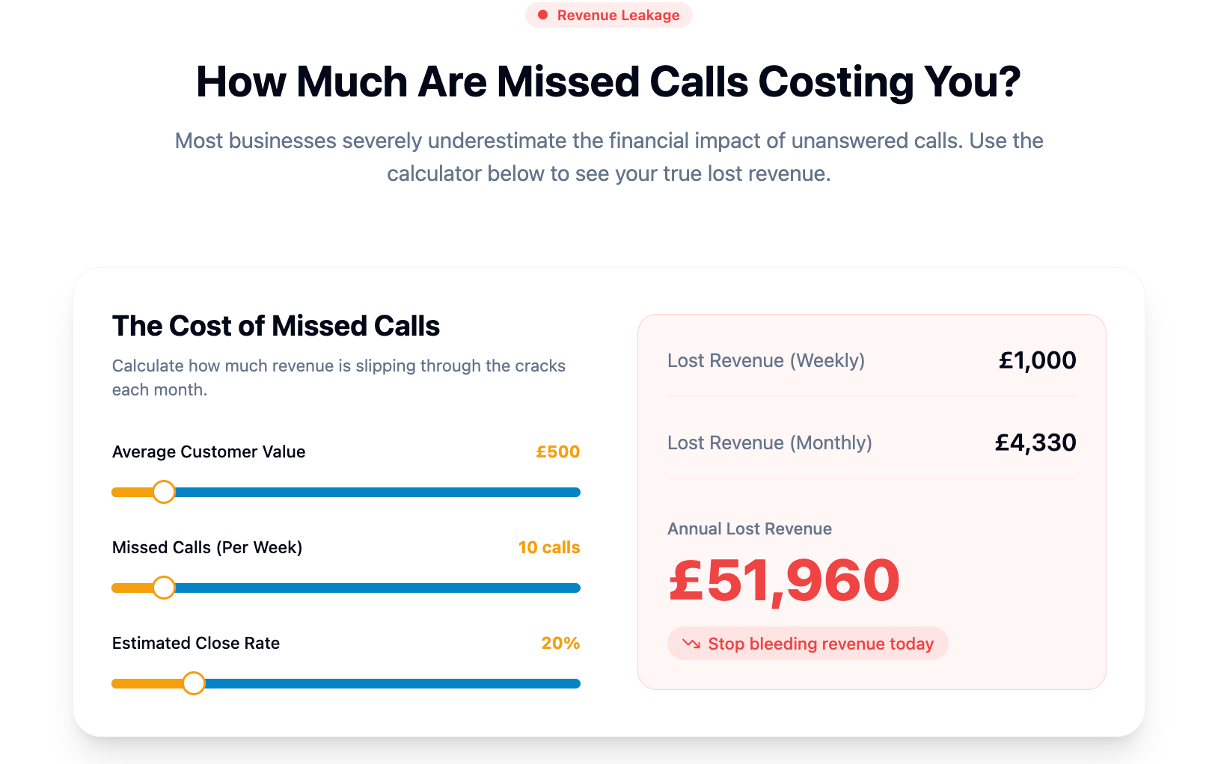
Talk2Aiva automates the mechanical side of follow-up across calls, SMS, email, and web chat, so enquiries are engaged instantly, around the clock, before a negotiator has even seen the notification. Leads are qualified, captured, and sequenced automatically, with your personal touches built into the workflow.
For letting agents who want to automate rental application screening alongside follow-up, the platform brings it all together in one place. No more missed enquiries. No more leads going cold because the diary got busy.
Explore Talk2Aiva by SWASCO and see how it fits into your lettings operation.
FAQ
How many times should a letting agent follow up with a tenant?
Research points to five to eight contacts over fourteen to twenty-one days as the optimal range. Most transactions require at least five touchpoints to convert, and stopping after one means losing the majority of warm leads.
What channels work best for tenant follow-up?
Phone calls work best for early contact and building rapport, email carries the most detailed information, and SMS is effective for time-sensitive nudges. Combining all three across a structured sequence consistently outperforms single-channel follow-up.
How can compliance communication help with follow-up?
Proactively informing landlords about their obligations under the Renters' Rights Act, including serving mandatory documentation correctly, builds trust and positions you as an expert. Agents who handle compliance communication clearly differentiate themselves in a crowded market.
When should you stop following up with a lead?
After six to eight contacts across three weeks with no response, move the lead to a low-frequency nurture list with monthly updates. Continuing beyond that point risks damaging the relationship and rarely produces results.
What is the difference between automated and personal follow-up?
Automated follow-up handles confirmation emails, scheduled nurture content, and behavioural triggers at scale. Personal follow-up, primarily phone calls, builds the rapport that turns interest into commitment. The strongest results come from combining both.