
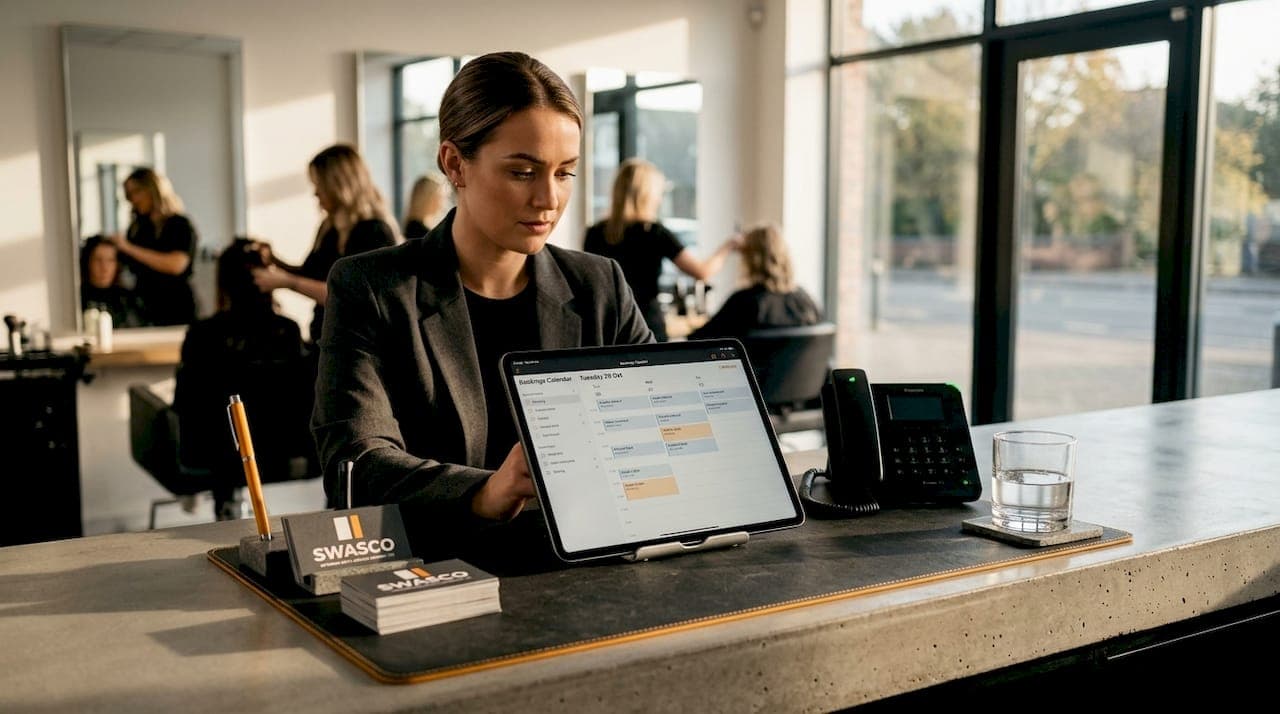
Most salon owners assume AI is either too complex, too impersonal, or simply not relevant to their business. That assumption is costing them clients. The role of AI in salon client retention is not about replacing your stylists or turning your front desk into a robot. It is about making sure every client hears from you at the right moment, gets booked without friction, and never slips through the cracks because your team was busy on the floor. This article breaks down exactly how AI tools are changing client retention in salons right now, with practical examples you can act on.
Table of Contents
Key takeaways
| Point | Details |
|---|---|
| AI augments, not replaces | AI handles routine communication so your staff can focus on delivering excellent service in the chair. |
| Automated rebooking drives repeat visits | AI learns each client’s booking cadence and sends personalised reminders at the right time. |
| 24/7 availability prevents lost revenue | AI virtual receptionists capture bookings and enquiries outside business hours, stopping missed opportunities. |
| Omnichannel messaging builds loyalty | Connecting with clients across SMS, email, and social with personalised context keeps them engaged between visits. |
| Measure at the cohort level | Tracking retention KPIs by client segment, not just totals, helps you spot churn risk early and act fast. |
How AI drives personalised rebooking and repeat visits
The most direct way to understand the role of AI in salon client retention is to look at what happens between appointments. Most salons lose clients not because of a bad experience, but because nobody followed up. Life gets busy, and without a nudge, clients drift to whoever contacts them first.
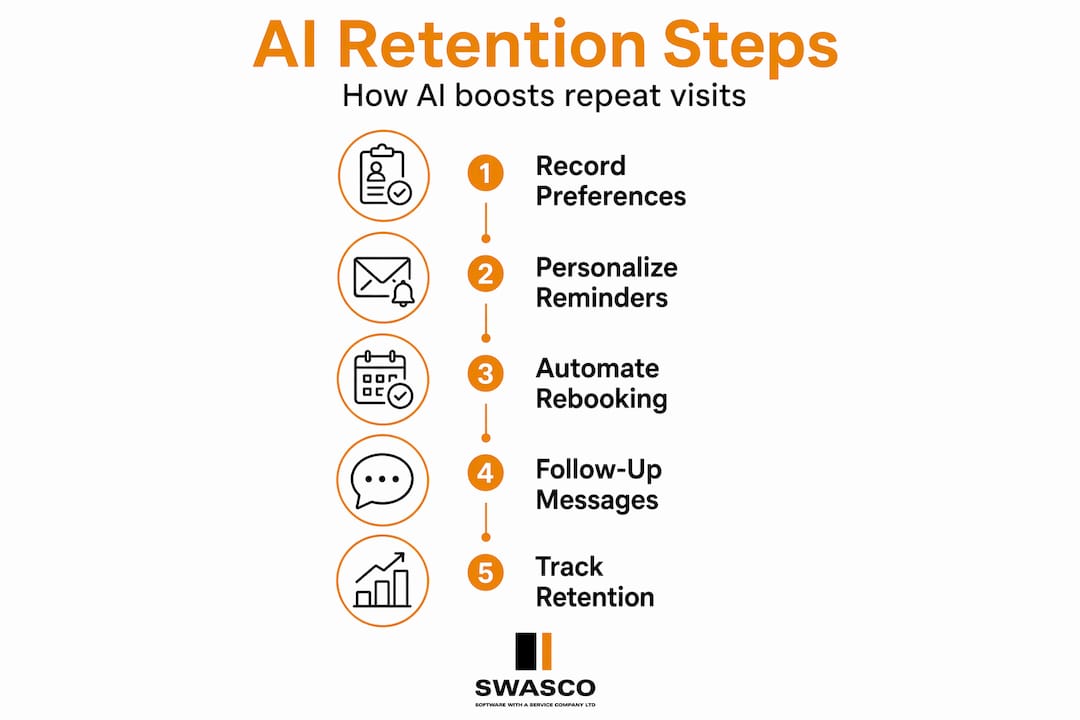
AI-powered client reconnect workflows learn each client’s booking cadence and automatically send personalised rebooking invitations, cutting manual tasks and improving retention rates. Rather than sending a generic “we miss you” blast to your entire database, these systems identify that Sarah books a colour every eight weeks and sends her a tailored message at week seven. The difference in response rates is significant.
Here is what a well-configured AI rebooking workflow actually does:
-
Tracks individual booking patterns across service types, frequency, and preferred stylist
-
Sends personalised Email and SMS reminders timed to each client’s typical rebooking window
-
Monitors key retention metrics such as lapse rate and average days between visits
-
Flags clients at risk of churning so your team can prioritise outreach
The key insight here is that AI triggers reconnects based on individual timelines and behaviours, not on a fixed calendar. That distinction matters enormously. A client who books every six weeks should not receive the same message timing as one who visits every three months.
Pro Tip: Treat AI rebooking reminders as a continuous workflow, not a one-off campaign. The system improves its timing accuracy the longer it runs, because it has more data on each client’s actual behaviour.
AI virtual receptionists: never miss a booking again
Your phone rings at 7pm on a Sunday. Nobody is in the salon. That call represents a client who wanted to book, did not get through, and may have booked elsewhere by Monday morning. This is one of the most straightforward problems AI solves for salons.
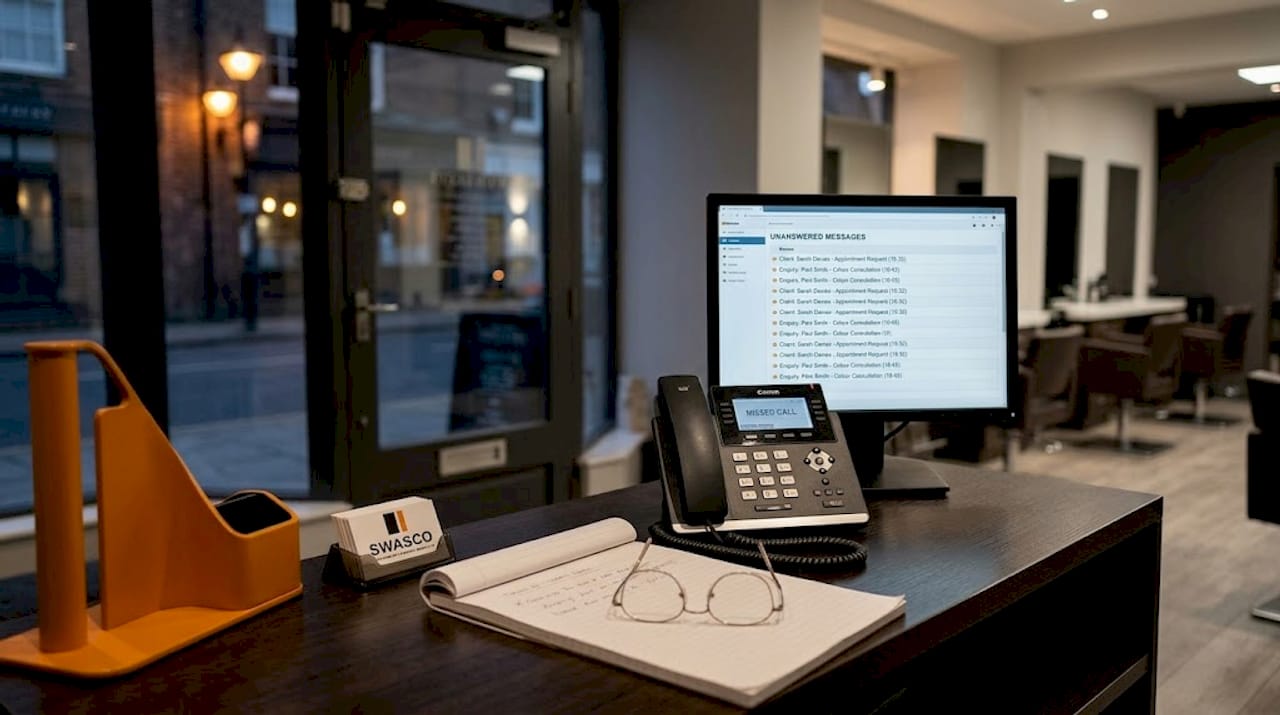
AI Concierge from Fresha manages booking-related enquiries across phone and messaging channels, embedded within client profiles for full context. It handles multiple simultaneous requests without putting anyone on hold, and it does not need a break. For a busy salon with two or three calls coming in during peak hours, that alone changes the economics of your front desk.
The practical benefits go beyond just answering calls:
-
Instant response to booking requests via phone, text, and website chat at any hour
-
Rescheduling and cancellation handling without pulling a staff member away from a client
-
Contextual responses drawn from the client’s profile, including past services and preferences
-
Reduced admin burden for your team, freeing them to focus on the client in front of them
Clients value consistent availability from AI tools more than conversational quality alone when it comes to loyalty. Put simply, clients do not complain that a booking was handled by AI. They complain when nobody answered. Solving the availability problem is a direct retention win.
Omnichannel AI communication beyond the appointment
Retention is not built only at the point of rebooking. It is built in the small interactions between visits. A message acknowledging a client’s last colour service, a heads-up about a new product that suits their hair type, or a birthday offer sent at the right moment. These touchpoints used to require significant manual effort. AI makes them automatic and, crucially, personal.
Fresha’s Client Connect links client messages with past service details, maintaining personalised client journeys across channels. That means when a client receives a message from your salon, it references their actual history, not a template. The communication feels like it came from someone who knows them.
Proactive AI messaging reduces support costs and improves client experience by pre-empting FAQs and delivering timely, relevant content. For salons, this translates to:
-
Automated post-visit follow-ups asking how the client is getting on with their new style
-
Product recommendations based on services received, sent a few days after the appointment
-
Seasonal promotions targeted to clients who have received relevant services before
-
FAQ handling across SMS, email, and social media without staff involvement
The shift from reactive to proactive communication is one of the most underrated changes in AI-driven service delivery. You stop waiting for clients to contact you and start reaching them before they even think to look elsewhere.
Balancing automation with the human touch
AI handles routine tasks well. It does not handle nuance well. This is the line every salon owner needs to understand before deploying any AI retention tool.
A client who messages to say they were unhappy with their last visit should never receive an automated response. A client dealing with a sensitive service, such as a first consultation after hair loss, needs a human voice. Getting this wrong does not just lose a client. It damages your reputation.
Here is a practical framework for deciding what to automate and what to keep human:
-
Automate routine booking confirmations, reminders, and rescheduling. These are transactional and low-stakes.
-
Automate FAQ responses about pricing, opening hours, and services. Clients want fast answers to simple questions.
-
Automate post-visit follow-ups for standard services where the outcome is predictable.
-
Escalate complaints, sensitive enquiries, and service issues to a human immediately. AI should flag these and step aside.
-
Review AI-generated messages periodically to confirm they still reflect your salon’s tone and values.
AI augments rather than replaces human tasks, with most businesses using AI in focused areas like sales and marketing rather than replacing entire roles. That finding aligns with what works in salons. The goal is not to automate everything. It is to automate the right things so your team has more time for the interactions that genuinely require a human.
Pro Tip: Measure retention gains at the client cohort level, not just in aggregate. A tool that improves rebooking rates for colour clients by 20% but has no impact on cut-only clients tells you something specific and useful about where to focus next.
Implementing AI retention tools: practical steps
Knowing AI can help is one thing. Knowing where to start is another. The good news is that most modern salon management platforms already include AI features you may not be using yet.
Here is a comparison of what effective AI retention implementation looks like versus a common under-utilised approach:
| Area | Under-utilised approach | Effective AI implementation |
|---|---|---|
| Rebooking reminders | Generic bulk SMS sent monthly | Personalised reminders timed to each client’s booking cadence |
| Missed calls | Voicemail with no follow-up | AI virtual receptionist responds instantly, 24/7 |
| Client communication | Manual email campaigns sent occasionally | Automated omnichannel messaging triggered by client behaviour |
| Churn detection | Reviewing lapse reports manually each quarter | Real-time KPI alerts flagging clients outside normal booking windows |
| Data used | Name and contact number only | Full service history, preferences, and booking frequency |
The most important structural step is building detailed service preferences into client profiles. AI can only personalise communication based on the data it has access to. A profile that contains only a phone number produces generic messages. A profile with service history, preferred stylist, product notes, and booking frequency produces messages that feel genuinely personal.
Start with one workflow, such as automated rebooking reminders, and measure the impact over 90 days before adding more. That approach keeps the process manageable and gives you clear data on what is working.
My honest take on AI and salon retention
I have seen salon owners fall into two camps when it comes to AI. The first group dismisses it entirely, convinced it will make their salon feel cold. The second group automates everything they possibly can and then wonders why clients feel disconnected.
In my experience, the salons that get the most from AI are the ones that treat it as a co-pilot. They use it to handle the communication that was previously falling through the cracks, not to replace the conversations that actually build loyalty. A client who receives a well-timed, personalised rebooking reminder does not think “that was a machine.” They think “my salon remembered me.”
The data-driven personalisation piece is where I see the biggest gap. Most salons collect more client data than they realise. They just never use it. Connecting service history to outgoing communication is not technically complex. It just requires someone to set it up properly once.
The pitfall I see most often is over-automation without context. Sending a “we miss you” message to a client who cancelled due to a bereavement is a real risk when you automate without filters. Build those filters in from the start. AI should make your salon feel more attentive, not less human.
— James
How Swasco helps salons retain more clients
If you recognise the missed calls, delayed responses, and unmanaged enquiries described in this article, Swasco was built to solve exactly those problems.
Swasco’s Talk2Aiva uses conversational AI to instantly engage, qualify, book, and follow up with clients 24/7 across calls, text, website chat, and social media. It is set up and managed for you, with ongoing technical support included. For salon owners who want to stop losing revenue from gaps in their communication without hiring more staff, it is a direct solution. Visit Swasco to see how it fits your salon’s retention strategy.
FAQ
What is the role of AI in salon client retention?
AI improves salon client retention by automating personalised rebooking reminders, handling enquiries 24/7, and sending proactive communications across multiple channels. It reduces the manual workload on staff while keeping clients engaged between visits.
Will AI make my salon feel impersonal?
No. When configured correctly, AI uses each client’s service history and preferences to send messages that feel relevant and personal. Clients value reliable availability from AI tools more than whether the response came from a human or a system.
Which tasks should AI handle versus my team?
AI works best for routine tasks such as booking confirmations, reminders, FAQ responses, and post-visit follow-ups. Your team should handle complaints, sensitive consultations, and any situation requiring empathy or judgement.
How do I measure whether AI is improving retention?
Track retention metrics at the client cohort level rather than just overall numbers. Monitor average days between visits, lapse rates by service type, and use real-time alerts to identify clients who have missed their expected rebooking window.
Do I need a large budget to use AI for client retention?
Not necessarily. Many salon management platforms already include AI-powered rebooking and communication features. Start with one automated workflow, measure the results over 90 days, and scale from there based on what the data shows.