
Lead response time is defined as the elapsed time between a lead enquiring and an agent making meaningful first contact. Agents who make common lead response time mistakes lose significant income. Industry estimates show agents losing up to £16,000 per month from slow or absent follow-up. The standard to beat is clear: responding within five minutes makes teams 21 times more effective than waiting 30 minutes. Yet the average B2B response time sat at 47 hours in 2025. The gap between best practice and reality is not a motivation problem. It is a systems problem, and this article names every mistake causing it.
1. The most common lead response time mistakes agents make
Real estate lead response errors and service industry follow-up failures share the same root causes. Most are structural, not personal. Here are the mistakes costing agents the most.
Mistake 1: Treating auto-responder time as actual response time

Many teams record the timestamp of an automated acknowledgement email as their official response time. This is a critical measurement error. Auto-responders are bridges that hold lead attention, but they do not replace a real conversation. When your CRM shows a two-minute response time but your rep made contact three hours later, your data is lying to you and your fixes will target the wrong problem.
Mistake 2: Conflating processing delays with rep delays
Tracking total lead response time without separating processing time from rep contact time masks where the delay actually lives. A lead might sit in an enrichment queue for 40 minutes before a rep even sees it. Blaming the rep for a slow response in that scenario solves nothing.
Mistake 3: Overly complex routing rules
Complex routing rules designed for precision often add 20 to 30 minutes of latency. Round-robin logic with 12 conditions, territory matching across five fields, and seniority overrides all sound thorough. In practice, they create bottlenecks that kill conversion speed.
Mistake 4: No after-hours fallback routing
Leads that arrive outside business hours frequently die in queues with no escalation path. After-hours routing gaps are often invisible in standard reports, which makes them easy to overlook and expensive to ignore. A lead submitted at 9pm on a Friday that receives no contact until Monday morning is a lost lead in most markets.
Mistake 5: Unclear lead ownership
When no single person owns a lead, everyone assumes someone else will act. One in four leads is routed incorrectly, causing significant delays and lost conversion opportunities. Shared inboxes, team email addresses, and unassigned CRM records are the most common culprits.
Mistake 6: Manual triage as standard practice
Manual triage introduces multiple human decision points, each adding latency and variability. A manager reviewing leads each morning before assigning them is not a process. It is a delay disguised as oversight. Automation handles this faster and more consistently.
Mistake 7: Skipping enrichment and notification automation
Agents who receive a lead notification without context spend the first few minutes researching the prospect before making contact. That research time is avoidable. Tools like HubSpot and GoHighLevel can pre-enrich lead records and push context directly to the rep before they pick up the phone.
Pro Tip: Never count an automated acknowledgement email as your response time in reporting. Track speed-to-conversation separately from speed-to-acknowledgement. These are two entirely different metrics.
2. How to diagnose and measure response time errors accurately
Fixing common agent response time issues starts with measuring the right things. Most teams measure the wrong things and wonder why nothing improves.
The single most important diagnostic step is separating processing time from rep contact time in your CRM data. Processing time covers everything from lead capture to assignment. Rep contact time starts when the rep receives the assignment and ends when they make first meaningful contact. SLAs without escalation protocols are ineffective at surfacing where delays actually occur. You need both a timer and a trigger.
Key diagnostic steps include:
- Segment by lead source and channel. A web form lead and a phone enquiry have different urgency profiles. Mixing them in a single average obscures which channel is failing.
- Measure median and 90th percentile response times. Averages hide your worst-case performance. If your median response time is six minutes but your 90th percentile is four hours, you have a systemic failure affecting one in ten leads.
- Use SLA timers with escalation rules. Platforms like Salesforce and HubSpot both support SLA tracking with automated escalation. Real-time SLA tracking with escalation rules identifies at which stage delays occur, enabling targeted fixes rather than guesswork.
- Segment by intent level. A lead requesting a valuation is not the same as a lead downloading a brochure. High-intent leads need a faster SLA and a separate reporting lane.
Pro Tip: Build a dashboard that shows three columns side by side: time to assignment, time from assignment to first contact, and total response time. The column with the largest number tells you exactly where to focus.
| Metric | What it reveals |
|---|---|
| Time to assignment | Routing and processing delays upstream of the rep |
| Time from assignment to contact | Rep availability and workload issues |
| 90th percentile response time | Worst-case performance affecting real leads |
| Auto-acknowledgement timestamp | Not a response metric. Remove from SLA calculations. |
3. Practical steps to correct mistakes in lead management
Improving agent response time requires changes to your systems, not just your habits. Here is what actually works.
Simplify routing rules first. Replace complex multi-condition routing with a primary assignment rule and a fallback. If the primary assignee does not accept within two minutes, the lead routes to a backup. This single change removes the most common source of routing latency. Human-only teams cannot sustain five-minute SLAs without automation support, so the fallback must be automated, not manual.
Automate lead-to-account matching and enrichment. Before a rep touches a lead, your system should already know the lead's company size, location, previous enquiries, and source channel. This context cuts the rep's pre-call research time from minutes to seconds. Platforms that handle this natively include Salesforce, HubSpot, and GoHighLevel. For a structured view of how CRM tools support this, Act! CRM guidance covers lead ownership and follow-up speed in detail.
Build after-hours protocols into your system. Every lead management system needs a defined answer to the question: what happens to a lead that arrives at 11pm? Options include AI qualification bots that engage immediately, SMS acknowledgements with a confirmed callback time, or click-to-book calendar links sent automatically. Any of these beats silence.
Key corrective actions to implement:
- Replace manual triage with automated assignment rules and clear ownership fields
- Add SMS acknowledgements as a response bridge for after-hours and high-volume periods
- Pass full lead context to reps via CRM notifications before first contact
- Integrate your lead capture forms directly with your CRM to eliminate sync delays. Web lead form integration explains how misconfigurations in capture workflows cause avoidable delays
- Set escalation rules that trigger when SLA thresholds are breached, not just when leads are missed
Pro Tip: Add a click-to-book calendar link to every automated acknowledgement. It gives the lead a way to self-schedule while your rep prepares for contact, which keeps the lead engaged without requiring immediate human availability.
4. How AI and technology reduce lead response time errors
AI tools change the economics of fast lead response, but only when implemented correctly. The technology itself is not the bottleneck. The workflow design usually is.
AI agent latency is most often caused by sequential tool calls rather than slow model inference. When an AI qualification bot checks a CRM record, then queries an enrichment API, then writes a follow-up task, one after another, each step adds wait time. Parallelising those tool calls can reduce total latency by over 65%. This is a workflow design decision, not a model selection decision. Swapping to a faster AI model while keeping a sequential workflow produces minimal improvement.
Streaming responses also matter more than most agents realise. Streaming response tokens reduce perceived wait time and lower user drop-off by 70%. A lead who sees a response beginning to appear stays engaged. A lead who sees a blank screen for eight seconds leaves.
The practical implications for agents and team leads are:
- Use AI qualification bots to handle first contact on high-volume lead sources, particularly social media and web forms
- Design AI workflows to run enrichment, CRM lookup, and notification steps in parallel rather than in sequence
- Cache frequently used data such as agent availability and territory maps to avoid repeated API calls
- Measure total workflow time from lead capture to first AI response, then cut every step that does not add value to the lead
"The fastest AI response system is not the one with the most powerful model. It is the one with the fewest unnecessary steps between lead arrival and first contact."
For agents managing social media lead generation, AI qualification bots are particularly valuable because social leads arrive at unpredictable hours and expect near-instant acknowledgement.
Key takeaways
Lead response time mistakes are primarily a systems and process failure, not a rep performance failure, and fixing them requires measuring the right metrics, simplifying routing, and automating the steps that currently add delay.
| Point | Details |
|---|---|
| Separate your metrics | Track time-to-assignment and time-to-contact separately to find where delays actually occur. |
| Simplify routing rules | Complex routing adds 20 to 30 minutes of latency. Use primary assignment plus an automated fallback. |
| Auto-responders are not responses | Never count automated acknowledgements as meaningful contact in your SLA data. |
| After-hours coverage is non-negotiable | Leads that arrive outside business hours need an automated fallback or they are lost. |
| AI speed comes from workflow design | Parallelising tool calls cuts AI agent latency by over 65%, far more than switching models. |
Why lead response is a systems problem, not a people problem
I have reviewed enough agent workflows to say this with confidence: the agents who struggle most with slow follow-up are not lazy or disorganised. They are working inside systems that were never designed for speed.
The most damaging belief I encounter is that response time is a motivation issue. It leads teams to add more pressure on reps while leaving the routing logic, CRM configuration, and after-hours coverage completely untouched. The pressure increases. The results do not.
What actually moves the needle is treating lead response as an engineering problem. Where does the lead enter the system? How many steps does it pass through before a human sees it? What happens if the assigned rep is unavailable? These questions have answers, and those answers reveal fixable problems.
The metric that most teams ignore is the 90th percentile response time. Your average looks fine. Your worst-case performance is where you are losing deals. A lead that waits four hours for contact on a Friday afternoon is not a data point. It is a lost commission.
My strongest recommendation is to audit your after-hours routing before anything else. It is the most common gap, the least visible in standard reports, and the easiest to fix with a basic automation rule or an AI qualification bot. Letting agent follow-up practices that work in 2026 all share one feature: they do not rely on a human being available at the moment a lead arrives.
Invest in your tech stack integration. Not because it is fashionable, but because every manual handoff between tools is a place where a lead can fall through and a commission can disappear.
— James Paul
Stop losing leads to slow follow-up with Talk2Aiva
If the mistakes in this article sound familiar, the fix is not more effort. It is better infrastructure.
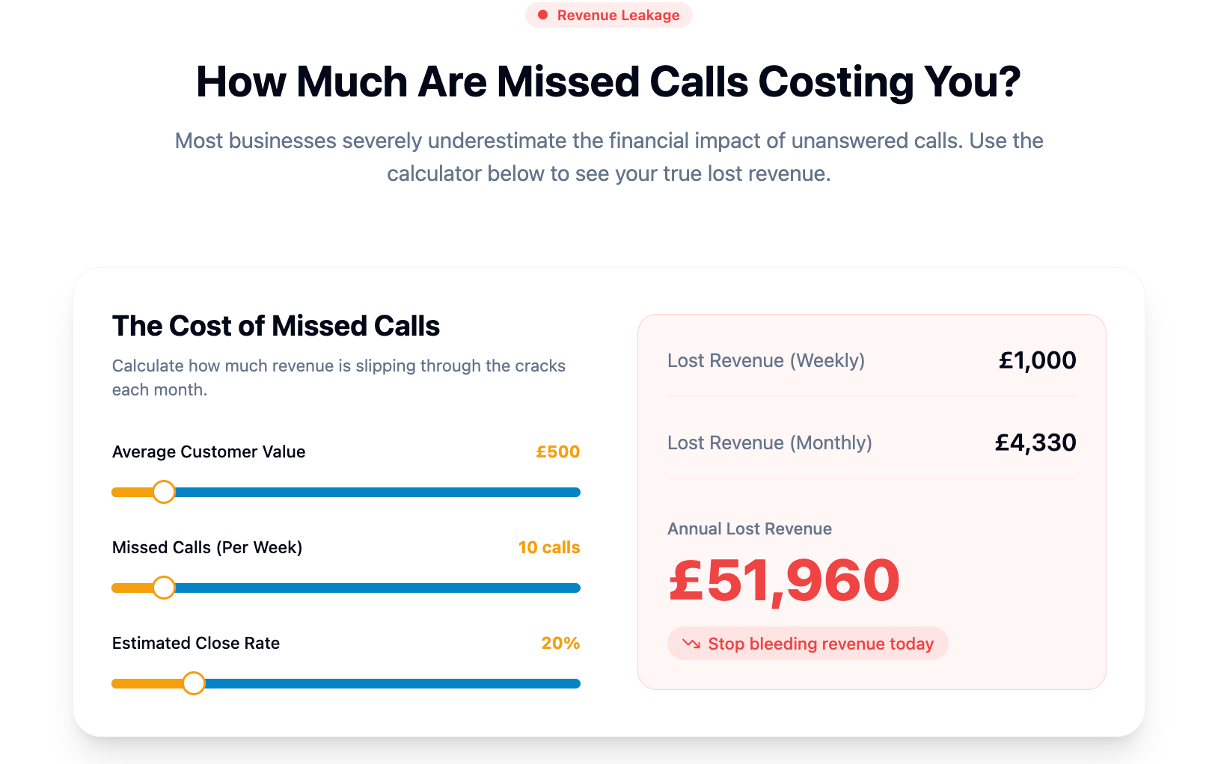
Talk2Aiva by SWASCO is a fully guided AI receptionist and revenue recovery system built for service-based businesses and agents who are tired of losing leads to slow responses and missed calls. It handles first contact, qualification, booking, and follow-up across calls, text, website chat, and social media, 24 hours a day. Setup, AI training, workflow building, and ongoing support are all included. You focus on closing. Talk2Aiva handles the rest. Visit Swasco's automation platform to see how it works for agents in your market.
FAQ
What is the ideal lead response time for agents?
Responding within five minutes makes contact 21 times more likely than waiting 30 minutes. Lead contact rates drop by 80% after the five-minute window closes.
Why do most agents respond to leads too slowly?
Lead response delays are primarily caused by routing errors, enrichment delays, and unclear ownership rather than rep motivation. Fixing the system produces faster results than pressuring individuals.
Does an automated acknowledgement email count as a response?
No. Auto-responders hold lead attention but do not replace meaningful contact. Recording auto-acknowledgement timestamps as response times produces misleading data and misdirects your fixes.
How can AI reduce lead response time mistakes?
AI qualification bots can make first contact instantly, at any hour. Parallelising tool calls in AI workflows reduces latency by over 65%, making AI-assisted follow-up faster than most human-only processes.
What is the biggest overlooked mistake in lead management?
The absence of after-hours routing is the most commonly missed gap. Leads that arrive outside business hours and receive no automated fallback are effectively lost before any agent has the chance to respond.