

Systematic lead follow-up is defined as a structured, repeatable process for contacting, nurturing, and converting property enquiries through defined stages, assigned ownership, and timed multi-channel outreach. If you want to follow up property leads systematically, the difference between a converted client and a lost one often comes down to speed, consistency, and workflow design rather than lead quality alone. Lead follow-up success hinges on structured cadences and accountability baked into workflows, not just persistence or message volume. Tools like CRM platforms, automation workflows, and multi-channel communication via email, SMS, and WhatsApp are the practical infrastructure that makes this possible. With 85% of buyers considering agents the most useful information source during their search, the agent who follows up consistently wins the instruction.
What does a systematic follow-up workflow in property lead management look like?
Effective property lead management begins with capturing every enquiry from every channel into a single, unified record. Leads arrive via Rightmove, Zoopla, your website, social media, phone calls, and walk-ins. If each source feeds a different spreadsheet or inbox, you have already lost visibility and leasing velocity before the first call is made.
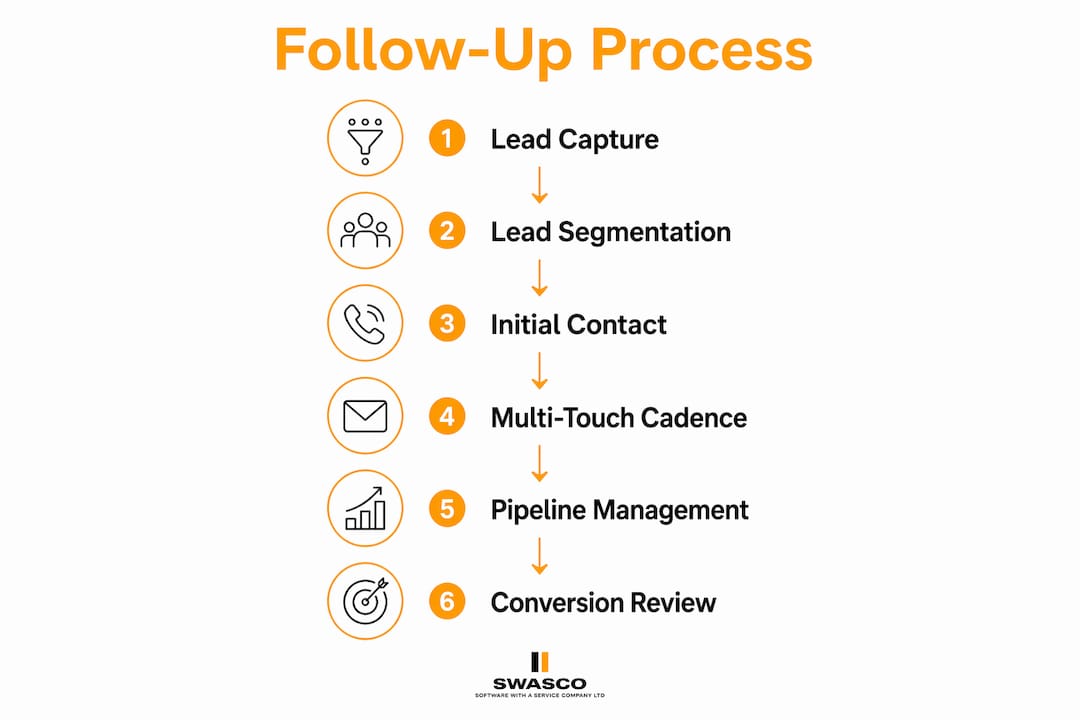
A well-designed pipeline maps the full lifecycle of a property lead through clearly named stages. For lettings and sales, those stages typically look like this:
- New enquiry: Lead captured, auto-acknowledgement sent
- Contacted: First human or AI-assisted outreach completed
- Visit scheduled: Viewing or call booked
- Application received: Formal interest confirmed
- Lease or sale agreed: Conversion recorded
Each stage must have a defined owner and a triggered next action. Pipeline stages require stage-level ownership and measurable KPIs tied to each lifecycle step. This means when a lead moves from "Contacted" to "Visit Scheduled," the CRM automatically creates a reminder to confirm the appointment 24 hours before. Without that trigger, the lead sits idle and the momentum dies.
Technology enforces this consistency. CRM platforms like Salesforce, HubSpot, or property-specific tools such as Reapit and Fixflo allow you to build stage-change automations that remove the reliance on individual memory or manual task creation. The lettings lead qualification checklist approach is equally useful here: qualifying leads at capture means your pipeline only contains prospects worth actioning, which keeps the workflow clean and focused.

Pro Tip: Set a rule that no lead can remain in the same pipeline stage for more than 48 hours without a logged next action. This single rule eliminates the majority of stagnant leads.
How to design a timed multi-touch follow-up cadence for property leads
The timing and structure of your outreach sequence determines whether a lead converts or goes cold. Leads contacted within 5 minutes during business hours are 50 to 60% more likely to convert. That single statistic should reshape how you think about your first response. Speed is not a courtesy; it is a conversion lever.
A proven cadence for property lead nurturing follows three distinct phases:
- Days 1 to 3 (high-frequency contact): Call within 5 minutes of enquiry. Send a personalised email referencing the specific property or search criteria. Follow up with an SMS if no response within 4 hours. The goal is to establish contact before the lead moves on to a competitor.
- Days 4 to 10 (value-added outreach): Shift from contact attempts to content. Send comparable listings, a local market update, or a short video walkthrough. Use multi-channel outreach across email, phone, SMS, and WhatsApp to reach leads in different contexts. Personalise each message by anchoring it to the lead's original enquiry or previous conversation.
- Days 11 to 21 and beyond (light nurture): The median home search lasts around 10 weeks, so dropping contact after two weeks is a costly mistake. Reduce frequency to weekly or fortnightly touches: a market update, a new listing alert, or a brief check-in call. These lighter touches keep you present without feeling intrusive.
Segment your leads by intent before assigning them to a cadence tier. A buyer who has already sold their home and needs to move within 60 days requires daily contact in week one. A first-time buyer still saving for a deposit belongs in a long-term nurture sequence from day one. Treating both identically wastes your time and frustrates the prospect.
Pro Tip: When recycling cold leads back into a nurture sequence, change the communication channel. If you called three times with no response, start the new sequence with an SMS or a WhatsApp message. A fresh channel often produces a response where the previous one failed.
What technology tools support systematic follow-up in property in 2026?
The right technology stack removes the manual burden from follow-up and makes consistency the default rather than the exception. The table below compares the core capabilities you need and what each delivers:
| Capability | What it does for your follow-up |
|---|---|
| CRM with unified lead records | Stores all contact history, stage data, and notes in one place across channels |
| Automated acknowledgements | Sends an instant reply to every new enquiry, even outside office hours |
| Lead scoring | Ranks prospects by intent signals so your team contacts the hottest leads first |
| Multi-channel outreach tools | Enables email, SMS, phone, and WhatsApp from a single workflow |
| Analytics dashboard | Tracks response time, conversion rate, and drop-off points by stage |
Automation tools such as instant replies and scheduled reminders increase follow-up consistency and free your team from manual task management. For WhatsApp specifically, real estate WhatsApp automation enables instant lead acknowledgement and engagement at scale, which is particularly effective for mobile-first buyers and tenants.
The most common technology mistake in property lead management is using fragmented tools that do not communicate with each other. A lead captured on Rightmove, logged in a spreadsheet, followed up via a personal Gmail account, and tracked in a separate diary creates four data silos and zero accountability. Unified prospect records that persist across pipeline stages improve visibility and allow targeted interventions when a lead stalls.
Property-specific platforms worth evaluating include Reapit, Salesforce with property add-ons, and Fixflo for maintenance-linked lead tracking. For AI-assisted response and qualification, Talk2Aiva by SWASCO handles inbound enquiries 24/7 across calls, SMS, website chat, and social media, qualifying and routing leads before a human agent ever picks up the phone.
How to measure and optimise your follow-up process using KPIs
You cannot improve what you do not measure. Core leasing dashboard KPIs include lead-to-lease conversion rate, lead response time, and tour-to-application rate. These three metrics tell you where your process is working and where leads are leaking out.
Set benchmarks for each KPI based on your property type and market. A residential lettings agency in a competitive urban market should target a lead response time under 5 minutes for enquiries received during business hours. A commercial property manager may have a longer acceptable window, but the principle of measuring and improving remains the same.
Use your data to identify bottlenecks at specific pipeline stages. If your lead-to-contact rate is strong but your visit-to-application rate is low, the problem is not your follow-up speed. It is what happens during and after the viewing. That distinction matters because it tells you where to invest your coaching and process improvement effort.
Review your cadence performance monthly. Track which outreach channels produce the most responses in days 1 to 3, and which content types generate the most re-engagement in the nurture phase. Adjust your sequences based on what the data shows, not what feels right. The agent response time mistakes that cost conversions are almost always visible in the data before they become visible in your revenue figures.
What are the most common mistakes in property lead follow-up?
Most follow-up failures are process failures, not people failures. The most damaging mistakes are predictable and fixable:
- Leads stagnating in pipeline stages without a triggered next action. The failure mode of most follow-up systems is leads getting stuck indefinitely in CRM stages with no trigger creating the next necessary task.
- Ignoring speed-of-response standards and relying on manual effort to catch every enquiry. Manual processes fail at volume and outside office hours.
- Treating all leads identically without segmentation. A cash buyer and a first-time enquirer do not belong in the same follow-up sequence.
- Over-complicating your CRM setup with too many custom fields and stages. Poor adoption follows complexity. Keep your pipeline stages to five or six maximum.
- Failing to personalise touchpoints. Personalising each touchpoint by anchoring messages to lead actions and conversation history improves engagement without requiring you to rewrite every message from scratch.
Conduct a quarterly audit of your pipeline. Pull every lead that has not moved stage in 14 days and assign a specific team member to review and action each one. Pair this with brief coaching sessions that focus on the stages where drop-off is highest. Accountability is not about blame; it is about making the system work.
Pro Tip: Record your average lead response time each week and share it with your team. Visibility alone drives improvement. Teams that see their response time data consistently outperform those that do not.
Key takeaways
Systematic property lead follow-up requires a defined pipeline, timed multi-channel cadences, clear ownership, and consistent measurement to convert enquiries into clients.
| Point | Details |
|---|---|
| Speed to first contact | Contacting leads within 5 minutes during business hours increases conversion by 50 to 60%. |
| Structured pipeline stages | Define five to six stages with triggered next actions to prevent leads stagnating. |
| Timed cadence by intent | Use high-frequency contact in days 1 to 3, value content in days 4 to 10, and light nurture beyond day 11. |
| Technology over manual effort | Unified CRM records and automation remove reliance on individual memory and prevent data silos. |
| Measure and adjust monthly | Track lead response time, lead-to-lease conversion, and tour-to-application rate to find and fix bottlenecks. |
Why most agents are one process away from significantly better conversion
I have worked with enough property teams to say this with confidence: the gap between a high-converting agency and an average one is rarely the quality of their leads. It is almost always the quality of their follow-up process.
The agents who consistently outperform their peers are not necessarily the most charismatic or the most experienced. They are the ones who have built a system that does not depend on remembering to follow up. Their CRM sends the reminder. Their automation sends the acknowledgement. Their pipeline stages tell them exactly what needs to happen next and who is responsible for it.
What I have also seen is that resistance to building this kind of system usually comes from one of two places: the belief that "we already do this" when the data says otherwise, or the fear that automation will make client relationships feel impersonal. Both concerns are understandable. Neither holds up under scrutiny. Personalisation and automation are not opposites. A well-configured workflow sends a message that references the specific property a lead enquired about, at the right time, on the right channel, without anyone manually typing it. That is not impersonal. That is attentive.
The property management automation guide for 2026 shows how far these tools have come. The barrier to entry is lower than most agents assume. The cost of not acting is higher than most agents realise.
— James Paul
How Talk2Aiva helps you follow up every property lead without missing one
If you are serious about converting more enquiries, the process described in this article requires the right infrastructure behind it.
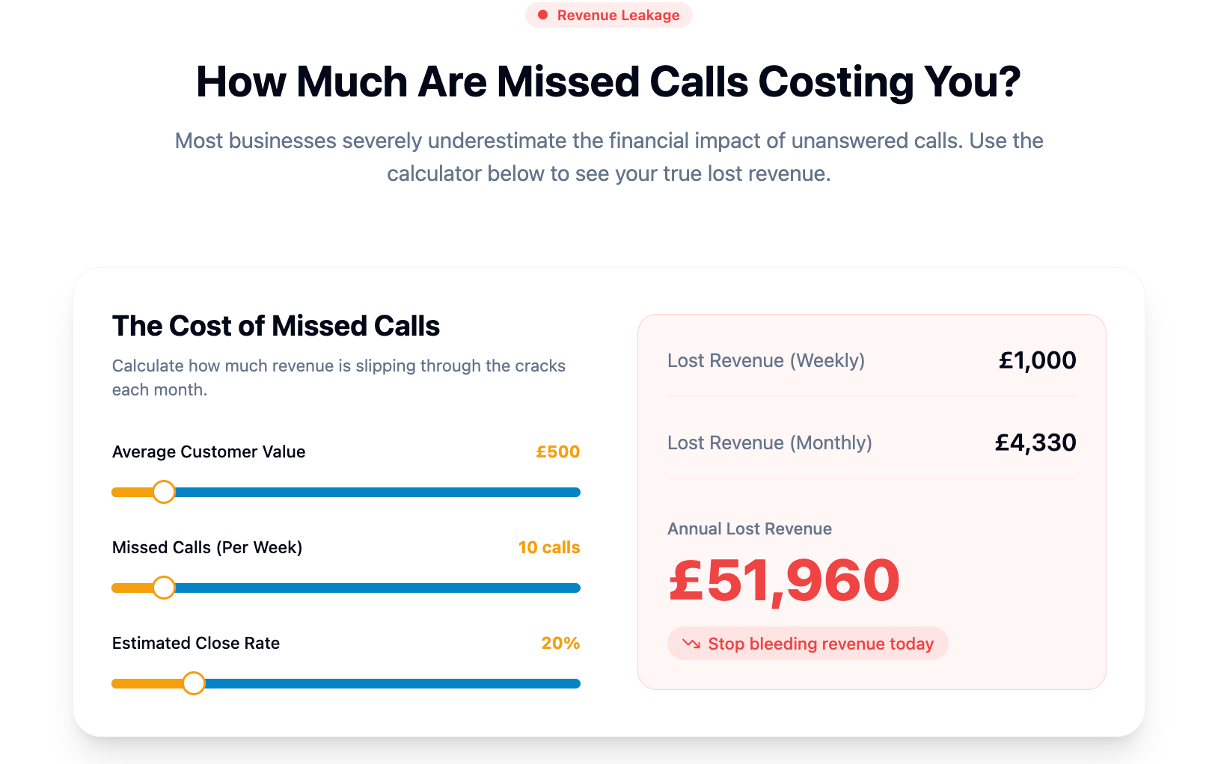
Talk2Aiva by SWASCO is built for exactly this. It handles inbound property enquiries 24/7 across calls, SMS, website chat, and social media, qualifying leads instantly and routing them into your follow-up workflow before a single manual step is needed. From automated lead follow-up to multi-channel outreach and pipeline visibility, Talk2Aiva gives property agents and managers the system that makes consistent, fast, and personalised follow-up the default. Setup, training, and ongoing support are all included, so you can focus on closing, not chasing.
FAQ
How quickly should you respond to a property enquiry?
Leads contacted within 5 minutes during business hours are 50 to 60% more likely to convert. An automated instant acknowledgement should be sent within 60 seconds for any enquiry received outside those hours.
How many follow-up touches does a property lead need?
Most property leads require between 5 and 8 contact attempts across multiple channels before converting. The follow-up cadence should span at least 21 days, with lighter nurture continuing through the buyer's full search period.
What KPIs should I track for property lead follow-up?
Track lead response time, lead-to-lease or lead-to-sale conversion rate, and tour-to-application rate. These core leasing KPIs identify exactly where leads are dropping out of your pipeline.
Why do property leads fall through the cracks?
Leads stall when there is no triggered next action after a stage change in your CRM. Pipeline stagnation is caused by unclear ownership and the absence of automated reminders, not by a lack of effort from individual agents.
How long should a property lead nurture sequence last?
The median home search lasts 10 weeks, so your nurture sequence should run for at least that duration. Reduce contact frequency after day 21 but maintain consistent, value-led touches until the lead converts or explicitly opts out.