
The fastest way to stop losing revenue to missed appointments is a staged, two-way follow-up sequence: confirmation, mid-window reminder, final prompt, then a rebook invitation, sent across SMS, voice and chat through an AI receptionist with a clear human escalation path. Evidence-backed timing and wording cut no-shows meaningfully, and the right consent and compliance controls keep it all lawful.
TL;DR:
- Sending at least two reminders, including a mid-window message and a final prompt, significantly reduces no-shows compared to a single reminder.
- Voice reminders should be reserved for high-value or high-risk procedures where a personal touch improves engagement.
- Proper classification, explicit opt-in, and immediate opt-out management are necessary to stay compliant with data and marketing laws during follow-up messages.
- Testing staged workflows with a pilot group enables clinics to identify gaps and refine timing, wording, and escalation procedures before full deployment.
- Automated follow-up should always include clear escalation paths to staff for complications or clinical questions, avoiding reliance solely on AI handling sensitive replies.
Table of Contents
- Design a staged follow-up workflow for aesthetics clinics
- Timing and wording that reduce no-shows (evidence you can use)
- Consent, PECR and data controls for automated follow-up
- Implementation checklist: tech, people and pilot steps
- Measure and optimise: KPIs and A/B tests to reduce no-shows
- Best practices for post-treatment care instructions during follow-up
- How to identify and manage patient complications or adverse reactions at follow-up
- Personalising follow-up protocols based on treatment type and patient risk factors
- Methods for collecting patient feedback and satisfaction during follow-up visits
- Communication strategies for addressing patient concerns and setting realistic expectations
- Integration of follow-up data into patient records for continuity of care
- Lessons from guided AI receptionist deployments
- How Talk2Aiva helps aesthetics clinics automate follow-up and recover revenue
- FAQ
- Sources
Design a staged follow-up workflow for aesthetics clinics
A single reminder text rarely does the job. What works is a sequence, each stage handling a different risk point between booking and treatment.
- Immediate booking confirmation: sent the moment someone books, with a calendar link and a one-tap cancellation route.
- Mid-window reminder (7 to 5 days out): a nudge with options to rebook or cancel, giving the clinic enough notice to refill the slot.
- 48 to 24 hour reminder: short, specific, with an easy reply path such as "reply C to confirm or R to rearrange".
- Final same-day prompt: a brief check-in that also feeds your short-notice waiting list if the patient doesn't respond.
- Post-appointment rebook and review branch: separate from marketing unless the patient has consented to promotional contact.
Each stage can run on SMS, voice or chat, but the channel mix matters. SMS suits routine reminders; voice calls work better for higher-value or higher-risk procedures where a two-way conversation catches hesitation early. An AI receptionist can handle confirmations, rescheduling requests and simple questions automatically, but anything ambiguous (a clinical query, a complaint, a request to discuss a reaction) should route straight to a named staff member. Mapping that handover clearly, before launch, is what separates a workflow that reduces admin from one that just adds a new inbox to ignore.
Timing and wording that reduce no-shows (evidence you can use)
The research on this is consistent: more touchpoints, sent at the right moments, in the right words, measurably improve attendance.
- Send at least two reminders rather than one: a mid-window message and a 48 to 24 hour follow-up, with a final same-day prompt for higher-risk slots.
- Use direct calls to action: "reply YES to confirm" or "call us on [your number] to rearrange" rather than vague wording.
- Keep a human reply option visible in every message, even when an AI receptionist handles the first response.
- Test specific, concrete language against generic reminders. Specificity changes behaviour more than politeness does.
- Reserve voice reminders for appointments where a missed slot carries higher cost (longer procedures, higher-value treatments, new patients).
A systematic review and meta-analysis in BMJ Open found that electronic notifications increase attendance from 54% to 67%, and that multiple notifications outperform a single reminder. That's the core case for a staged sequence rather than a lone text the day before.
Wording matters too. A Gov found that stating the specific cost of a missed appointment reduced non-attendance from 11.1% to 8.4%, a relative drop of 23%, across roughly 20,000 patients. Translate that carefully for an aesthetics setting: rather than citing a clinical cost, you might reference the value of the slot or the knock-on delay to the patient's own treatment plan, tested gently and never framed as a threat.

Consent, PECR and data controls for automated follow-up
Not every message in your sequence carries the same legal weight, and treating them all the same is the quickest way to create a compliance headache.
Appointment confirmations and reminders are service messages, not marketing, under ICO guidance on electronic and telephone marketing. Review requests and promotional rebooking offers are a different matter: they typically count as direct marketing and need a lawful basis to send.
- Classify each message type before it goes out: service message or marketing, never assumed.
- Use explicit opt-in for marketing messages rather than relying on a pre-ticked box.
- Apply the soft opt-in only to existing patients who bought a similar treatment and were given a clear chance to refuse at the time.
- Maintain a do-not-contact list and action opt-outs the same day they arrive.
- Refresh consent periodically; a two-year review cycle is a sensible default for an evolving patient base.
Pro Tip: Build your decision tree so the AI receptionist tags every outgoing message as "service" or "marketing" at the point of creation, not after a complaint forces you to check.
Logging consent properly also protects you if a patient disputes a message later. Our GDPR SMS consent guide walks through the practical steps for recording and auditing that trail.
Implementation checklist: tech, people and pilot steps
Rolling this out works best as a contained pilot before a full-clinic launch.
- Map your systems: identify which bookings trigger which message stage in your existing calendar or booking software.
- Build templates and decision trees: write the wording for each stage and the branching logic for replies (confirm, cancel, rebook, no response).
- Set your consent and suppression rules: decide who sees marketing messages, who doesn't, and how opt-outs flow back into the system instantly.
- Integrate your channels: connect SMS, voice and chat, then test two-way replies end to end before going live.
- Configure AI-to-human handover: define exactly which replies route to a named team member and within what timeframe.
- Run a small pilot: a single practitioner or treatment type for two to four weeks, measuring attendance before scaling clinic-wide.
Pro Tip: Pilot with your highest-volume treatment first. You'll get a meaningful sample size faster, and any workflow gaps surface before they touch your whole patient list.
Our guide to how follow-up automation works covers the typical integration points between booking software and messaging platforms in more depth.
Measure and optimise: KPIs and A/B tests to reduce no-shows
Once live, track a small set of numbers rather than drowning in dashboards.
- Attendance rate and no-show rate: your headline measures, tracked weekly during the pilot.
- Confirmed reply rate: how many patients actively respond versus stay silent until the final prompt.
- Opt-out rate: a rising trend signals message frequency or tone needs adjusting.
- Rebook conversion: how many cancellations convert into a new booking rather than a lost slot.
Run simple A/B tests: one timing window against another, a specific-cost style message against a neutral one, SMS against voice for a higher-risk treatment group. To estimate recovered revenue, multiply your average appointment value by the reduction in no-show rate over a rolling three to six month window, which smooths out seasonal swings rather than overfitting to a short pilot. Review weekly while piloting, then shift to monthly reporting once the workflow is stable, with a clear threshold (for example, a no-show rate creeping back above your pre-pilot baseline) that triggers a review.
Best practices for post-treatment care instructions during follow-up
Follow-up messages are also where aftercare instructions land, and clarity here reduces both complications and unnecessary calls to the clinic.
Keep instructions short, specific to the treatment given, and sent at the moment they're most needed rather than buried in a generic welcome pack. A patient who's had a chemical peel needs sun protection reminders within the first 24 to 48 hours; someone who's had an injectable needs guidance on avoiding exercise or heat on the day. Sending these as a distinct message, separate from the booking confirmation, means they don't get lost.
Written instructions should include what's normal to expect (mild redness, slight swelling), what warrants a call, and a direct way to reach the clinic if something feels wrong. Pairing text instructions with a short video link, where you have one, tends to reduce follow-up questions because patients can see rather than just read what normal healing looks like.
Automating the timing of these messages, rather than relying on staff to remember, is where a follow-up system earns its keep: the right aftercare message reaches the right patient at the right hour without anyone having to track it manually.
How to identify and manage patient complications or adverse reactions at follow-up
A follow-up sequence isn't just about attendance. It's also a safety net that catches problems early, provided it's built to listen as well as remind.
Design at least one follow-up touchpoint that explicitly invites the patient to report how they're feeling, not just confirm a future booking. A simple prompt such as "how is your skin feeling today?" with an open reply option surfaces concerns that a patient might not otherwise think to raise unprompted.
The critical design decision is escalation. Any reply that mentions pain, swelling beyond what's expected, a reaction or anything the AI receptionist can't confidently categorise as routine should route immediately to a clinician, not sit in a queue. Define that threshold in advance rather than leaving it to judgement calls mid-conversation. A named staff member should own same-day response for anything flagged as a possible complication, with a clear fallback if they're unavailable.
Document every flagged reply and its outcome. That record matters both for individual patient care and for spotting patterns, such as a particular product batch or technique prompting more reports than usual.
Personalising follow-up protocols based on treatment type and patient risk factors
Not every patient needs the same sequence. A first-time patient having a more involved procedure benefits from closer follow-up than a returning patient having a routine top-up.
Segment your workflows by treatment type and risk profile. Higher-risk or longer-recovery treatments might warrant an extra check-in at 24 hours and again at a week, while lower-risk treatments might need just the standard confirmation and reminder stages. Patients on blood thinners, with known sensitivities, or new to a particular treatment benefit from an additional aftercare touchpoint that a routine case doesn't need.
Building this into your decision tree up front means the AI receptionist can select the right sequence automatically based on the appointment type logged at booking, rather than staff remembering to manually flag higher-risk cases. That reduces the chance of a vulnerable patient falling through a generic one-size-fits-all reminder flow, and it keeps your message volume proportionate instead of over-messaging low-risk return patients who find frequent check-ins unnecessary.

Methods for collecting patient feedback and satisfaction during follow-up visits
The same channels used for reminders are well suited to gathering feedback, provided the timing and framing are right.
A short satisfaction prompt sent a few days after treatment, once initial healing has settled, tends to get more honest and useful responses than one sent the same day. Keep it to one or two questions: a simple rating plus an open text field works better than a long survey that few patients finish.
Separate this from any review request that's intended for public platforms. A private feedback question helps you catch and fix problems quietly; a public review request is a different, consented communication that belongs in the marketing branch of your workflow, not bundled into the same message as a satisfaction check.
Route low ratings or negative free-text responses to a staff member for a personal follow-up call rather than leaving them in an inbox. That's often the difference between recovering a dissatisfied patient and losing them, along with whatever they tell other people about the experience.
Communication strategies for addressing patient concerns and setting realistic expectations
Automated follow-up only works if the underlying messages set expectations honestly. Overpromising results in a confirmation text creates disappointment that no reminder can fix later.
Use follow-up messages to reinforce what was discussed at consultation rather than introducing new claims. If a treatment typically needs a course of sessions to show full results, say so again in the post-appointment message rather than letting a single-session patient assume one visit should have delivered everything.
When a patient replies with a concern, whether about results, discomfort or cost, the AI receptionist should acknowledge it plainly and route anything beyond a simple scheduling question to a person who can discuss specifics. Avoid scripted reassurance that sounds dismissive; a patient who feels unheard in an automated reply is more likely to leave a negative review or simply not rebook.
Setting realistic timelines for results, swelling, bruising or downtime in the immediate aftercare message reduces the number of anxious follow-up calls later, because the patient already knows what to expect and when to worry if something falls outside that range.
Integration of follow-up data into patient records for continuity of care
Follow-up conversations generate information worth keeping, not just in a messaging platform's log, but in the patient's actual record.
Replies about complications, feedback scores, consent status and rebooking history should feed back into your patient management system automatically rather than living only in a chat thread that nobody revisits. That matters most when a patient returns months later for a different treatment: a clinician reviewing their file should be able to see what was flagged last time without digging through old text messages.
This also supports your consent obligations. If a patient opted out of marketing messages during a follow-up exchange, that preference needs to sit in their central record immediately, not just in the messaging tool, so it's respected across every future communication regardless of which staff member or channel initiates it.
Our post-appointment follow-up guide includes templates designed to carry this kind of structured data back into a patient record rather than leaving it stranded in a chat log.
Lessons from guided AI receptionist deployments
Clinics rolling out automated follow-up for the first time tend to trip over the same three things: nobody owns replies outside office hours, edge cases (a complaint, a clinical question) aren't tested before launch, and consent isn't logged clearly enough to survive a complaint. None of these are technology failures. They're planning gaps.
A guided onboarding process, where someone builds the decision tree, tests the escalation paths and trains the AI on your specific treatments before go-live, catches most of this before a patient ever notices. That's the difference between automation that quietly recovers revenue and automation that generates a new set of complaints.
— James Paul
How Talk2Aiva helps aesthetics clinics automate follow-up and recover revenue
We built an AI receptionist system for clinics that know staged, two-way follow-up works but don't have the time or in-house technical team to build and maintain it themselves. The service handles the full setup, from mapping your booking system and writing your message sequences to configuring AI-to-human handover, so the workflow above goes live without becoming your own project to manage.
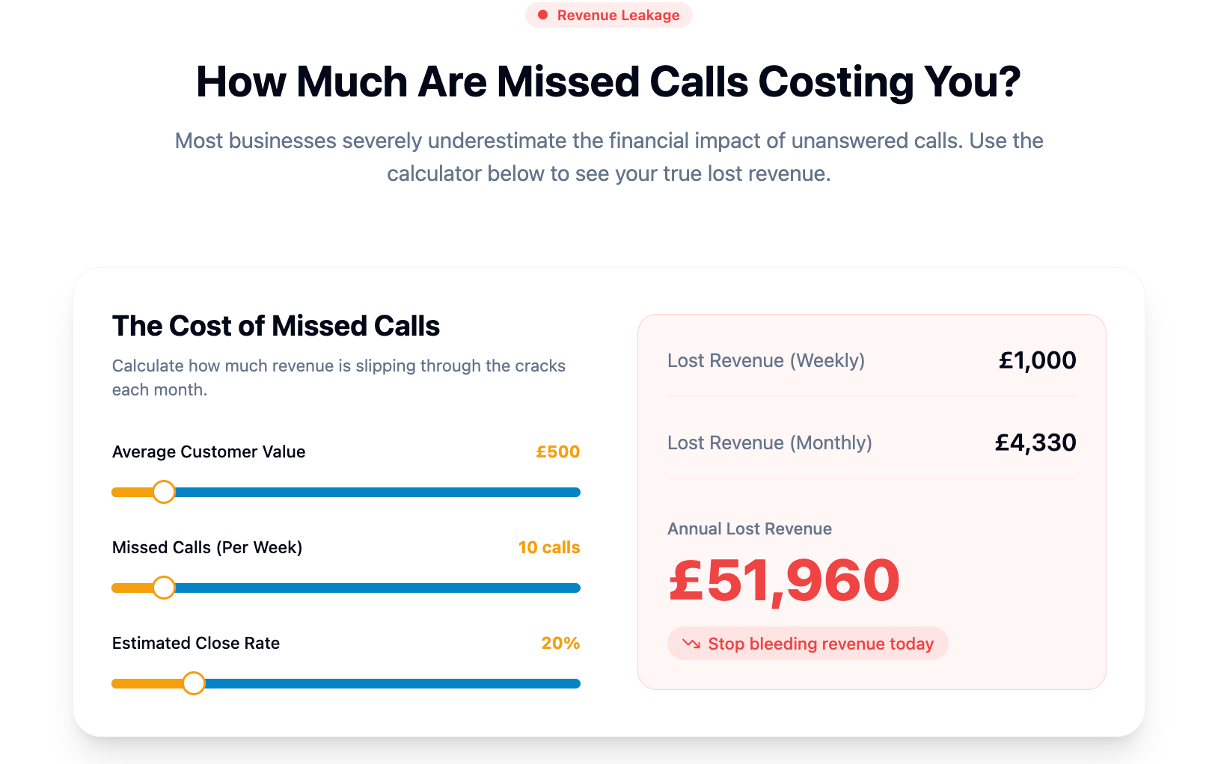
The AI receptionist runs across calls, SMS, website chat and social media from one unified inbox, with ongoing optimisation and technical support included rather than left to you after launch.
- Guided onboarding, workflow building and launch.
- Multichannel coverage so no enquiry or reply gets missed between systems.
- Support and optimisation included in subscription tiers.
If you want to see how this applies to your own booking volume and treatment mix, our Software Suite, Ultimate AI Suite and Elite AI Suite pages set out what's included at each level, or you can explore the feature set before booking a demo.
FAQ
What is the best way to reduce no-shows at an aesthetics clinic?
A staged sequence of at least two reminders, sent via SMS, voice or chat with a clear reply option, works better than a single reminder. A BMJ Open meta-analysis found multiple electronic notifications increase attendance from 54% to 67%.
How many appointment reminders should a clinic send?
Most evidence supports at least two: a mid-window reminder around five to seven days before the appointment, and a second closer to 24 to 48 hours out, with an optional same-day prompt for higher-risk slots. This staged approach reflects the multiple-notification advantage found in clinical research on attendance.
Are appointment reminder texts classed as marketing under PECR?
No, routine appointment reminders are service messages, not marketing, under ICO guidance. Review requests or promotional rebooking offers, however, usually need separate marketing consent.
What does Talk2Aiva cost for a clinic automating follow-up?
The service is available on plans with annual pricing detailed on the plans page, each including guided setup and ongoing support.
Can automated follow-up messages replace staff entirely?
No, automation handles routine confirmations, reminders and rescheduling, but replies involving complications, complaints or clinical questions should always route to a named staff member. NHS operational guidance stresses that a defined human escalation path is essential alongside any automated reminder system.
Sources
- Using digital notifications to improve attendance in clinic: systematic review and meta-analysis | BMJ Open
- Gov
- Electronic and telephone marketing | ICO