
Targeted automation, digitisation and delegation reclaim the most administrative time, and the fastest way to start is a two-week time log that reveals your single highest-volume repeatable task. Businesses that adopt basic automation for admin work can save roughly 122 hours per employee each year, and small pilots often pay for themselves within months rather than years.
TL;DR:
- Automating scheduling, templates, and document management can save up to 122 hours per employee annually, especially when piloted over 30 days with clear metrics.
- Mapping and redesigning workflows before automation reveals costless improvements like removing unnecessary approvals or batching tasks to boost efficiency.
- Matching the right tool category, such as scheduling or invoice automation, to the identified process bottleneck ensures effective implementation and support.
- Delegating decisions through clear thresholds and automated routing prevents owners from bottlenecking their own workflows, improving turnaround times and accuracy.
- Focusing on small, measured pilot projects within 90 days builds trust in automation, with SMEs typically seeing a payback within months and achieving 20 to 30 percent efficiency gains.
Table of Contents
- Quick wins: three high-impact actions to cut admin time this week
- Map and redesign the process before you automate
- Tools and tech categories that reduce admin (how to choose, not which brand)
- Delegation, organisation design and removing decision bottlenecks
- Measure impact: simple metrics and how to build the business case
- Evidence, compliance and practitioner pitfalls when automating
- A pragmatic 90 day plan for busy owners
- A guided option for service businesses drowning in enquiries
- Sources
- FAQ
Quick wins: three high-impact actions to cut admin time this week
The best quick wins share three traits: they happen often, they follow the same steps every time, and they need little judgement. Booking confirmations, invoice chasing and data entry from forms all qualify. If a task ticks all three boxes, it is a strong automation candidate.
Start with these actions:
- Automate scheduling: let a booking tool handle calendar invites and reminders instead of manual back-and-forth emails.
- Build standard templates: create reusable templates for quotes, follow-up emails and reports so nobody starts from a blank page.
- Centralise documents: move scattered files into one shared system so staff stop hunting across inboxes and folders.
Once you have picked a task, run a 30-day micro-pilot before rolling anything out further:
- Choose one team or process to trial the change.
- Track hours spent before and after using a simple spreadsheet.
- Note any errors or complaints that arise during the trial.
- Ask the team involved what felt slower or easier.
- Decide whether to scale, adjust or drop the change.
This structure keeps risk low. You are not betting the business on a new system, you are testing one task with a clear measurement window. A step-by-step marketing automation checklist offers a useful template for structuring this kind of pilot and measuring the result.
Map and redesign the process before you automate
Automating a broken process just makes the mess move faster. Before buying anything, map how the work actually happens today, not how it is supposed to happen. A two-week time log, where each team member notes what they did and how long it took, usually exposes the real bottlenecks within days.
Once you have that log, sketch a simple swimlane map: who touches the task, in what order, and where it waits. This often reveals redesign opportunities that cost nothing:
- Remove approval steps that rarely change the outcome.
- Batch similar tasks together instead of handling them one at a time.
- Cut handoffs between people or departments where possible.
Pro Tip: Map and redesign the process before you shop for tools, otherwise you risk automating a workaround that should have been deleted.
Managers often digitise an existing inefficient workflow rather than fixing it first, which locks in the same delays under a shinier interface. Process discovery costs nothing but a notepad and two weeks of honest logging, and it usually points straight at where automation will pay off fastest.

Tools and tech categories that reduce admin (how to choose, not which brand)
Match the tool category to the problem you found in your process map, not the other way round. The main categories worth knowing:
- Scheduling tools handle bookings, reminders and calendar sync automatically.
- AI receptionists answer calls, texts and web chats when your team cannot.
- CRM systems track leads and customer history in one place instead of scattered notes.
- Invoice automation generates, sends and chases payments without manual entry.
- Workflow automation moves tasks between people or systems based on rules you set.
When comparing options, run through a short checklist:
- Does it integrate with the systems you already use?
- What support is included once it is live, not just during setup?
- How does it handle data protection and access controls?
- Can your team use it without lengthy training?
- Is the pricing a flat fee, a subscription or usage-based?
For a one-off task, a pilot with an existing tool is usually cheaper. For an ongoing bottleneck, such as chatbot-driven lead handling, outsourcing the whole function to a managed service can save more owner time than building it yourself.
Delegation, organisation design and removing decision bottlenecks
Owners often bottleneck their own business by insisting on approving things that do not need their judgement. Fixing this is less about tools and more about who decides what.
- List every task that currently waits on your personal sign-off.
- Separate genuine owner-only decisions (contracts, large spend) from habit-based ones.
- Set clear thresholds, such as a spending limit, below which staff decide without asking.
- Route incoming queries to the right person automatically instead of everything landing in your inbox.
- Give new owners of a task a short checklist and review their first few attempts before stepping back.
Measuring delegated work is simple: track error rates and turnaround time for a month after handover. If both hold steady or improve, the delegation has worked.
Measure impact: simple metrics and how to build the business case
Before you scale anything, establish a baseline. Track hours spent on the target task before the change, then measure again after 30 and 90 days. Pair this with error rates and, where relevant, revenue recovered from faster response times.
| Metric | What it shows |
|---|---|
| Hours saved per week | Direct time reclaimed from the task |
| Error rate | Whether quality held up under the new process |
| Payback period | How long until savings cover the tool's cost |
Businesses that analyse their own operational data report higher odds of improved internal efficiency and cost savings, which is exactly what this kind of before-and-after tracking gives you. Present the numbers plainly to stakeholders: hours saved, cost of the tool, and the date the investment paid for itself.
Evidence, compliance and practitioner pitfalls when automating
Targeted automation projects can produce 20 to 30 percent operational efficiency gains in their first year, with SME pilots typically paying back within months. That upside comes with a catch: automation that touches personal data needs care from the start.
Fairness and data protection should be built into AI-driven admin processes from the design stage, including a DPIA where risk is high.
The ICO's guidance on fairness in the AI lifecycle makes this point directly. Keep a human reviewing outputs and a clear escalation route for anything the system gets wrong, otherwise automation can shift burden onto customers or staff instead of removing it.
A pragmatic 90 day plan for busy owners
Identify one task in week one, pilot it by week four, measure by week eight, and scale by day 90. Small, proven wins build the trust to tackle the next one.
— James Paul
A guided option for service businesses drowning in enquiries
If missed calls and slow follow-ups are your biggest admin drain, Talk2Aiva by SWASCO answers calls, texts and web chats around the clock, books appointments straight into your calendar and follows up on leads automatically. Setup, training and ongoing support are included, so you are not left configuring anything alone. Plans start at £970 a year with the Software Suite, scaling up to the Ultimate and Elite AI Suites for businesses that want more automation built in.
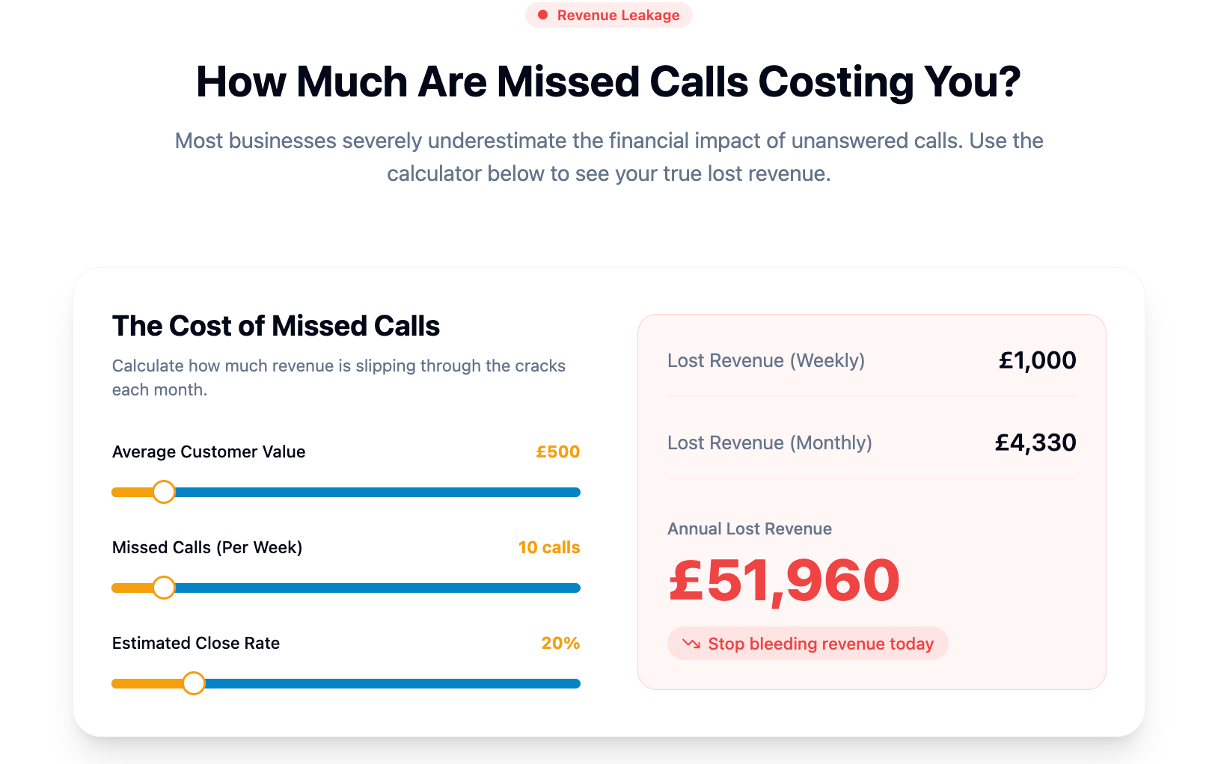
Check current plan details and see which suite fits your call volume on the Talk2Aiva pricing page.
Sources
- Business data use and productivity study (wave 2): statistical report
- Annex A: Fairness in the AI lifecycle | ICO
- Smedigital
FAQ
What is another way to say "reduce workload"?
Common alternatives include lightening the load, streamlining tasks, or cutting down on busywork. In a business context, people also say "lower the admin burden" or "simplify duties" to mean the same thing.
Is admin a low stress job?
Admin work is not inherently low stress, and heavy, repetitive workloads can raise pressure significantly when tasks pile up faster than they are cleared. Automating the highest-volume repeatable tasks, as covered above, is one of the most reliable ways to ease that pressure.
How to reduce administrative burden?
Map your current process first, then automate the highest-volume repeatable tasks such as scheduling or invoicing. Businesses using basic automation report reclaiming around 122 hours per employee yearly, and pairing that with clear delegation rules compounds the effect.
What does too much admin mean?
Too much admin means routine paperwork and coordination tasks are consuming time that should go toward serving customers or growing the business. It is usually a sign that repeatable tasks have never been mapped, automated or delegated properly.