
An AI receptionist screens price-focused enquiries by pairing a clear ideal customer profile with a small scoring model and a short, progressive question flow. Add one qualifying question and a booking trigger today, and you will start separating genuine buyers from tyre-kickers within days. Talk2Aiva builds this exact flow into its guided setup, so you are not starting from a blank page.
TL;DR:
- Leads with a score of 60 or above are booked automatically, while those between 30 and 59 are routed into nurturing sequences, and below 30 are politely disqualified.
- The scoring model prioritizes intent, customer profile fit, urgency, contactability, and discounts, with price flags reducing the score by up to 20 points.
- AI qualification flows should avoid asking about budget early, instead focusing on intent and fit through one-question-at-a-time interactions across channels.
- Follow-up communication must include explicit consent under PECR, requiring a clear opt-in for marketing messages, separate from transactional contacts.
- Performance is evaluated through metrics like qualified lead percentage, conversion rates, cost per lead, and no-show rates, with ongoing adjustments based on CRM feedback and results.
Table of Contents
- Why qualifying price shoppers protects your revenue
- What scoring model separates price shoppers from real buyers?
- How do you build qualifying flows for each channel?
- Staying PECR-compliant when you follow up with leads
- Which metrics prove your qualification flow is working?
- Spotting price shoppers without asking them outright
- How do you qualify leads without putting off good customers?
- Fitting AI qualification into your existing CRM and sales process
- Getting your team to trust the qualification flow
- Getting Talk2Aiva to build this for you
- Sources
- FAQ
Why qualifying price shoppers protects your revenue
Every unqualified appointment costs you the same slot a paying customer could have taken. A 30-minute consultation given to someone who was never going to book at your rate is not a neutral outcome. It is lost capacity, and in a service business with finite calendar space, that adds up fast.
Your ideal customer profile (ICP) is the primary filter. It defines who you actually want, by budget range, location, service type, or urgency, before you even look at price sensitivity. Everyone outside that profile gets handled differently from the start, regardless of how they ask about cost.
Three signals tend to flag a price-driven enquiry early:
- They ask "how much is it" before describing their actual need or timeline.
- They compare your price directly to a named competitor within the first message.
- They ask about discounts, package deals, or "best price" before booking anything.
None of these should trigger an automatic disqualification. They should trigger a follow-up question that tests fit against your ICP, not just their budget.
What scoring model separates price shoppers from real buyers?
A workable scoring model needs only four or five components, not an enterprise sales stack. Simplified frameworks for short sales cycles recommend treating ICP fit and urgency as the primary disqualifiers, dropping the heavier elements built for enterprise deals.
Here is a starting-point model you can copy directly:
- Intent (0 to 20 points): Do they describe a specific need or timeframe, rather than a vague "just checking prices" message?
- ICP fit (0 to 25 points): Do they match your service area, service type, and typical customer profile?
- Urgency (0 to 20 points): Are they looking to book this week, this month, or with no timeframe at all?
- Contactability (0 to 15 points): Have they given a working phone number or email, and responded to a follow-up?
- Price-sensitivity flags (subtract 10 to 20 points): Repeated discount requests or direct competitor price comparisons before any other question.
A lead scoring 60 or above gets booked straight into the calendar. Between 30 and 59, route them into a nurture sequence with helpful, low-pressure content. Below 30, disqualify politely and point them to self-serve pricing information.
Pro Tip: Run your first 50 to 100 scored leads before you touch the thresholds. Adjusting a scoring model on a handful of enquiries just bakes in noise, not insight.

How do you build qualifying flows for each channel?
Channel shapes the question order, but the underlying logic stays the same everywhere: one intent question first, then progressive profiling, never budget straight away. Practical AI qualification templates show that short, contextual flows asking one question at a time consistently produce better-qualified leads than long intake forms.
Phone script. The AI receptionist opens with "What can we help you with today?" rather than "What's your budget?". It follows with a service-specific fit question, then urgency ("When are you hoping to get this sorted?"), and only asks about price expectations once fit and urgency are established.
Website chat. Start with a single button choice ("Booking a service" vs "General question") to route intent instantly, then ask two follow-up questions before offering a calendar slot.
SMS qualifier. Keep it to one question per message. "Hi, thanks for reaching out! What service are you interested in?" works better than a five-question block that gets ignored.
Social DM flow. PIF style flows (Purpose, Interest, Fit) suit DMs well because they are quick and conversational, matching how people actually message on social platforms.
Routing rules stay consistent across every channel:
- High-scoring leads get an instant booking link, no human delay.
- Mid-scoring leads receive a consented follow-up with a helpful resource, not a hard sell.
- Low-scoring leads get a courteous message and a self-serve pricing page link.
Three integrations make this work in practice: calendar sync so booking happens inside the conversation, CRM field mapping so scores and answers land in the right record, and transcript storage so you can review edge cases later.
Pro Tip: Never ask about budget in the first two questions of any channel. It reads as transactional and pushes genuinely good leads away before you have shown them any value.
Staying PECR-compliant when you follow up with leads
Once a lead is scored and routed, how you contact them afterwards is a legal question, not just a courtesy one. Under PECR rules enforced by the ICO, electronic marketing requires specific, informed, affirmative consent. Pre-ticked boxes do not count.
A narrow soft opt-in exists, but it only covers existing customers who bought or negotiated to buy a similar product and were given a clear opt-out at the time. It does not extend to a brand-new enquiry, so most price-shopper follow-ups need explicit consent captured in the flow itself.
Build this into your qualification questions directly:
- Add a plain checkbox or spoken confirmation: "Can we text you updates about your enquiry?"
- Keep transactional messages (booking confirmations, appointment reminders) separate from marketing messages in your wording and your consent logic.
- Default to explicit opt-in for any nurture sequence rather than relying on the soft opt-in exception, which rarely applies to a first-time enquiry.
Which metrics prove your qualification flow is working?
Four numbers tell you whether the flow is earning its place: qualified leads as a share of total enquiries, conversion rate from qualified lead to booked appointment, cost per qualified lead, and no-show rate for booked slots.
Track these on a rolling basis, then test changes on a fixed cycle rather than tweaking constantly:
- Run each qualification variant (question order, wording, threshold) for a 30 to 90 day cycle before judging results.
- Compare conversion rate and no-show rate between variants, not just raw enquiry volume.
- Feed closed-won outcomes from your CRM back into the scoring model. Connecting CRM outcomes to AI systems shifts optimisation from surface actions like form fills toward actual revenue, which is the only metric that matters long-term.
If a scoring component never predicts a closed-won deal, drop it. A scoring model with five active variables should stay under review every quarter, not left untouched for a year.
Spotting price shoppers without asking them outright
Direct questions tell you plenty, but behaviour tells you more, and it does so before the person has said a word about cost. Response speed is one of the clearest tells: someone who replies within minutes to every message across multiple providers is often running a parallel comparison, not committing to a decision.
Message pattern matters too. A prospect who copies the same question verbatim to your enquiry form, your phone line, and your social DMs within the same hour is shopping broadly, not researching you specifically. Contrast that with someone who references something specific from your website or a past interaction. That level of detail signals genuine interest.
Timing offers another signal. Enquiries that arrive in clusters right after a competitor runs a sale or publishes new pricing often carry more price sensitivity than organic, steady-flow enquiries. If your CRM logs referral source and enquiry timestamp, you can spot this pattern within a few months of data.
Purchase history, where you have it, is the strongest signal of all. A returning customer asking about price is usually negotiating loyalty, not shopping cold. A brand-new contact asking the identical question carries a different weight entirely. Build this distinction into your scoring model as a modifier rather than a separate question, since it draws on data you already hold rather than anything you need to ask.
None of these signals should stand alone. Combine two or three, and the pattern becomes far more reliable than any single flag.

How do you qualify leads without putting off good customers?
The risk with any qualification flow is treating every enquiry like a suspect. Ask too many questions, or ask the wrong one too early, and you lose people who would have booked happily if you had just let them.
Keep the flow to three or four questions before offering any next step. Short, high-signal qualification consistently outperforms longer intake processes, because most people abandon a form or a chat that feels like an interrogation.
Frame questions around helping, not screening. "What service are you looking for, so we can point you to the right specialist?" gathers the same information as "Are you our target customer?" but reads completely differently to the person answering it.
Give every enquiry a path forward, even a low-scoring one. A polite response with a self-serve pricing page or a link to book a lower-cost entry service keeps the door open without wasting a full consultation slot. Some of the strongest long-term customers start as a modest first booking, not a big-ticket enquiry.
Watch your abandonment rate on the qualification flow itself. If a large share of people drop out after question two, that question is doing more harm than the leads it filters out are worth. Test removing it before you assume the flow is working as intended.
Fitting AI qualification into your existing CRM and sales process
The qualification flow only earns its keep once its output lands somewhere useful. That means every score, answer, and consent flag needs a home in your CRM, mapped to fields your team already checks daily rather than a separate tool nobody opens.
Set up field mapping so intent, ICP fit, and urgency scores populate as custom fields on the contact record, visible the moment a team member opens it. Booked appointments should carry their qualification score into the calendar entry itself, so whoever runs the consultation walks in already knowing whether they are speaking to a strong-fit lead or a price-conscious one who needs a different pitch.
Transcript storage matters here too. Keeping the full qualification conversation attached to the CRM record lets staff review exactly what was asked and answered, rather than relying on a single score with no context behind it.
Closed-won and closed-lost outcomes need to flow back into the scoring model, not just sit in a sales report. Linking CRM data to AI optimisation improves lead quality over time because the system starts learning which combinations of signals actually convert, rather than which ones simply looked promising on paper.
Getting your team to trust the qualification flow
Expect a bedding-in period. The most common mistake is over-asking, piling five or six questions into the first exchange because it feels thorough. It rarely converts better; it just drives people away before you learn anything useful about them.
Asking for budget too soon is a close second mistake, and log every transcript from day one so you can review edge cases and retrain the flow with real examples, not guesswork. Early wins, even a handful of well-qualified bookings in the first fortnight, do more to win staff buy-in than any explanation of the scoring logic. Keep a human reviewing borderline scores for the first few months; edge cases are where the model learns fastest.
— James Paul
Getting Talk2Aiva to build this for you
There are other ways to build a qualification flow, hiring a developer, stitching together separate chatbot and CRM tools, or running it manually through a receptionist. Talk2Aiva gives service SMEs a guided route to the same result, without the DIY setup or fragmented tech stack those other routes usually involve.
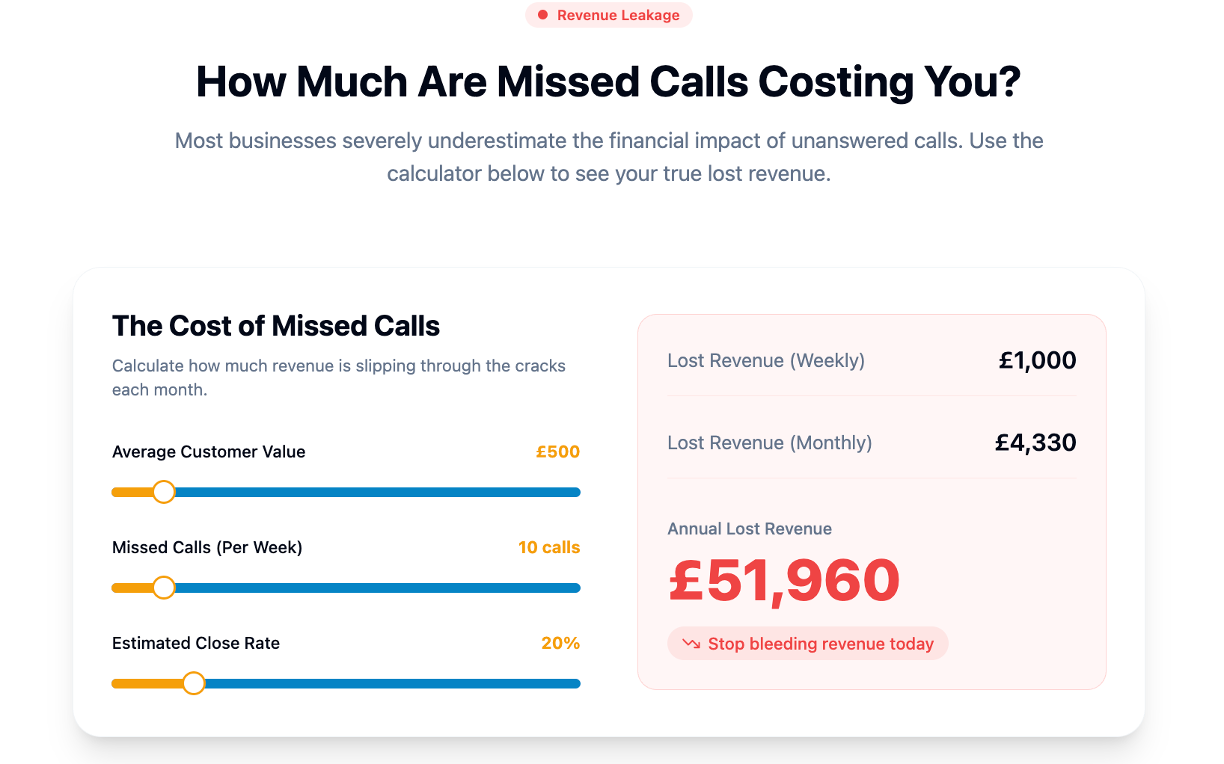
Every part of the flow described in this guide, the scoring thresholds, the channel templates for phone, chat, SMS and social DMs, the consent capture wording, and the calendar and CRM integration, is built into onboarding rather than left for you to configure. Talk2Aiva's team handles AI training, workflow building, live launch, and ongoing optimisation, so the qualification logic keeps improving as real enquiries come through, not just at setup.
Plans run through the Software Suite, Ultimate AI Suite, and Elite AI Suite, each including the setup and support needed to get a qualification flow live rather than sitting half-built in a settings panel. If missed calls and unscreened price enquiries are costing you booked appointments, request a demo and see the flow built around your own ICP before you commit to anything.
FAQ
What does it mean to qualify price shoppers?
It means screening enquiries that are primarily motivated by cost, using a mix of scoring criteria and progressive questions, so only leads matching your ICP and showing genuine intent reach your calendar. An AI receptionist automates this screening across phone, chat, SMS, and social channels.
What is a good starting score threshold for booking a lead?
A score of 60 or above is a reasonable starting threshold for automatic booking, with 30 to 59 routed to nurture and anything below 30 disqualified. Simplified qualification frameworks support keeping the model to a handful of weighted components rather than a complex enterprise scorecard.
Can I ask about budget in the first message?
Asking about budget too early tends to push away consumer and SMB leads before they have engaged with your service. Progressive profiling guidance recommends leaving budget questions until later in the flow, once intent and fit are already established.
Do I need consent before texting a qualified lead?
Yes. Under PECR rules, marketing texts and emails require specific, affirmative consent captured at the point of enquiry, and the soft opt-in exception only applies to existing customers under narrow conditions.
How much does Talk2Aiva cost?
Talk2Aiva runs on three plans: the Software Suite at £970 per year, Ultimate AI Suite at £2970 per year, and Elite AI Suite at £4970 per year, each bundling setup, onboarding, and ongoing support.