
Qualify leads by SMS with an immediate, consented two-way sequence that asks 2 to 4 routing questions and passes hot leads straight into your CRM. Done properly, this beats email and web forms on speed and response rate, and it works around the clock. Get the consent right under PECR, keep the questions short, and route by confidence. That's the whole method, and Talk2Aiva builds it for you.
TL;DR:
- SMS qualification responds faster than email or web forms, with most replies arriving within minutes, boosting response rates during the critical initial contact window.
- Validating consent at the moment of interaction through explicit opt-in points prevents compliance issues and ensures all texts are legally supported under PECR.
- Triggering SMS flows immediately after key events, such as form submissions or missed calls, guarantees timely engagement and filters out unqualified leads before they lose interest.
- Automated escalation rules based on reply content improve routing accuracy by alerting reps to urgent leads or dismissing unrelated inquiries, saving time and increasing sales efficiency.
- Using Talk2Aiva simplifies setup by consolidating scripting, CRM logging, and compliance support into one platform, eliminating the need to build disconnected tools or worry about regulatory pitfalls.
Table of Contents
- Why SMS works for qualifying leads
- Where and how to capture compliant SMS opt-ins
- When to trigger an SMS qualification flow and how to design it
- Sample SMS questions and short scripts you can use
- Integrations and CRM logging: what to record and how to route
- UK compliance checklist: PECR, opt-in, opt-out and records
- Worked example: using Talk2Aiva to run SMS qualification
- When SMS qualification wins, and when to use a different approach
- Get SMS qualification running without building it yourself
- Sources
- FAQ
Why SMS works for qualifying leads
Speed decides most deals before a salesperson even picks up the phone. A lead who fills in a form at 9pm and hears nothing until the next afternoon has usually already messaged three competitors. SMS closes that gap because people read texts almost immediately, and they reply while the enquiry is still fresh in their mind.
Ofcom's research into business text messaging found that recipients treat SMS as a legitimate channel for confirmations and notifications, often trusting it more readily than messaging apps for this kind of exchange. That trust matters for lead qualification, because a prospect who believes the message is genuine is far more likely to answer honestly.
There's a behavioural reason behind this too. Email sits in a queue competing with dozens of other messages. A text arrives with a notification banner, gets read within minutes, and creates a small social pressure to respond, the same instinct that makes you reply to a friend's message before you finish your coffee. That instinct is exactly what surfaces genuine intent: someone who replies "yes, this week" to a timing question has told you more in four words than a lead-scoring model infers from three page visits and a downloaded brochure.
Static lead scoring still has its place for large volumes of low-touch traffic. But conversational qualification wins whenever the answer to "are they ready now?" actually changes what your sales team does next. A few practical advantages stack up in SMS's favour:
- Response speed: most replies land within minutes rather than hours, unlike email threads that stretch across a working day.
- Higher completion rates: a two-question SMS thread rarely gets abandoned halfway, unlike long web forms.
- Lower cost per qualified lead: no landing page redesign, no A/B testing infrastructure, just a script and a number.
- Works outside office hours: leads who enquire at 10pm get engaged immediately instead of going cold overnight.
Pro Tip: If you only have budget to fix one channel this quarter, fix the first five minutes after a lead arrives. Ofcom's data suggests recipients associate SMS with time-sensitive, trustworthy communication, so a fast, well-worded text does more qualifying work than a slow, polished email.
Where and how to capture compliant SMS opt-ins
You cannot qualify a lead by SMS if you never legally captured their number for that purpose. Consent has to come first, and it has to be specific to text marketing, not buried inside a generic terms-and-conditions tick box.
The strongest capture points sit at moments when a prospect is already actively engaging:
- Web forms with an explicit SMS checkbox — never pre-ticked, and worded so the person knows exactly what they're agreeing to receive.
- Checkout or booking confirmation screens, where a customer completing a purchase or appointment can opt in to text updates about that specific transaction.
- Click-to-text buttons on your website or Google Business listing, which count as the prospect initiating contact, a cleaner consent path than any form.
- Missed-call-to-SMS triggers, where a call that goes unanswered automatically fires a text inviting the caller to continue by message.
- QR codes and keyword opt-ins at events, on print materials, or in-store, where texting a keyword like "QUOTE" to a shortcode is itself the consent action.
Under PECR, marketing texts to individuals require explicit prior consent, with a narrower soft opt-in exception for people who are already your customers and were given a clear chance to decline at the point of sale. Your opt-in wording should look something like: "Tick here to receive text updates about your enquiry from [Business Name]. Reply STOP anytime to opt out." No pre-ticked boxes, no vague "communications" language that could mean anything.
Operationally, keep one source of truth for consent status, ideally inside your CRM, so a lead who opts out through one channel doesn't keep getting texted through another. Maintain a live suppression list and check every outbound campaign against it before sending. And never buy or rent a contact list for SMS marketing; platform guidance across the industry is consistent that purchased lists and marketing SMS are a bad mix, because you have no evidence of consent and no relationship to fall back on if someone complains.
For a fuller walkthrough of consent capture and the exact form language that holds up under scrutiny, see this breakdown of GDPR SMS consent steps for UK SMEs.
When to trigger an SMS qualification flow and how to design it
Timing decides whether your qualification text feels helpful or feels like spam. Trigger the flow the moment intent is signalled, not hours later once someone's attention has moved elsewhere.
The four events worth automating a trigger around, as part of a comprehensive lead nurturing explained strategy, are:
- Form submission — the lead has just told you they're interested; text within seconds if legally consented at that point.
- Demo or consultation booking — confirm the slot and ask one qualifying question before the call even happens.
- Missed call — someone tried to reach you and got nothing; a text within a minute recovers that enquiry before they call a competitor.
- Ad click through to a landing page — high-intent traffic that converts far better when engaged immediately rather than dropped into a nurture sequence three days later.
Once triggered, the flow itself should follow a simple shape: opener, then routing questions, then a confidence check, then a decision. The opener identifies who's texting and why ("Hi, it's Sam from [Business] following up on your enquiry"). The routing questions, 2 to 4 of them, gather only what changes the outcome: timing, service required, budget band, decision-maker status. The confidence check is where automation decides what happens next based on the answers received.
Escalation should follow clear rules rather than a human scanning every thread:
- Any reply signalling urgent timing ("this week", "ASAP") escalates immediately to a live rep with a CRM alert.
- Vague or incomplete answers after two follow-up attempts get tagged "needs clarification" and routed to a lower-priority queue.
- A reply indicating no budget or wrong service fit gets tagged "not a fit" and closed out, saving a rep's time entirely.
- Silence after 24 to 48 hours triggers one gentle nudge text before the lead moves to a longer nurture cadence.
The point of building this as a flow rather than a single blast message is that each answer should genuinely change the next step. Ask a question, get an answer, act on it. If a question's answer never changes your routing decision, cut the question. Automated workflows triggered immediately after a lead event and run continuously tend to filter out the noise fastest, surfacing genuinely hot leads with full context attached rather than leaving reps to guess from a name and a phone number.
Sample SMS questions and short scripts you can use
Every SMS question you write should do one job: move the lead closer to a routing decision. If a question doesn't change what happens next, delete it. Keep each message under 160 characters where you can, use plain language, and always make it obvious who's texting.
A few working principles before the scripts:
- Ask one thing per message rather than stacking three questions into a single text, which people tend to answer only partially.
- Use closed or short-answer questions ("Are you looking to start this month, or later?") rather than open-ended ones that invite an essay reply.
- Always identify your business by name in the first message of any new thread.
- Include an opt-out line ("Reply STOP to opt out") on the first marketing-style message in every conversation.
For B2B SaaS: "Hi [Name], it's [Rep] from [Company]. Thanks for booking a demo. Quick one first: are you evaluating this for your own team, or comparing options for a wider rollout?"
For property and home services: "Hi, thanks for your enquiry about [service]. What's the postcode for the job, and roughly when are you hoping to get this done?"
For appointment-based businesses: "Hi [Name], we've got your booking request for [service]. Do mornings or afternoons work better for you this week?"
Pro Tip: Write your opener and your opt-out line once, then reuse them across every flow. Consistency here builds recognition, and a lead who's seen your sender name before is far more likely to reply to the second text than the first.
Integrations and CRM logging: what to record and how to route
A qualification text that never reaches your CRM is a wasted conversation. The value of SMS qualification comes from what happens after the reply, not the reply itself.
Three integrations matter most: your CRM, so every answer writes back to the right contact record in real time; your calendar or booking system, so a qualified lead can move straight to a slot without a rep manually checking availability; and your inbox or suppression list, so opt-outs and existing conversations stay in sync across every channel you use.
What you log from each thread should stay minimal but complete:
- The actual answers given to each routing question, not a summary written after the fact.
- A confidence or intent score attached to the lead, updated as the conversation develops.
- The full message transcript, timestamped, for context if a human rep needs to pick up the thread.
- The source of the lead (which form, ad, or trigger started the conversation) so you can measure which channels produce leads worth pursuing.
Routing rules then decide who sees what, and in what order. Hot leads with high confidence scores should surface at the top of a rep's dashboard automatically, not sit in the same queue as a cold enquiry from three weeks ago. Sales and ops teams that build this kind of lead routing automation into their dashboard find reps spend less time triaging and more time actually selling, because the software has already done the sorting. For teams building this from scratch, instant lead qualification workflows that write directly to CRM fields tend to outperform anything relying on a rep to manually copy answers across systems.
UK compliance checklist: PECR, opt-in, opt-out and records
Getting the compliance wrong doesn't just risk a fine, it damages the trust that makes SMS qualification work in the first place. The rules aren't complicated, but they do need to be built into your process rather than bolted on afterwards.
- Confirm the lawful basis for texting. Individuals need explicit prior consent under PECR; existing customers may qualify for the narrower soft opt-in if they were given a clear chance to decline marketing at the point their details were collected.
- Identify your business in every message. A text that doesn't say who it's from, even a qualification message, undermines the trust that makes recipients willing to answer honestly.
- Include an opt-out on every marketing message. "Reply STOP" is the standard, and it needs to actually work the moment someone sends it, not after a delay.
- Handle opt-outs immediately. The ICO expects opt-out requests processed promptly, not batched into a weekly clean-up job.
- Keep records. Log when and how consent was given for every contact, and be able to produce that record if asked. This matters more than most businesses assume, because the burden of proof for lawful consent sits with you, not the recipient.
- Maintain a single suppression list. Every campaign and every automated flow should check against it before a message goes out.
Platforms built for UK SMS marketing generally support this by providing real UK numbers, automatic STOP handling and suppression lists as standard features rather than optional add-ons, which removes a large chunk of the compliance risk from manual process. Building a compact checklist like this into onboarding, rather than treating it as a legal afterthought, tends to prevent the deliverability and legal problems that surface months later when a business scales its texting volume without ever revisiting its consent records.
Worked example: using Talk2Aiva to run SMS qualification
Talk2Aiva runs the workflow described above without requiring you to stitch together a form tool, a texting platform, and a CRM integration yourself. It engages a new lead by text the moment they enquire, whether that's a form submission, a missed call, or a booking request, and runs a scripted 2 to 4 question sequence built around your specific routing logic.
Every answer writes back to your CRM in real time, along with a full transcript and a confidence tag, so a rep opening their dashboard sees exactly who's ready to book and who needs a nudge first. Calendar booking happens inside the same conversation when a lead confirms they're ready, no separate scheduling step required.

For a small team without a dedicated ops person, the value sits less in the automation itself and more in the guided setup: someone builds the flow, tests it against your actual enquiry types, and adjusts it as replies come in. When evaluating any vendor for this kind of system, ask directly how they handle consent records, what gets logged from each conversation, and what the handoff to a human rep looks like when a lead needs one.
When SMS qualification wins, and when to use a different approach
SMS earns its place with service businesses, time-sensitive enquiries, and mobile-first audiences, tradespeople, clinics, salons, anyone whose customers expect a fast reply and check their phone more than their inbox. It struggles where the audience skews toward desk-based professional buyers who treat email as the default record of a conversation, or where the enquiry genuinely needs a long-form explanation that a 160-character message can't carry.
Regulatory context matters too: B2B contacts fall under slightly different rules than individual consumers, so check which category your leads sit in before assuming the same consent approach applies everywhere. A rough decision checklist: choose SMS when speed matters and the questions are short; choose email when the answer requires documentation or attachments; choose phone when the deal size justifies a human conversation from the first contact; choose in-app messaging when the lead is already inside your product and expects continuity there rather than a channel switch.
— James Paul
Get SMS qualification running without building it yourself
Most businesses that try to build this themselves end up with three disconnected tools, a texting platform, a form, and a CRM, none of which talk to each other properly. Talk2Aiva gives you the whole workflow in one place: guided setup of your qualification script, 24/7 engagement so no lead waits until office hours, CRM and calendar integration that logs every answer automatically, and compliance support built into onboarding rather than left for you to figure out.
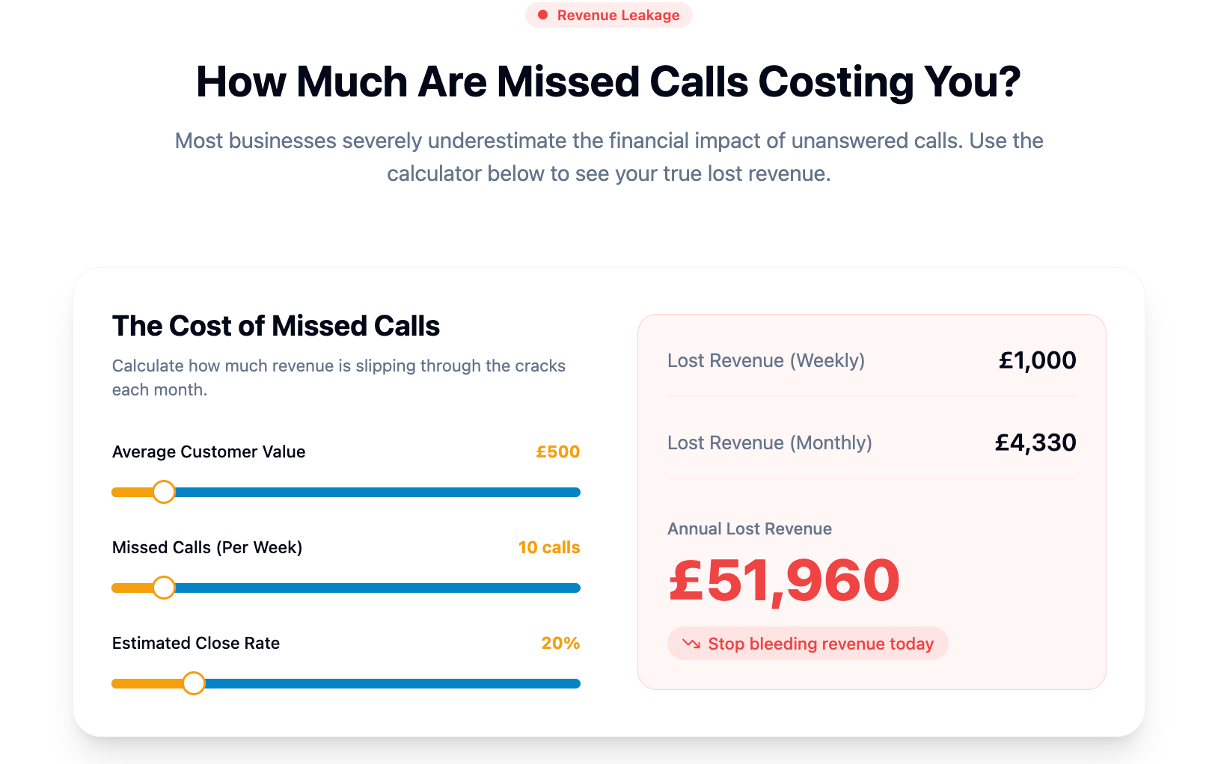
If you're comparing options, ask any vendor three things during a demo: how they handle consent records and suppression lists, what data gets logged from each SMS conversation, and what the support arrangement looks like once you're live. Talk2Aiva includes ongoing technical support and optimisation with every subscription, so the flow keeps improving as real replies come in rather than sitting static after launch. Plans start with the Software Suite at £970 per year, with the Ultimate AI Suite and Elite AI Suite available for teams needing broader automation across calls, chat, and social alongside SMS. Book a look at how it fits your enquiry volume before your next missed call becomes a missed sale.
Sources
For the legal detail behind everything above, the ICO's PECR guidance is the primary UK reference. Ofcom's A2P recipient research covers how UK recipients actually respond to business texting.
- A2P message recipient research report | Ofcom
FAQ
How do you generate qualified leads with SMS?
Trigger a text within minutes of a lead event, form submission, missed call, or booking, then ask 2 to 4 short routing questions that determine timing, need, and fit. Route replies straight to your CRM so reps only spend time on leads that show real intent.
Is SMS marketing illegal in the UK?
No, but it's tightly regulated. PECR requires explicit prior consent for marketing texts to individuals, with a soft opt-in exception for existing customers, and every message needs a clear opt-out.
Is SMS getting phased out as a business channel?
No. Ofcom's recipient research found people still view A2P SMS as a trusted channel for confirmations and notifications, often more so than newer messaging apps for business communication.
Which CRM has built-in SMS for lead qualification?
Many mainstream CRMs offer SMS add-ons or integrations, but the quality varies in how well they support conversational routing rather than simple broadcast texting. Talk2Aiva builds SMS qualification directly into its workflow, logging every reply and confidence score back to your CRM without a separate integration step.
What should the first SMS in a qualification flow say?
Identify your business by name, reference the enquiry that triggered the text, and ask a single, short question. Something like: "Hi, it's [Name] from [Business] following up on your enquiry. Are you looking to get started this month, or later on?"