
Managing properties manually is expensive, error-prone, and frankly unsustainable at scale. Between chasing rent payments, coordinating maintenance, and keeping tenants informed, the administrative burden alone can consume hours every day. Property management automation examples are multiplying fast in 2026, and the landlords and managers who act on them are pulling ahead. This guide covers the most practical, proven automation workflows available today, from billing and tenant communications to financial close and vendor management, so you can identify exactly where to start.
Table of Contents
- Key takeaways
- Property management automation examples: where to start
- 1. Automated rent invoicing and billing
- 2. AI-powered payment reconciliation
- 3. Automated lease renewal notifications
- 4. Tenant portal and maintenance request routing
- 5. Automated vendor bill capture and approval
- 6. Real-time portfolio dashboards and financial reporting
- 7. Centralised automation platforms
- 8. AI for tenant screening and risk identification
- My honest take on automation in property management
- Ready to automate your property management workflows?
- FAQ
Key takeaways
| Point | Details |
|---|---|
| Map workflows before buying tools | Identify repeatable, admin-heavy tasks first so automation delivers measurable impact from day one. |
| Billing automation pays back fastest | Automated invoicing, late fees, and reconciliation reduce errors and recover lost revenue quickly. |
| Tenant-facing automation lifts satisfaction | Portals, maintenance routing, and lease renewal alerts reduce complaints and improve retention. |
| AI cuts financial close time significantly | AI-powered transaction matching can reduce reconciliation effort by 50 to 70 per cent. |
| Centralised platforms beat fragmented tools | One connected system replaces multiple disconnected tools and gives your whole team real-time visibility. |
Property management automation examples: where to start
Before you buy a single piece of software, you need to map your workflows. Mapping repeatable touchpoints before tool selection is the single most important step, because it focuses your investment on processes that actually hurt your business right now.
Start by listing every task your team performs more than once a week. Rent reminders, maintenance follow-ups, invoice generation, lease renewal notices — these are your automation targets. Then score each one on two dimensions: how often it happens, and how much revenue or tenant satisfaction it affects when it goes wrong.
When evaluating automation tools for property management, look for:
- Integration capability. Can the tool connect to your accounting software, CRM, and tenant portal without custom development?
- Scalability. Will it handle 10 properties as easily as 100?
- Ease of use. Can your team configure workflows without a developer on call?
- Tenant experience impact. Does it make life easier for tenants, or just for you?
Low-code and no-code platforms deserve serious attention here. They let you build and modify workflows without writing a single line of code, which means faster deployment and easier adjustments as your portfolio grows.
Pro Tip: Start with tenant-facing and billing automations. They produce the fastest return on investment because they directly affect cash flow and tenant retention, the two things that matter most to your bottom line.
1. Automated rent invoicing and billing
Billing is the single most automatable workflow in property management, and the gains are immediate. Recurring invoicing in NetSuite posts charges to accounts receivable and emails tenants on schedule, with zero manual entry required. Lease terms drive the schedule, so when a lease changes, the billing updates automatically.
The practical impact is significant. Your team stops spending time generating invoices manually. Tenants receive consistent, professional communications. And because the system handles the timing, nothing falls through the cracks during busy periods.
Key billing automations to implement:
- Recurring charge generation based on lease start dates and payment schedules
- Automatic late fee application after the grace period expires, without anyone needing to remember
- Payment posting to the general ledger without manual reconciliation
- Owner statement generation on a fixed monthly schedule
Pro Tip: Set up customised payment reminder notifications at 7 days, 3 days, and 1 day before the due date. Landlords who use tiered reminders consistently report fewer late payments than those who send a single notice.
2. AI-powered payment reconciliation
Manual bank reconciliation is one of the most time-consuming tasks in property finance. AI changes that dramatically. AI-powered transaction matching reduces manual reconciliation effort by 50 to 70 per cent, with tools like NetSuite's Intelligent Close Manager using generative AI to match bank transactions to ledger entries automatically.

What this means in practice: your finance team spends less time hunting for discrepancies and more time analysing the numbers that actually drive decisions. Reconciliation that once took days can complete in hours.
The reliability of these systems has improved considerably. Structured output formats like JSON, combined with error-handling logic and logging for invalid entries, keep AI automation reliable even when processing thousands of transactions. You get speed without sacrificing accuracy.
3. Automated lease renewal notifications
Lease expiry is a revenue risk. Every day a property sits vacant between tenants costs you money. The good news is that the entire renewal process can be automated, from the first alert to the final signed document.
NetSuite SuiteFlow triggers alerts at 120, 90, 60, and 30 days before lease expiry, sending notifications to both the tenant and the property manager with relevant market data and renewal offer templates attached. Nothing is left to memory or a spreadsheet reminder.
This kind of property management workflow automation also reduces the awkward gap where a tenant is unsure whether to renew or start looking elsewhere. Early, professional communication signals that you value them as a tenant, which directly improves retention rates.
4. Tenant portal and maintenance request routing
A self-service tenant portal is one of the highest-impact automation tools for property management. When tenants can log maintenance requests, pay rent, view their lease, and check the status of open issues without calling your office, your team's inbound workload drops sharply.
No-code platforms like WeWeb let you build branded portals connected to payment processors like Stripe, with maintenance request intake that routes jobs automatically by category and preferred vendor. A boiler fault goes to your heating contractor. A broken window goes to your glazier. No manual triage required.
The automation extends further:
- Photo uploads attached to maintenance requests give contractors the context they need before they arrive
- Status update notifications keep tenants informed without your team sending individual messages
- Lease document storage gives tenants access to their agreements on demand
- Digital signing removes the need for in-person or postal document exchange
"Nearly every touchpoint in the tenant journey can be automated, including messaging, scheduling, e-signatures, and team coordination. The question is not whether to automate, but where to begin."
You can explore how to automate rental application screening as a natural extension of tenant portal automation, covering the period before a tenancy even begins.
5. Automated vendor bill capture and approval
Vendor invoices are a notorious source of manual effort and payment errors. AI-powered optical character recognition (OCR) scanning extracts data from supplier invoices automatically, populating your accounting system without anyone typing a single figure.
Once captured, the bill moves through an automated approval workflow. The right person receives a notification, reviews the invoice, approves it, and the payment is scheduled. No paper trail. No chasing signatures. No missed payment dates.
NetSuite's real estate ERP combines automated billing, lease administration, and financial reporting in one system, which means vendor payments and property income flow into the same consolidated view. That level of integration makes portfolio-wide financial decisions considerably easier.
Pro Tip: Set approval thresholds so that routine invoices below a set value are auto-approved and paid, while larger or unusual bills route to a senior manager. This removes bottlenecks without sacrificing control.
6. Real-time portfolio dashboards and financial reporting
Static monthly reports are a relic. Property managers who rely on them are always making decisions based on last month's data. Automated dashboards give you live visibility into cash flow, occupancy rates, maintenance spend, and key performance indicators across your entire portfolio.
The best examples of property management software in this category pull data from multiple sources simultaneously. Rent payments, maintenance costs, vacancy rates, and lease expiry dates all appear in one view, updated in real time. You spot a cash flow issue before it becomes a crisis, not after.
Compliance reporting benefits too. Lease accounting standards require specific disclosures, and automated financial close tools generate the necessary reports without your team assembling spreadsheets manually at quarter end.
| Automation type | Manual time saved | Key benefit |
|---|---|---|
| Recurring invoicing | 3 to 5 hours per week | Consistent cash flow, fewer errors |
| Bank reconciliation (AI) | 50 to 70% reduction | Faster close, higher accuracy |
| Vendor bill capture (OCR) | 2 to 4 hours per week | Fewer payment errors, audit trail |
| Portfolio dashboard | Daily reporting time | Real-time decisions, early issue detection |
| Lease renewal alerts | 1 to 2 hours per week | Lower vacancy rates, better retention |
7. Centralised automation platforms
Fragmented tools are the enemy of efficient property management. When your billing software does not talk to your maintenance system, and your maintenance system does not connect to your tenant portal, your team spends hours reconciling data between platforms.
Centralised platforms that integrate everyone from the portfolio owner to individual contractors into one hub replace this fragmentation entirely. The result is radical transparency. Every team member sees the same data. Issues are spotted and resolved faster. Decisions are based on facts, not guesswork.
Virtually every repetitive task in property management can be automated when you have the right platform in place. The goal is to buy back your team's time for activities that genuinely require human judgement: negotiating with tenants, evaluating acquisitions, managing complex disputes.
8. AI for tenant screening and risk identification
Tenant screening is time-consuming and high-stakes. AI tools can process applications, cross-reference credit data, verify references, and flag risk factors in minutes rather than days. This does not replace your judgement. It informs it, faster.
The best property management workflow automation in this area routes low-risk applications through quickly, while flagging borderline cases for human review. You spend your time on the decisions that genuinely need you, not on processing straightforward applications. Understanding how lost rental leads accumulate during slow screening processes shows exactly why speed matters here.
For AI-driven screening to work reliably at scale, the underlying workflows need structured outputs and explicit error handling. Zero JSON parsing errors in production AI workflows are achievable when you enforce structured formats and log exceptions for manual review. Reliability is not optional when tenant decisions are involved.
My honest take on automation in property management
I've spent years watching property managers invest in automation and get wildly different results. The ones who struggle share a common pattern: they buy tools before they understand their workflows. They end up with three systems that partially overlap, none of which talk to each other properly, and a team that has lost confidence in all of them.
The managers who get real value from automation do something different. They start small. They pick one painful, repetitive process, automate it properly, and measure the result. Then they expand. Billing automation almost always comes first because the ROI is immediate and visible. Tenant communications come next because the impact on satisfaction is undeniable.
What I've learned is that automation does not replace good property management. It amplifies it. When your team is not buried in manual invoicing and maintenance triage, they have the capacity to build genuine relationships with tenants, spot problems early, and focus on growing the portfolio. That is where the real value lies.
The uncomfortable truth is that most landlords are still leaving significant money on the table by not automating their tenant communications. Missed calls, slow responses to enquiries, and unmanaged follow-ups cost far more than any software subscription. The technology to fix this exists and it is not complicated to implement.
— James Paul
Ready to automate your property management workflows?
If you are managing properties and still relying on manual processes to handle tenant enquiries, rent reminders, and follow-ups, you are losing revenue every day. Talk2Aiva by SWASCO helps property managers and landlords automate the conversations that drive occupancy: instant responses to enquiries, 24/7 lead qualification, appointment booking, and follow-up sequences across calls, text, and web chat.
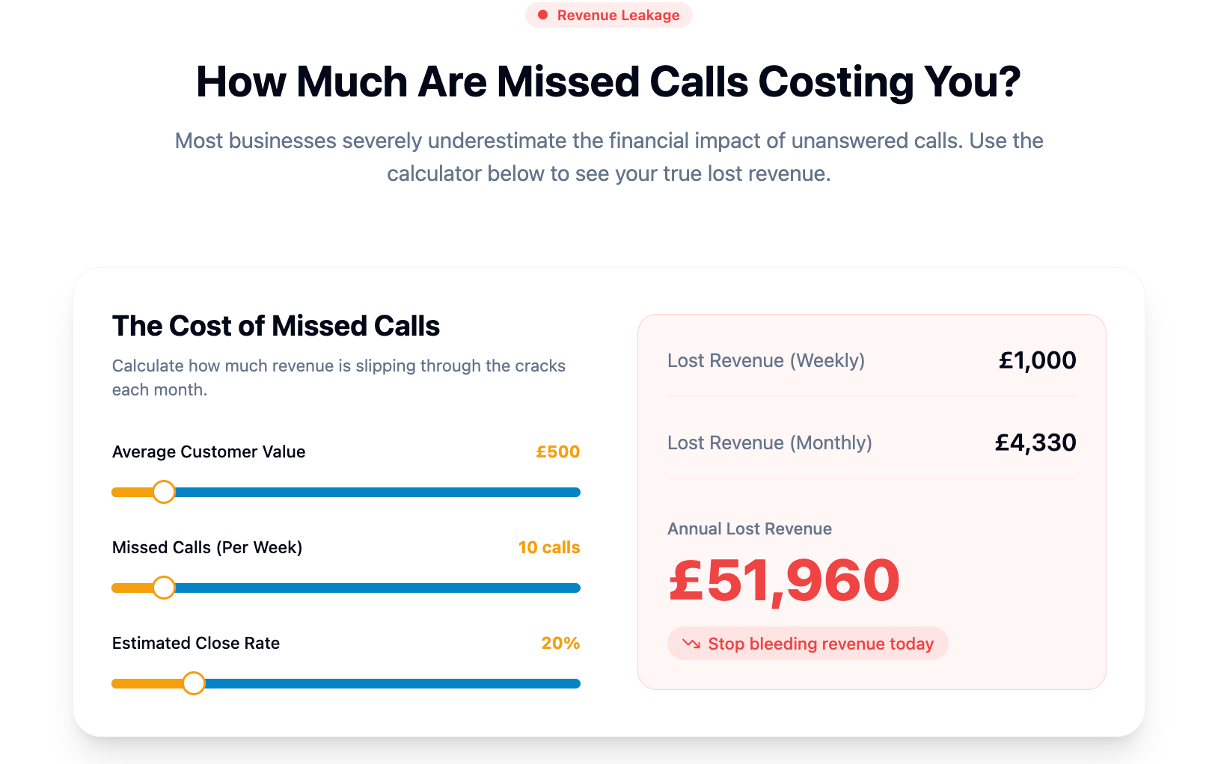
You get the end-to-end automation your portfolio needs, with full setup support included so you are not left to figure it out alone. Whether you manage 5 properties or 500, Talk2Aiva scales with you. Stop losing leads to slow response times and start converting more enquiries into signed tenancies.
FAQ
What are the best property management automation examples to start with?
Billing automation and tenant communications deliver the fastest results. Automated rent invoicing, late fee application, and maintenance request routing reduce manual effort immediately while improving tenant satisfaction.
How do I automate property management without technical expertise?
No-code platforms let you build automated workflows and tenant portals without writing code. Tools like WeWeb connect to payment processors and maintenance systems through visual interfaces designed for non-technical users.
Can automation tools for property management handle lease renewals?
Yes. Automated lease renewal workflows trigger notifications at preset intervals before expiry, sending renewal offers and relevant data to both tenants and managers without any manual prompting.
How much time can AI reconciliation save in property finance?
AI-powered bank transaction matching reduces manual reconciliation effort by 50 to 70 per cent, according to data from NetSuite's Intelligent Close Manager, significantly accelerating monthly financial close cycles.
What is the risk of over-automating property management?
The main risk is removing human judgement from decisions that require it, such as complex tenant disputes or unusual maintenance situations. Best practice is to automate repetitive tasks while keeping strategic oversight with your team.