
Social media lead generation is defined as the process of using social platforms to attract potential customers, capture their contact information, and nurture their interest until they become paying clients. Shopify confirms this definition, framing it as the full journey from audience to qualified lead. For service-based businesses, platforms like Facebook, LinkedIn, and Instagram are not optional extras. They are active pipelines where buyers signal intent, compare providers, and make decisions every day. 66% of marketers report success generating leads from social media, and the businesses winning on these platforms share one thing in common: they treat social media as a conversion system, not a broadcasting channel.
What is the role of social media in lead gen?
Social media's role in lead generation goes well beyond posting content and hoping someone gets in touch. At its core, social media acts as a live demand feed where buyers openly express their needs, frustrations, and purchase intent before they ever contact a business directly. A homeowner asking for a plumber recommendation on a local Facebook group, a business owner posting on LinkedIn about struggling with their current accountant, or a client leaving a review on Instagram are all high-intent signals. The question is whether your business is positioned to capture them.

Social media surfaces buyer intent through problem statements, competitor comparisons, and direct recommendation requests. These are not passive signals. They represent buyers who are actively in the market and ready to engage. The businesses that win are those monitoring these conversations, not just their own brand mentions.
Speed matters enormously here. A lead who posts a question or fills in a form on social media expects a response within minutes, not hours. Research from Harvard Business Review has long established that response time within the first hour dramatically increases conversion rates compared to delayed follow-up. If your business cannot respond quickly, that lead moves on to whoever replies first.
- Monitor keywords and phrases related to your service, not just your brand name
- Track competitor mentions to identify dissatisfied customers who may be open to switching
- Set up alerts for recommendation requests in local community groups and industry forums
- Respond to comments and DMs within the hour during business hours
Pro Tip: Use social listening tools like Mention or Brand24 to track problem-related conversations across Facebook, Reddit, and LinkedIn. You will find high-intent leads who have never heard of your business but are actively searching for exactly what you offer.
Which social media platforms work best for service businesses?
Not every platform delivers the same results for service-based lead generation. Each has a distinct audience, content format, and conversion behaviour. Choosing the right platform is not about being everywhere. It is about being where your buyers are most active and most ready to engage.
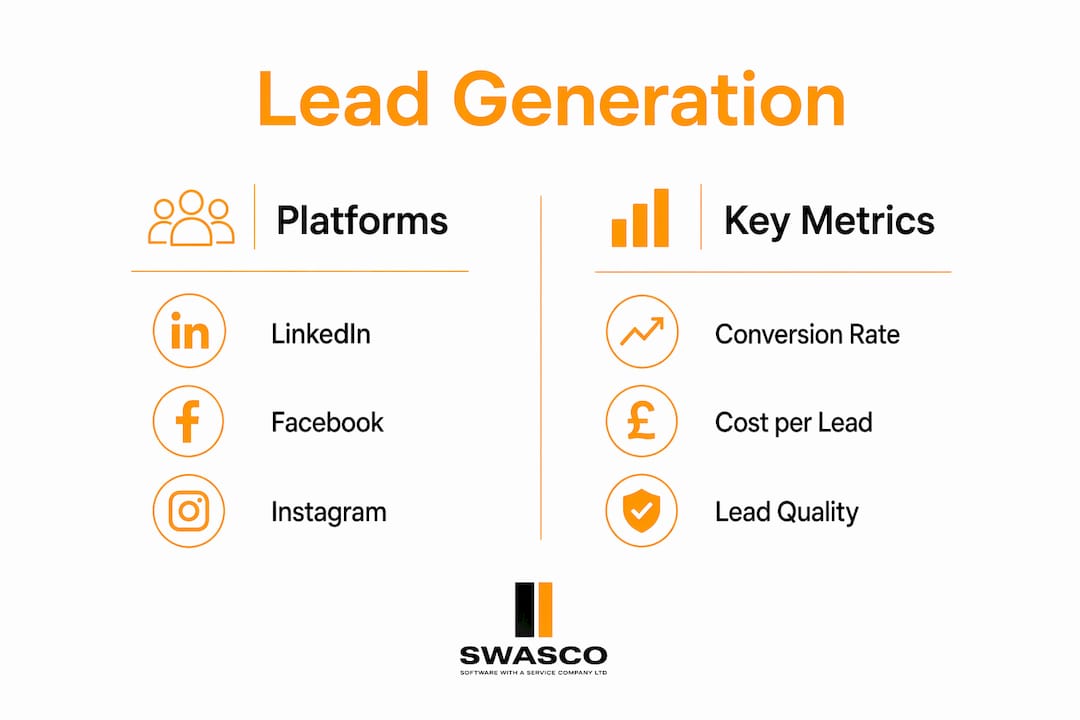
LinkedIn accounts for 80% of B2B social media leads and is the strongest platform for high-consideration service purchases such as consulting, legal, financial, and IT services. Its Lead Gen Forms allow prospects to submit contact details without leaving the platform, removing friction at the point of conversion. Facebook remains the dominant platform for local and consumer-facing service businesses, with its community groups and targeted advertising offering unmatched reach for tradespeople, health professionals, and home service providers. Instagram works best for visually demonstrable services such as interior design, beauty, and fitness, where before-and-after content and client testimonials drive trust and enquiry. TikTok is emerging as a discovery platform for younger audiences, particularly for lifestyle and wellness services, while Reddit offers access to niche communities where buyers ask highly specific questions and actively seek recommendations.
| Platform | Best for | Lead gen method | Conversion strength |
|---|---|---|---|
| B2B and professional services | Lead Gen Forms, InMail, content | Very high for B2B | |
| Local and consumer services | Lead ads, community groups, Messenger | High for local services | |
| Visual and lifestyle services | Story links, DMs, bio link | Medium to high | |
| TikTok | Younger audiences, discovery | Profile links, DM funnels | Medium, growing |
| Niche communities, research phase | Community engagement, AMA posts | Low volume, high intent |
Platform-native lead forms consistently outperform external landing pages. LinkedIn Lead Gen Forms average a 13% conversion rate compared to 4.02% for traditional landing pages. That gap exists because native forms pre-populate with profile data, reducing the effort required from the prospect. For mobile users especially, removing the step of loading an external page and re-entering details makes a measurable difference.
Pro Tip: Start with one platform where your ideal clients are already active and test native lead forms before building out a multi-platform strategy. Depth on one channel outperforms shallow presence across five.
How to capture and nurture leads from social media
Capturing a lead from social media is only the beginning. The conversion happens in what follows. Many service businesses invest in content and advertising but lose leads at the follow-up stage because they have no structured process to move prospects from interest to booking.
-
Optimise your social profiles as conversion pages. Your bio, pinned posts, and contact buttons should all point to a clear next step. A plumber's Facebook page should have a "Get a Quote" button linked directly to a booking form or a WhatsApp conversation, not just a phone number.
-
Use lead magnets to capture contact details. Offer something of genuine value in exchange for an email address or phone number. A free checklist, a short video guide, or a downloadable price guide works well for service businesses. Gate it behind a simple form linked from your social profile or ad.
-
Build direct message funnels. When someone comments on a post or clicks an ad, an automated DM can acknowledge their interest, ask a qualifying question, and guide them towards booking. Tools like ManyChat allow you to automate Facebook and Instagram DM sequences without losing the personal feel. For WhatsApp-based follow-up, converting leads via messaging has proven particularly effective for service businesses with mobile-first audiences.
-
Combine organic content with paid retargeting. Organic content builds trust and attracts warm audiences. Paid retargeting ads then re-engage people who visited your profile, watched a video, or clicked a link but did not convert. This combination keeps your business visible throughout the buyer's decision period.
-
Connect social leads to your CRM immediately. Every lead captured from social media should flow automatically into your CRM with source tagging. This allows you to track which platform, ad, or post generated the lead and follow up with the right message at the right time.
The most common mistake service businesses make is focusing on vanity metrics. Follower counts and post likes do not pay invoices. Optimising for conversions rather than engagement is what separates businesses that generate revenue from social media from those that simply maintain a presence.
Pro Tip: Tag every social lead in your CRM with the originating platform and campaign. After 90 days, review which sources produced paying clients, not just enquiries. That data tells you where to invest your next budget.
How do you measure the impact of social media on lead generation?
Measuring the true impact of social media on lead generation requires going beyond platform analytics. Likes, reach, and impressions tell you about content performance. They do not tell you how many leads became clients or how much revenue those clients generated.
The gap between engagement and conversion is where most businesses lose clarity. Attributing closed deals to social media is difficult because buyers rarely follow a straight path from a single post to a purchase. They might see your Instagram content, click a Facebook ad three days later, and then call you directly. Without proper tracking, that call looks like it came from nowhere.
UTM parameters solve part of this problem. Adding UTM tags to every link you share on social media allows Google Analytics and your CRM to record exactly which platform and campaign drove each website visit or form submission. Pair this with CRM source tagging and you build a picture of which social channels are genuinely contributing to your pipeline. The automation of lead routing from social capture to CRM follow-up removes the manual gap where leads are most commonly lost.
| Metric | What it measures | Why it matters |
|---|---|---|
| Cost per lead | Spend divided by leads captured | Benchmarks efficiency across platforms |
| Lead-to-client rate | Leads converted to paying clients | Reveals quality of social traffic |
| Time to first response | Minutes from lead capture to contact | Directly impacts conversion probability |
| Revenue per platform | Closed deals attributed by source | Identifies highest-value channels |
45% of sales professionals rate social media as very effective at driving sales, with 35% naming it their top source of high-quality leads. That figure reflects businesses that have closed the attribution gap and can see the direct connection between social activity and revenue.
Key takeaways
Social media generates leads most effectively when it is treated as a conversion system built on intent signals, platform-native capture tools, and rapid follow-up rather than a content broadcast channel.
| Point | Details |
|---|---|
| Social media as intent feed | Buyers signal needs and compare providers publicly before making contact. |
| Platform-native forms convert better | LinkedIn Lead Gen Forms average 13% conversion vs 4.02% for landing pages. |
| Speed determines conversion | Responding within the hour dramatically increases the chance of converting a lead. |
| Vanity metrics mislead | Optimise for leads and revenue, not followers and likes. |
| CRM integration closes the loop | Source-tagging every social lead reveals which platforms actually drive revenue. |
Why most service businesses are leaving social leads on the table
I have worked with enough service business owners to know that the problem is rarely the content. Most businesses post consistently, run occasional ads, and maintain a decent presence on one or two platforms. The revenue gap comes from what happens after someone shows interest.
A prospect fills in a Facebook lead form at 7pm on a Tuesday. Nobody sees it until Wednesday morning. By then, they have already booked with someone else. This is not a social media problem. It is an operational problem, and it is the most expensive mistake I see service businesses make repeatedly.
The businesses that genuinely profit from social media have separated lead capture from lead conversion. They have automated the first response so that every enquiry receives an acknowledgement within minutes, regardless of when it arrives. They qualify leads through a structured process before a human ever picks up the phone. And they use CRM data to follow up with the right message rather than a generic "just checking in" call three days later.
My honest advice: before you spend another pound on social media advertising, audit your follow-up process. If a lead came in right now, how long would it take your business to respond? If the answer is more than 30 minutes, you are not ready to scale your social media spend. Fix the follow-up first. The leads will convert.
— James Paul
How Talk2Aiva helps you convert social media leads automatically
You can generate all the right leads from social media and still lose revenue if your follow-up is slow or inconsistent. Talk2Aiva by SWASCO is built specifically for service businesses that want to stop losing enquiries to delayed responses.
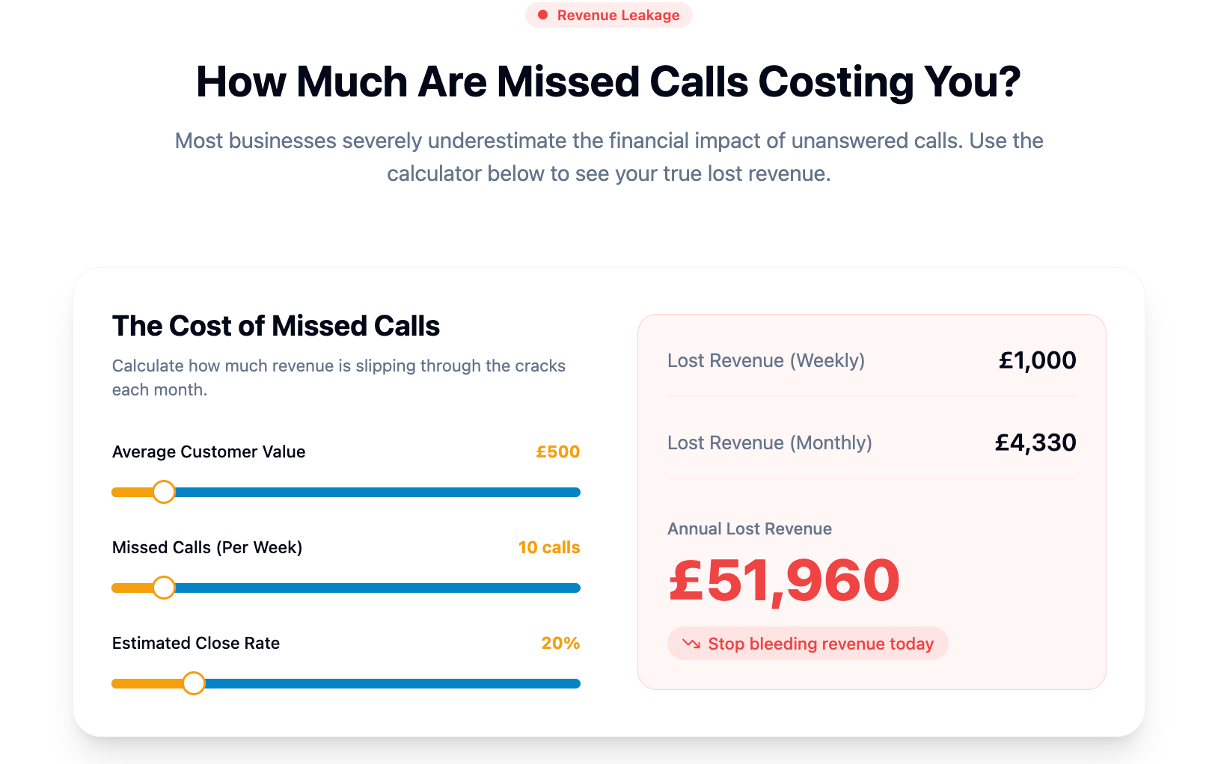
Talk2Aiva connects to your social media channels, website, and phone lines to engage every lead instantly, qualify their needs, and book appointments without you lifting a finger. Real-time CRM notifications mean no lead goes cold, and automated follow-up sequences keep prospects warm until they are ready to commit. If you want to see how sales and marketing automation can turn your social media activity into a reliable revenue stream, Talk2Aiva is the place to start.
FAQ
What is the role of social media in lead generation?
Social media's role in lead generation is to attract potential clients, surface buyer intent signals, and convert interest into qualified enquiries through targeted content, native lead forms, and direct engagement. It functions as both a discovery channel and a conversion tool when managed with the right processes.
Which social platform generates the most leads for service businesses?
LinkedIn generates 80% of B2B social media leads and is the strongest platform for professional services. Facebook and Instagram perform best for local and consumer-facing service businesses through community groups and visual content.
Why are my social media leads not converting into clients?
The most common cause is slow follow-up. Leads captured through social media expect a rapid response, and delayed contact allows competitors to step in. Integrating social lead capture with a CRM and automating the first response significantly improves conversion rates.
Do native lead forms outperform landing pages on social media?
Yes. Native lead forms on LinkedIn average a 13% conversion rate compared to 4.02% for external landing pages, primarily because they reduce friction by pre-populating contact details from the user's profile.
How do I measure the real impact of social media on my leads?
Use UTM parameters on every social link and tag all leads by source in your CRM. Track lead-to-client conversion rates by platform rather than relying on engagement metrics, which do not reflect revenue generated.