
Always-on client engagement is defined as a continuous, proactive communication model that keeps service businesses connected with their clients at every hour, not just during office hours. The industry term for this practice is "perpetual engagement," and it sits at the opposite end of the spectrum from reactive customer service. Automating 60–80% of routine client enquiries reduces waiting times without raising overhead costs, which is the clearest measure of what this model delivers. CRM systems, AI-powered chatbots, and self-service portals are the three core technologies that make it possible. For service-based business owners, understanding this model is the first step to stopping the revenue loss that comes from missed calls, slow replies, and unmanaged enquiries.
What is always-on client engagement and why does it matter?
Always-on client engagement means your business responds, follows up, and adds value to client relationships at any time of day. Client engagement is proactive, not reactive. That distinction matters because reactive customer service waits for problems to arrive, while proactive engagement anticipates client needs before they become complaints or cancellations.
The practical difference shows up in revenue. A client who cannot reach you at 7PM on a Tuesday does not wait until morning. They call the next business on their list. Perpetual engagement closes that gap by keeping your business present and responsive around the clock, across calls, text, website chat, and social media.

Service businesses that adopt this model report stronger retention and higher lifetime value per client. The reason is straightforward. Clients who feel consistently supported are less likely to shop around. Structured, CRM-driven workflows yield higher retention rates than ad-hoc outreach, which confirms that the structure behind the engagement matters as much as the frequency.
What are the core frameworks that structure effective client engagement?
Two frameworks give service businesses a reliable structure for always-on engagement: the 5 Cs and the Big 8 tactics.
The 5 Cs of client engagement
The 5 Cs are Clarity, Courtesy, Competence, Consistency, and Care. Each one addresses a specific failure point in client communication.
- Clarity means every message your client receives is easy to understand and free of jargon.
- Courtesy covers tone, responsiveness, and the basic respect clients expect in every interaction.
- Competence is the confidence clients feel when your team or your AI handles their enquiry correctly the first time.
- Consistency is the hardest to maintain without technology. It means every client gets the same quality of response, regardless of the time or channel.
- Care is the human element. It shows up in personalised follow-ups, remembered preferences, and proactive check-ins.
The Big 8 tactics
The Big 8 tactics extend the 5 Cs into operational practice. They include omnichannel communication, personalised feedback loops, automated follow-up sequences, self-service portals, real-time reporting dashboards, client health scoring, proactive outreach triggers, and co-created success plans. These tactics reduce churn and increase lifetime value when applied consistently across the client lifecycle.
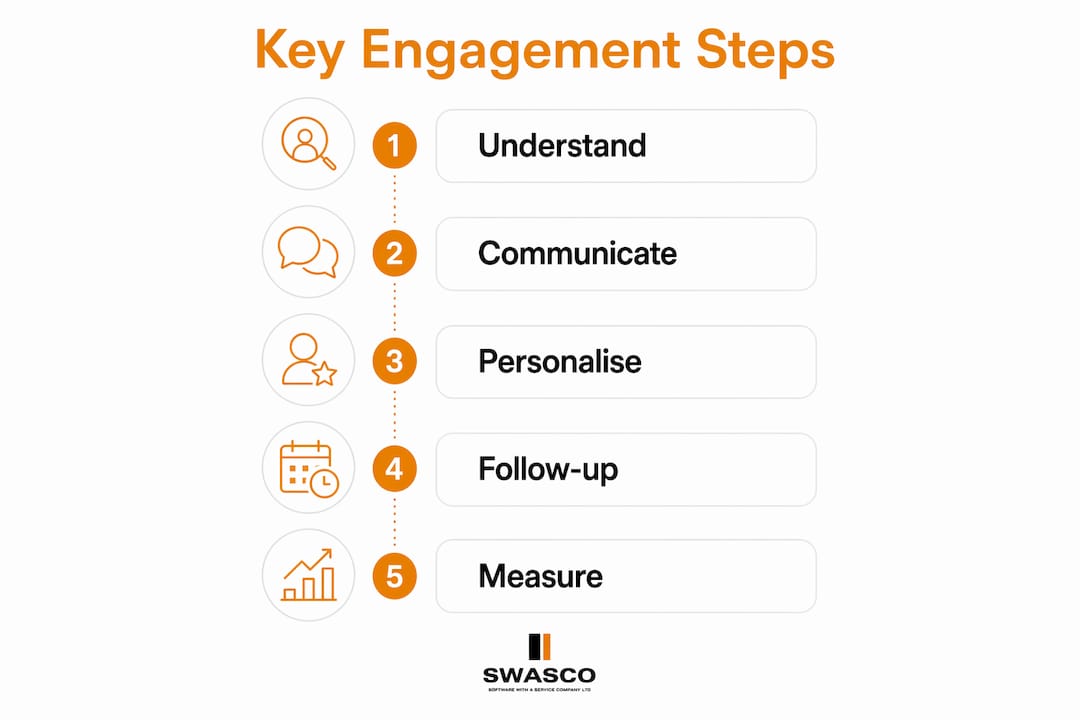
Pro Tip: Track at least three client engagement KPIs from day one: retention rate, Net Promoter Score (NPS), and average response time. Without baseline numbers, you cannot tell whether your engagement model is improving or declining.
How does technology enable always-on client engagement?
Technology is what separates a genuine always-on model from a business that simply works longer hours. Three categories of tools do the heavy lifting.
CRM systems give every team member a complete view of each client's history, preferences, and open issues. That visibility means any person or automated system handling an enquiry can respond with context, not just a generic reply. CRM integration for service firms is the foundation on which all other always-on tools are built.
AI-powered chatbots and voice AI handle the volume that no human team can sustain around the clock. They qualify leads, book appointments, answer common questions, and escalate complex issues to the right person. Automated follow-ups, chatbots, and self-service portals allow firms to serve more clients efficiently and profitably without adding headcount.
Predictive analytics add a layer that most service businesses overlook. Behavioural tracking monitors how clients interact with your communications. A 10–15% decline in response behaviour often precedes client loss. Catching that signal early gives you time to intervene before the contract is at risk.
The operational benefits stack up quickly:
- Reduced cost per client interaction as automation handles routine enquiries
- Faster response times across all channels, including outside business hours
- Scalable capacity without proportional increases in staffing costs
- Early warning signals from behavioural data, enabling proactive retention
Pro Tip: When evaluating AI engagement tools for your business, prioritise those that integrate directly with your existing CRM. Disconnected tools create data gaps that undermine the consistency clients expect.
What are the best practices for meaningful client engagement?
Frequent communication is not the same as effective engagement. This is the most common mistake service business owners make. Sending weekly emails or scheduling monthly calls does not deepen a client relationship if those interactions lack substance.
Vision-first questioning uncovers hidden motivations and connects your deliverables to measurable business impact. That means starting every significant client conversation by asking about their goals, not your services. The shift sounds small. The effect on retention is significant.
Here is a practical sequence for moving from surface-level contact to genuine engagement:
- Open with vision questions. Ask what the client is trying to achieve in the next 90 days. Listen for priorities that your service can directly support.
- Link your work to their outcomes. Show how your deliverables connect to specific results they care about. Revenue, time saved, risk reduced. Make the connection explicit.
- Use a shared roadmap. Document agreed milestones and review them together. A shared roadmap removes ambiguity and gives both sides a clear reference point.
- Run RAG check-ins. Red, Amber, Green status reviews flag issues before they escalate. Strategic QBRs catch issues months before contracts are jeopardised, which is why quarterly business reviews should always include a RAG assessment.
- Co-create expansion opportunities. When a client's goals evolve, your service should evolve with them. Ask directly what else they need. Do not wait for them to ask you.
The discipline here is not about adding more touchpoints. It is about making each touchpoint count. Value-led touchpoints anticipate client needs before problems arise, which is what separates businesses that retain clients for years from those that constantly replace them.
How can service businesses measure and optimise their engagement strategies?
Measurement is what turns a good engagement strategy into a repeatable system. Without it, you are guessing which tactics work and which ones waste time.
The core KPIs for always-on client engagement are:
- Retention rate: the percentage of clients who renew or continue their engagement over a set period
- Churn rate: the inverse of retention, and the clearest signal that something in your engagement model is failing
- Net Promoter Score (NPS): a direct measure of how likely clients are to recommend your business
- Average response time: how quickly your business responds to client enquiries across all channels
- Client engagement rate: the frequency and depth of meaningful interactions per client per month
Governance teams and dashboards support iterative improvements and ensure engagement tactics remain effective over time. A steering committee or regular operational review meeting gives you a structured forum to assess what the data is telling you and act on it.
A/B testing applies here too. Test different follow-up sequences, message formats, and outreach timing. The results tell you what your specific client base responds to, which is always more reliable than generic best practice advice. Continuous measurement with feedback loops is what separates businesses that grow their client base from those that work hard just to stand still.
Key takeaways
Always-on client engagement is the most reliable way to reduce churn, increase retention, and grow revenue without proportionally increasing your team size.
| Point | Details |
|---|---|
| Define engagement clearly | Always-on engagement is proactive, not reactive, and operates across all hours and channels. |
| Use proven frameworks | The 5 Cs and Big 8 tactics give your engagement model structure and measurable outcomes. |
| Technology does the heavy lifting | CRM systems, AI chatbots, and predictive analytics automate routine contact and flag churn risks early. |
| Quality beats quantity | Vision-first conversations and RAG check-ins build deeper relationships than high-volume, low-substance contact. |
| Measure everything | Track retention rate, NPS, and response time from the start to know what is working and what is not. |
Why most service businesses get client engagement wrong
The businesses I see struggle most with client engagement are not the ones ignoring their clients. They are the ones confusing activity with impact. They send the newsletters, book the calls, and run the check-ins. But the conversations stay shallow, and the clients leave anyway.
The shift that actually changes retention is moving from "how often are we in touch?" to "how much do our clients feel understood?" That requires asking better questions, not scheduling more meetings. Vision-first conversations, where you ask about a client's goals before you talk about your own services, consistently produce stronger relationships than any automated drip sequence.
Technology matters enormously, but only when it handles the right things. Automating routine enquiries and follow-ups frees your team to focus on the conversations that require genuine human judgement. The mistake is automating the wrong layer, using AI to replace the strategic conversations that build trust, rather than the administrative tasks that drain time.
The businesses that get this right treat their engagement model as a system with inputs, outputs, and feedback loops. They measure retention, act on churn signals early, and review their approach quarterly. That discipline is not glamorous. It is what actually works.
— James Paul
How Talk2Aiva supports your always-on engagement strategy
Running an always-on client engagement model is straightforward in theory. Executing it without the right infrastructure is where most service businesses fall short.
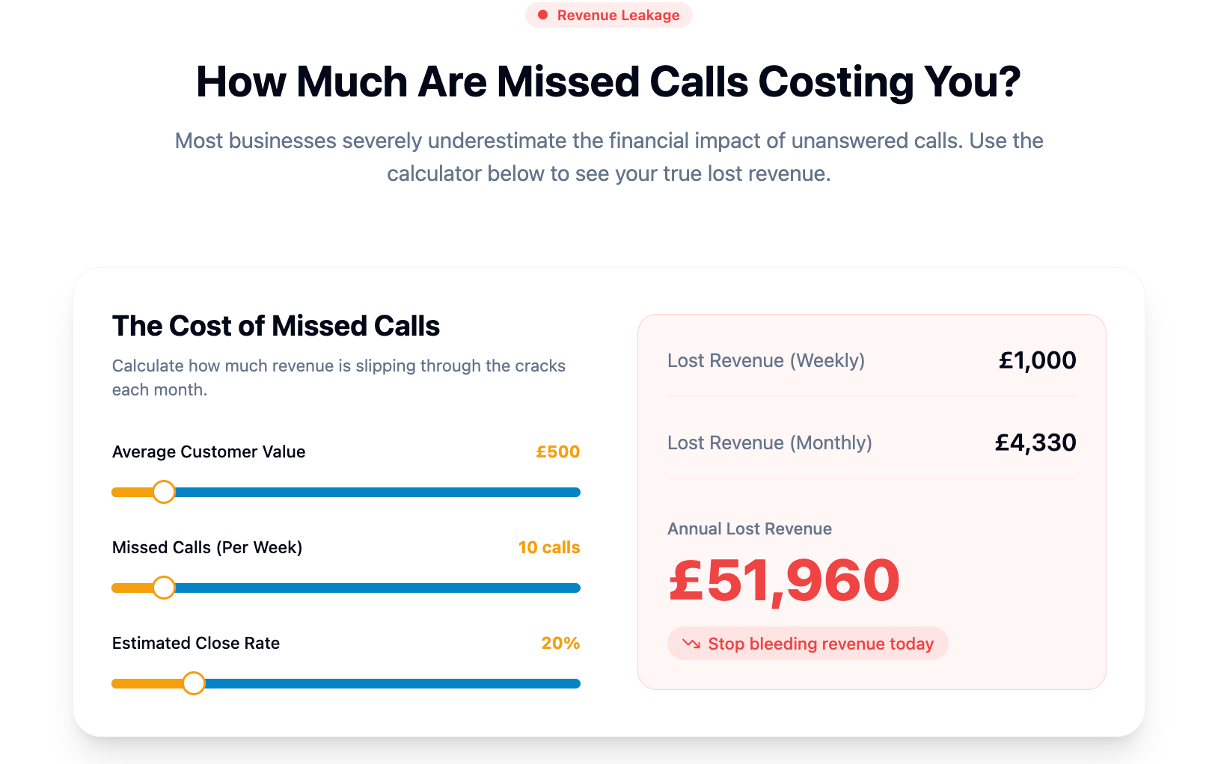
Talk2Aiva by SWASCO gives service-based businesses the tools to respond instantly, qualify leads, book appointments, and follow up with clients 24 hours a day, across calls, text, website chat, and social media. The entire system is set up and supported for you, from AI training and workflow building to live launch and ongoing technical support. If you are ready to stop losing revenue from missed calls and delayed responses, Talk2Aiva's voice AI platform is built specifically for businesses like yours. You focus on delivering your service. Talk2Aiva handles the rest.
FAQ
What is always-on client engagement?
Always-on client engagement is a proactive communication model that keeps service businesses connected with clients at any hour, using CRM systems, AI, and automation to respond, follow up, and add value continuously.
How does always-on engagement differ from customer service?
Customer service is reactive and responds to problems after they occur. Always-on client engagement is proactive, anticipating client needs and maintaining regular, value-led contact before issues arise.
What technology do I need for always-on client engagement?
The three core tools are a CRM system for client history and visibility, AI-powered chatbots or voice AI for round-the-clock responses, and predictive analytics to identify clients at risk of leaving.
How do I measure whether my client engagement strategy is working?
Track retention rate, churn rate, NPS, and average response time. A 10–15% decline in client response behaviour is an early warning sign of churn and should trigger immediate outreach.
What is the biggest mistake service businesses make with client engagement?
The most common mistake is prioritising communication volume over quality. Frequent but shallow contact does not build loyalty. Vision-first conversations that connect your work to measurable client outcomes are what drive long-term retention.