
Deploy a 24/7 conversational AI receptionist that centralises every channel and runs a defined qualifying and booking workflow, and most tree surgeon enquiries stop leaking through the cracks. Talk2Aiva offers a guided version of this, with onboarding built around a short pilot rather than a slow rollout. Most operators see the biggest shift in response speed within the first fortnight.
TL;DR:
- Implementing instant SMS responses for missed calls and real-time webhook routing for website inquiries can reduce enquiry leakages and improve response rates.
- Asking targeted qualifying questions on initial contact helps identify "closer-ready" leads, significantly reducing wasted time on unserious clients.
- Fast response times, especially within five minutes for calls and sixty seconds for texts, dramatically increase the chances of winning the job.
- A structured multi-touch follow-up sequence over hours and days can recover over half of initially lost enquiries, especially for storm damage cases.
- A unified automation system that integrates all communication channels and maintains conversation context reduces communication breakdowns and enquiry fall-through.
Table of Contents
- How do you capture every tree surgeon enquiry that comes in?
- What qualifying questions turn an enquiry into a booked job?
- Which follow-up sequence recovers lost tree surgeon enquiries?
- What tech setup keeps enquiry data from falling through the cracks?
- How do you roll out an AI receptionist without disrupting live bookings?
- Why does this fail without a change in habits, not just software?
- Ready to put this playbook to work for your business?
- Sources
- FAQ
How do you capture every tree surgeon enquiry that comes in?
Tree service operators commonly lose around 23% of enquiries to follow-up gaps, and most of that leakage happens before anyone even qualifies the lead. It happens because a call goes to voicemail, a Facebook message sits unread over a weekend, or a website form drops into an inbox nobody checks until Monday. Fixing this starts with treating every channel as a front door, not just the phone.
Here's the minimum coverage checklist:
- Missed calls trigger an instant SMS within seconds, not minutes, confirming you've seen the enquiry and asking one qualifying question.
- Website forms fire a webhook straight into your intake system the moment someone hits submit, no manual checking required.
- WhatsApp and SMS get an automated first reply that reads naturally, not like a bot script copied from a template.
- Social DMs (Facebook, Instagram) get the same auto-reply treatment; storm season floods these channels faster than owners expect.
- Live chat on your website hands off to the same qualifying flow as every other channel, so nobody repeats themselves.
When a conversation moves between channels, five fields need to travel with it: name, contact method, service type, location, and urgency. Losing any of these forces the customer to repeat themselves, and that's often the moment they ring a competitor instead.
Pro Tip: Set a hard first-responder SLA of five minutes for calls and sixty seconds for text-based channels, then let automation enforce it rather than relying on whoever happens to check their phone.
Fast first replies matter more in this trade than most people assume. Homeowners staring at a leaning tree after a storm are anxious, and the first tree service to reply usually wins the job regardless of price.
What qualifying questions turn an enquiry into a booked job?
Getting someone to reply isn't the hard part. Getting them booked without a human wasting twenty minutes on a lead that was never serious is the real skill, and it comes down to asking the right five questions in the right order.
A trade-specific qualifying ruleset for tree surgery typically needs three core fields plus one context field:
- Service type — removal, pruning, stump grinding, storm damage, or a hedge job that's really tree work in disguise.
- Urgency — is a tree currently on a roof, or is this a job for next month?
- Address and access notes — can a lorry get down the drive, and is there a decision-maker on site or is this a tenant calling on behalf of a landlord?
- Preferred dates — even a rough window narrows the booking conversation considerably.
Once those four answers exist, a lead becomes "closer-ready": ready to hand to a human for final pricing or a site visit, rather than something that still needs chasing for basic facts.
A booking script that works on first contact follows a tight sequence:
- Confirm the job type and urgency in the customer's own words, not yours.
- Ask for the address and one access detail before anything else.
- Offer two specific appointment slots rather than asking "when suits you?"
- Confirm the booking in writing (SMS or email) within sixty seconds.
- Sync the slot to the live calendar immediately, not at end of day.
Double bookings happen when calendar checks lag behind confirmations. The fix is simple in principle: the booking system checks live availability before offering a slot, not after, and every confirmed job locks that slot instantly across every channel a customer might use to book again.
Which follow-up sequence recovers lost tree surgeon enquiries?
Most enquiries that don't convert on first contact aren't dead. They're unanswered, and a structured cadence recovers a meaningful share of them without anyone manually chasing a spreadsheet.
A workable sequence looks like this:
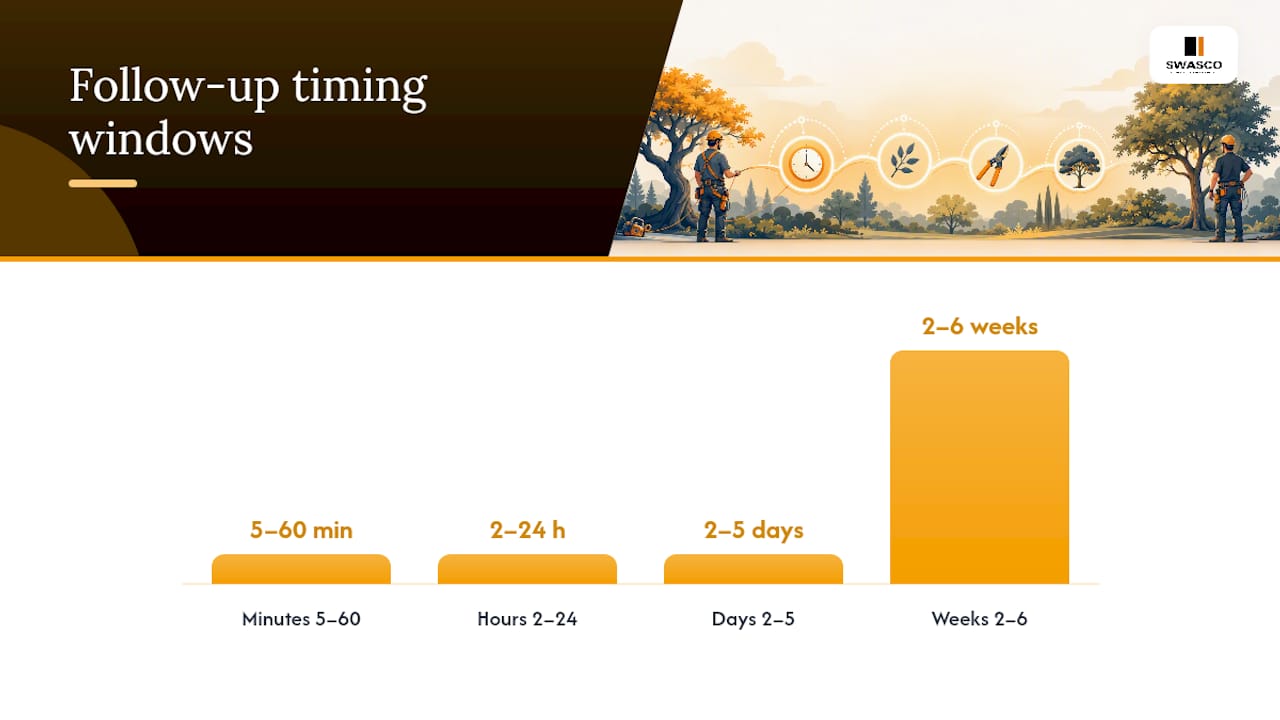
- Minute 0: automatic text confirming receipt, plus one qualifying question.
- Minutes 5 to 60: a call attempt if the enquiry looks urgent (storm damage, a tree on a structure).
- Hours 2 to 24: a follow-up message if there's been no reply, offering a specific time slot rather than a vague "let us know."
- Days 2 to 5: a third touch, often email, with a photo or short explainer about the job type they enquired about.
- Weeks 2 to 6: a long-nurture message for anyone who said "not ready yet," plus an automated review request once a job completes.
Storm-driven enquiries need different handling from routine pruning requests. A systematic response and follow-up plan that combines faster replies with a multi-touch cadence has taken conversion from a low rate to over fifty percent in one documented case, and the mechanism is straightforward: most lost jobs weren't lost on price, they were lost on silence.
Commercial enquiries (property managers, councils) tend to need a written quote before booking, so route them toward email with a clear turnaround promise rather than pushing for an instant phone commitment.
What tech setup keeps enquiry data from falling through the cracks?
Automation only works if the underlying architecture holds a conversation's context together as it moves between channels and people. A missed call that becomes a text that becomes a booked job needs to read as one continuous thread, not three disconnected touches that force the customer to explain themselves three times.
The essentials:
- Phone and SMS/WhatsApp feed into one inbox, not separate apps nobody checks consistently.
- Website chat and forms route into the same system, tagged with the same five core fields as every other channel.
- CRM integration means every enquiry, qualified or not, has a permanent record instead of living in someone's memory.
- Calendar sync runs in both directions: bookings block slots instantly, and cancellations free them just as fast.
- Surge/triage mode classifies storm-driven enquiries by hazard level at intake, so a tree on a roof jumps the queue ahead of a routine hedge trim, rather than being handled in arrival order.
A full inbound operating system that unifies these pieces closes far more of the leakage gap than a basic chatbot bolted onto one channel, because most of the loss happens at the handoffs, not within any single channel.
How do you roll out an AI receptionist without disrupting live bookings?
A pilot for a tree surgery business typically runs several weeks, and the milestones are predictable if you've seen a few of these launches.
- Week 1: a qualification call, usually about an hour, to map your service types, pricing tiers, and the questions your best office staff already ask instinctively.
- Week 2: build the ruleset (the qualifying fields, urgency thresholds, and calendar mapping) and load SMS/WhatsApp templates written in your own voice.
- Weeks 3 to 4: go live on a subset of traffic, often the website chat and missed-call text-back first, while calls stay human-handled.
- Weeks 5 to 6: expand to full call coverage once qualifying accuracy looks solid, then tune thresholds based on real conversations.
Success metrics to track from day one: response time to first contact, percentage of enquiries reaching "closer-ready" status, and booked-job conversion rate compared with your pre-pilot baseline.
Pro Tip: Don't skip the one-hour ruleset call. It's the single biggest predictor of whether the pilot feels like your business or feels like a generic script.
A tyre-shop onboarding example shows the same guided pilot structure applied outside tree surgery, and a tree-surgeon-specific rollout follows the same 24/7 answering approach adapted to storm-season call spikes.
Why does this fail without a change in habits, not just software?
The most common mistake I see isn't a technology gap. It's owners who trust memory over process, keeping the qualifying questions in their head instead of writing them into a system anyone (human or AI) can run consistently.
Treat the qualifying conversation as infrastructure, not a personality trait of your best office person. Once it's written down and enforced automatically, it survives holidays, busy Mondays, and staff turnover. Run a short pilot before committing to a full rollout. Four weeks tells you more than any amount of debate about whether this fits your business.
— James Paul
Ready to put this playbook to work for your business?
Everything in this article, the instant text-backs, the qualifying fields, the storm triage, the calendar sync, is exactly what Talk2Aiva builds for service businesses, with the setup done for you rather than left as a DIY project. Where a basic chatbot only patches one channel, systems exist that centralise calls, SMS, website chat, and social messages into one guided system, with onboarding and ongoing tuning included rather than billed separately.
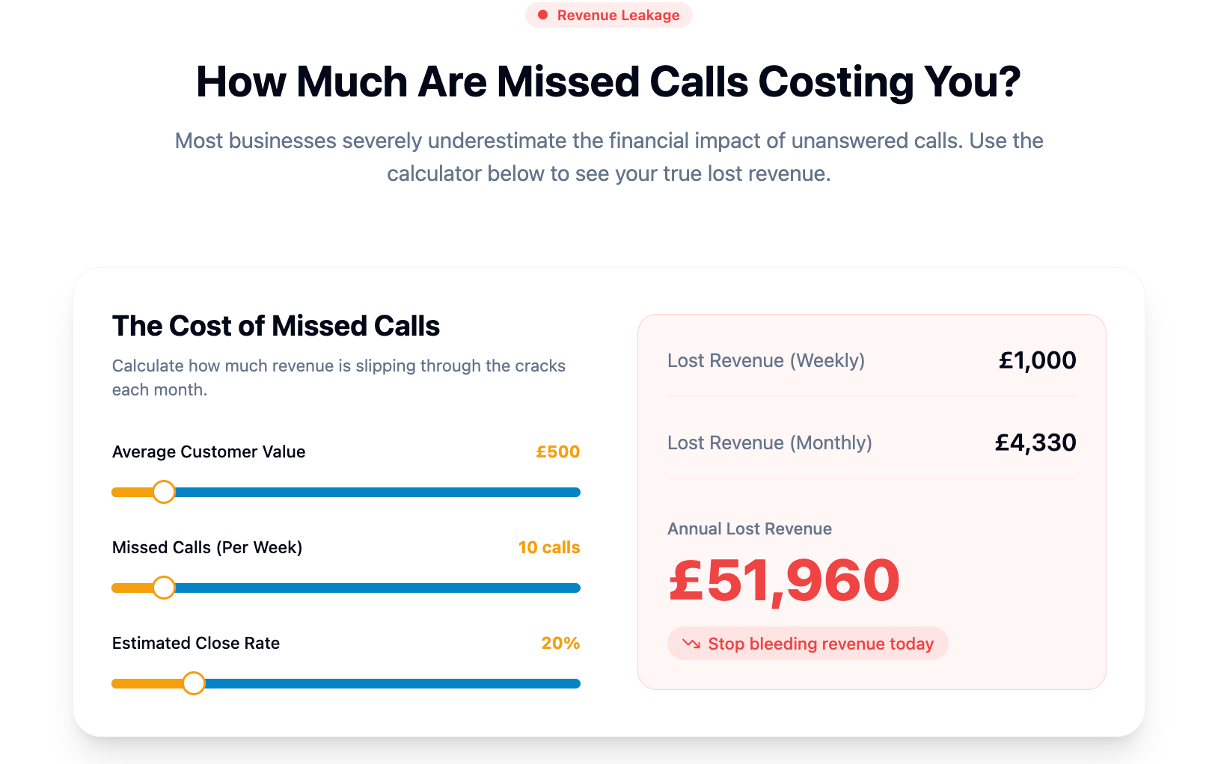
A pilot follows the same shape described above: a short setup call to map your services and urgency thresholds, template building in your own voice, then a live launch with tuning as real enquiries come in. Pricing runs through three tiers, from the Software Suite at £970 per year up to the Elite AI Suite at £4,970 per year, depending on how much of the workflow you want fully managed. If you're losing jobs to slow replies or missed calls, the next step is straightforward: book a demo through the Talk2Aiva plans page and see the qualifying flow built around your own services before you commit to anything.
Sources
- Why Service Businesses Lose Leads (And It Is Not Marketing)
- Tree service lead management: turn inquiries into jobs
- The first tree service to reply wins the job: why response time decides your revenue
- How one change nearly doubled revenue
FAQ
How long does a tree surgeon AI receptionist pilot take?
Most pilots run four to six weeks, starting with a qualification call and ruleset build before going live on a subset of traffic. Full call coverage typically follows once qualifying accuracy holds up on real enquiries.
How does surge handling work during a storm?
Storm-driven enquiries get classified by hazard level at intake, so a tree on a roof or blocking a road jumps ahead of routine pruning requests. This triage approach prevents urgent jobs getting buried under a flood of routine messages.
What happens to complex or high-value enquiries?
Anything reaching "closer-ready" status, meaning service type, urgency, address, and a decision-maker contact are all confirmed, gets handed to a human for final pricing or a site visit. Commercial enquiries and unusual jobs route to email with a clear quote turnaround instead of a forced instant booking.
What does Talk2Aiva cost for a tree surgery business?
Talk2Aiva runs three tiers: the Software Suite at £970 per year, the Ultimate AI Suite at £2970 per year, and the Elite AI Suite at £4,970 per year, all listed on the Talk2Aiva site. Guided onboarding and ongoing support are included rather than billed as extras.
Does data privacy matter when an AI handles customer enquiries?
Yes. Any system storing customer names, addresses, and job details needs clear data handling practices and secure storage, since this information typically feeds into a CRM for future contact and review requests. Check that your chosen provider documents how enquiry data is stored and who can access it before rolling out live traffic.