
AI in cosmetics consultation is defined as the application of machine learning, computer vision, and generative AI to deliver personalised beauty advice at scale. Where a human consultant relies on observation and experience, an AI system analyses skin profiles, facial geometry, and purchase history simultaneously. The result is advice that adapts to each person in real time. Brands including L'Oréal, OLAY, and DOUGLAS Group are already embedding these capabilities into their customer touchpoints, and the gap between early adopters and everyone else is widening fast.
What core AI technologies power the role of AI in cosmetics consultation?
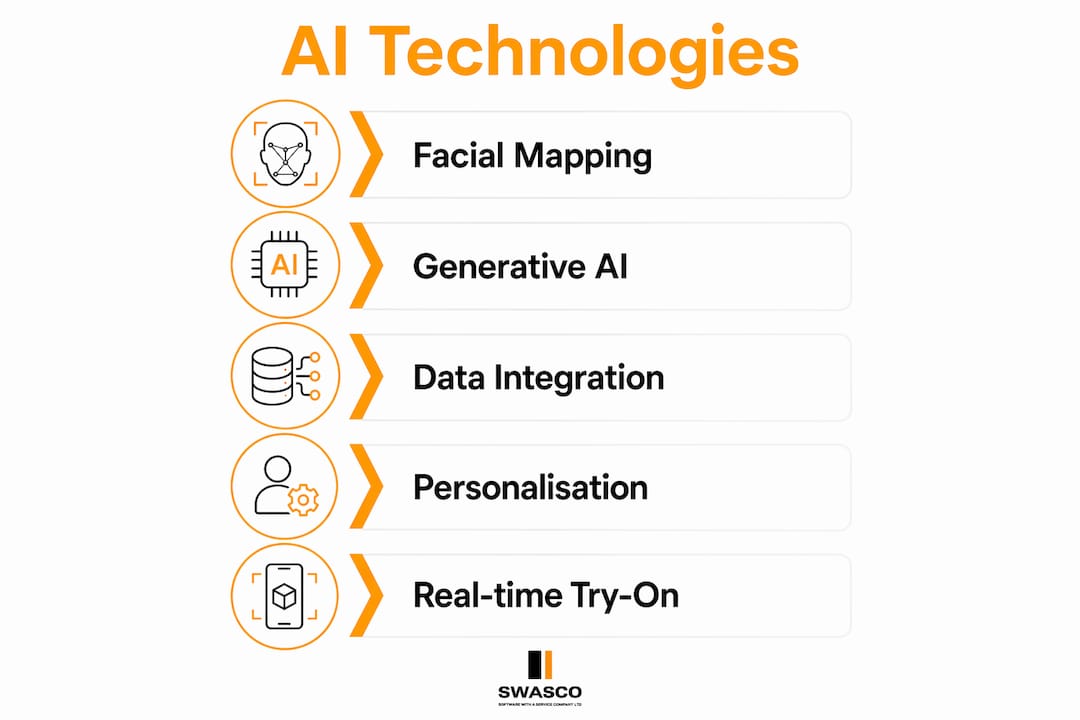
Three technologies sit at the heart of modern AI beauty consultations: facial landmark detection, generative AI simulation, and large-scale data integration.
Facial landmark detection maps the geometry of a face with high precision. L'Oréal's partnership with OpenAI, for example, maps over 68 facial landmarks to power virtual try-on directly inside ChatGPT. That level of detail means a foundation shade or lip colour sits convincingly on the face rather than floating above it. Critically, all processing happens on-device, so no photo ever reaches a remote server.
Generative AI simulation goes further than try-on. OLAY's collaboration with Haut.AI uses SkinGPT technology to model skin improvement across a 4–8 week horizon. A person can see a projected outcome before committing to a skincare routine. That removes one of the biggest barriers to purchase: uncertainty about whether a product will actually work for them.
Large-scale data integration ties everything together. The DOUGLAS Group's AI advisor Anna draws on over 1 million skin data points and 64 million loyalty profiles to generate recommendations. That volume of data produces advice that reflects a person's full history, not just their current visit.
| AI technology | Primary function in consultation |
|---|---|
| Facial landmark mapping | Real-time virtual try-on with 68+ reference points |
| Generative AI simulation | Clinically modelled skincare outcome projection |
| Loyalty and CRM data integration | Dynamic, history-aware product recommendations |
| Conversational AI agents | Proactive follow-up questions and purchase guidance |
Pro Tip: When evaluating an AI consultation tool, ask the vendor specifically whether facial processing happens on-device or in the cloud. On-device processing is the current gold standard for both privacy and speed.
How does AI improve personalised experience in cosmetics consultations?
Personalisation in AI beauty consultations works through a continuous loop: collect data, analyse it, recommend, observe the response, and refine. Each interaction makes the next recommendation sharper.
The steps in a well-designed AI consultation follow a clear sequence:
- Skin profile capture. The system photographs or scans the person's skin, identifying tone, texture, hydration level, and any areas of concern.
- History retrieval. Loyalty and purchase data surfaces past products, known sensitivities, and preferred price points.
- Match generation. The AI cross-references the skin profile against its product catalogue and clinical data to produce a ranked shortlist.
- Outcome simulation. Generative AI projects how the recommended products will perform over several weeks, giving the person a visual reference.
- Guided dialogue. AI agents ask follow-up questions to refine the shortlist further, comparing options and explaining trade-offs in plain language.
- Confidence building. The agent summarises the recommendation with clear reasoning, reducing the decision fatigue that often kills a sale.
This process mirrors what an experienced human consultant does, but it scales to thousands of simultaneous conversations. The educational layer that AI provides is particularly valuable for complex categories like skincare, where consumers often feel lost between competing claims.
Pro Tip: Pair AI-generated skin profiles with a brief human check-in. The AI handles the data; the consultant handles the emotional reassurance. That combination consistently outperforms either approach alone.
For beauty businesses exploring how AI fits into client retention strategies, the personalisation loop described above is the mechanism that keeps people coming back.
What are the practical applications and limitations of AI in cosmetics consultations?
AI augments beauty advisors rather than replacing them. Industry leaders are consistent on this point: AI handles speed and analytics, while humans provide emotional intelligence and tactile experience. A person choosing a perfume or testing a foundation texture still needs a human present. AI handles data-heavy comparisons so the consultant can focus entirely on that human moment.
Privacy is the other major practical consideration. Consumers increasingly expect GDPR-compliant, on-device processing for any tool that analyses their face or skin. Systems that transmit images to cloud servers face growing resistance, particularly in the UK and EU markets. On-device architectures, like the one used in L'Oréal's ChatGPT integration, address this directly.
Common pitfalls in AI cosmetics consultation implementations include:
- Poor data quality. Recommendations are only as good as the dataset behind them. Disconnected CRM systems produce generic advice that erodes trust.
- Over-automation. Removing the human consultant entirely from high-value interactions reduces conversion and damages brand perception.
- Opaque recommendations. AI that cannot explain why it suggested a product creates scepticism. Explainable AI outputs build confidence.
- Ignoring accessibility. Facial mapping tools that perform poorly on darker skin tones or textured skin alienate a significant portion of the market.
Pro Tip: Audit your CRM and loyalty data before deploying any AI consultation tool. Clean, connected data is the single biggest predictor of recommendation quality.
How are leading brands using AI to transform cosmetics consultations?
The most instructive examples come from brands that have moved beyond pilots into full deployment.
L'Oréal and OpenAI embedded Maybelline's virtual try-on directly inside ChatGPT. Verified product catalogues supply the AI with authoritative data, which also improves the brand's discoverability in AI-powered search. The on-device facial mapping means the experience is fast and private, two qualities that drive repeat use.
OLAY and Haut.AI took a different angle. Their virtual companion technology uses clinically modelled simulations to show a person what their skin could look like after following a recommended routine. Seeing a projected result over 4–8 weeks shifts the conversation from "does this product exist?" to "this product will work for me."
DOUGLAS Group built its AI advisor Anna around loyalty and CRM data integration, drawing on 64 million loyalty profiles. The result is an omnichannel experience where advice is consistent whether a person shops in-store, online, or via the app.
| Brand | AI feature | Primary benefit |
|---|---|---|
| L'Oréal / Maybelline | ChatGPT virtual try-on, 68+ landmarks | Private, real-time makeup simulation |
| OLAY / Haut.AI | SkinGPT outcome modelling | 4–8 week skincare progress projection |
| DOUGLAS Group | Anna AI advisor with loyalty data | Personalised omnichannel recommendations |
Pro Tip: Study how DOUGLAS Group links loyalty data to AI recommendations. If your business already has a loyalty programme, that data is your fastest route to genuinely personalised AI advice.
For a broader view of how AI drives upselling in grooming and beauty, the same data integration principles apply across service categories.
What should beauty professionals consider when adopting AI for consultations?
Choosing the right AI consultation tool starts with data readiness. AI recommendations depend on quality data linked to CRM and loyalty systems. A tool layered on top of disconnected or incomplete records will produce advice that feels generic and loses the person's trust quickly.
Beyond data, consider these best practices:
- Prioritise privacy-first architecture. Choose tools with on-device processing and clear GDPR compliance documentation. Transparency about data use is now a competitive advantage, not just a legal obligation.
- Train your team to work alongside AI. The hybrid AI-human model works best when consultants understand what the AI is doing and can add context the system cannot provide.
- Start with one use case. Virtual try-on or skin analysis is a manageable starting point. Expand to outcome simulation and proactive AI agents once the data pipeline is solid.
- Monitor recommendation quality continuously. Set up a feedback loop where consultants flag poor recommendations. That data feeds back into the model and improves it over time.
- Watch for proactive AI agents. The next wave of AI consultation tools does not wait for a question. These agents initiate conversations, surface relevant products based on browsing behaviour, and follow up after a purchase.
Pro Tip: Ask any AI vendor for a breakdown of how their model handles under-represented skin tones. Bias in training data is the most common cause of poor performance for diverse client bases.
Key takeaways
AI in cosmetics consultation delivers its greatest value when high-quality data, privacy-first architecture, and human expertise work together rather than in isolation.
| Point | Details |
|---|---|
| Facial landmark mapping | AI maps 68+ facial landmarks for accurate, real-time virtual try-on experiences. |
| Outcome simulation | Generative AI projects skincare results over 4–8 weeks, building purchase confidence before commitment. |
| Data quality is foundational | Recommendations improve only when AI connects to clean CRM and loyalty data. |
| AI augments, not replaces | Human consultants handle emotional and tactile needs; AI handles data analysis and comparisons. |
| Privacy drives trust | On-device processing and GDPR compliance are now baseline expectations for beauty AI tools. |
Why the human element still defines great AI consultations
I have spent years watching technology promise to replace skilled professionals, and beauty consultation is one of the clearest examples of where that promise falls short on its own. The data capabilities are genuinely impressive. Mapping 68 facial landmarks in real time, projecting skincare outcomes across weeks, and drawing on tens of millions of loyalty profiles are feats no human consultant can replicate at speed. But I have also seen what happens when brands remove the human entirely: conversion drops, returns rise, and the brand loses the emotional texture that makes beauty retail distinctive.
The brands getting this right treat AI as a decision intelligence layer. It surfaces the right products, explains the reasoning, and removes the cognitive load from both the consultant and the client. The consultant then steps in with the question AI cannot ask: "How does this make you feel?" That question closes more sales than any algorithm.
My prediction for the next two years is that proactive AI agents will become the standard entry point for beauty consultations, particularly online. They will initiate conversations, not just respond to them. The professionals who thrive will be those who learn to hand off to AI for the analytical work and reclaim their time for the moments that genuinely require a human presence. That is not a threat to the profession. It is the most significant upgrade the industry has seen in a generation.
— James Paul
How Talk2Aiva supports AI-powered beauty businesses
Beauty businesses investing in AI consultation tools still face a familiar problem: enquiries arrive at all hours, and a missed message is a missed sale. Talk2Aiva by SWASCO addresses that gap directly.
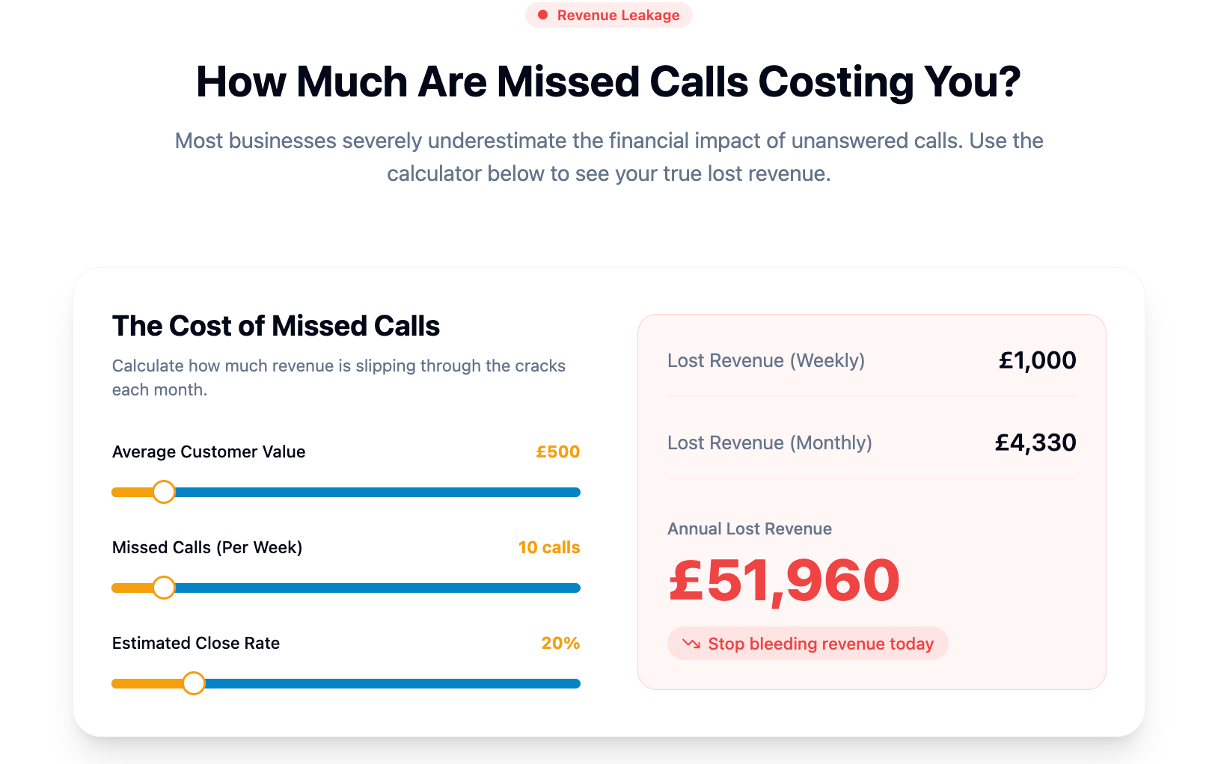
Talk2Aiva acts as a fully guided AI receptionist, engaging leads across calls, text, website chat, and social media around the clock. For beauty businesses, that means every consultation request, product enquiry, and booking is captured and responded to instantly, regardless of when it arrives. The system integrates with your existing workflows and includes full setup, AI training, and ongoing support so your team can focus on delivering the consultations that matter. See how Talk2Aiva works and find out how it fits your beauty business.
FAQ
What is the role of AI in cosmetics consultation?
AI in cosmetics consultation analyses skin profiles, facial geometry, and purchase history to deliver personalised product recommendations in real time. It acts as a data layer that enhances the advice a beauty professional or virtual advisor provides.
How does AI skin analysis work in beauty consultations?
AI skin analysis tools use computer vision to assess skin tone, texture, and condition from a photograph or live camera feed. The system then matches those characteristics against a product database to generate a ranked recommendation.
Can AI replace a human beauty consultant?
AI augments rather than replaces human consultants. It handles data analysis and product matching, while human advisors provide the emotional intelligence and tactile experience that drive confident purchase decisions.
What data does a virtual cosmetics advisor use?
A virtual cosmetics advisor draws on skin profile data, loyalty programme history, purchase records, and behavioural data to personalise recommendations. The quality of that data directly determines the accuracy of the advice.
Is AI beauty consultation safe for my personal data?
Leading AI consultation tools use on-device processing, meaning facial images are analysed locally without being sent to external servers. This approach aligns with GDPR requirements and is now the expected standard for reputable beauty AI platforms.