
Automation in grooming businesses is defined as the use of technology to handle repetitive, rule-based tasks such as booking, reminders, invoicing, and client follow-up without manual input. The role of automation in grooming growth is to free your time, reduce costly errors, and let you serve more clients without hiring proportionally more staff. AI automation reduces scheduling conflicts by 43%, cuts manual admin by 38%, and lifts customer satisfaction by 29%. Those numbers are not aspirational. They reflect what grooming businesses are already achieving in 2026 by adopting structured automation programmes.
What is the role of automation in grooming growth?
Automation drives grooming growth by removing the bottlenecks that cap your capacity. Every hour spent manually confirming bookings, chasing payments, or updating client records is an hour not spent on the work that actually earns revenue.

The industry term for this shift is business process automation (BPA). It covers any system that replaces a manual, repeatable task with a programmed workflow. In grooming, BPA applies to scheduling, reminders, payment processing, client communications, and reporting.
Scaling service businesses decouples revenue growth from headcount by automating rule-based tasks. That means you can take on more clients, run more appointments, and generate more revenue without a proportional rise in staffing costs. For small and mid-sized grooming businesses, that is the core growth argument for automation.
What are the core automation technologies reshaping grooming businesses?
Four categories of automation technology are reshaping how grooming businesses operate.
Automated scheduling and reminder systems handle booking confirmations, appointment reminders, and cancellation notices without any manual input. These systems connect directly to your calendar and send timed messages via SMS, email, or WhatsApp. The impact on no-show rates is significant, and the data is covered in the next section.
AI-powered client management goes beyond a basic contact list. These tools build detailed pet profiles, track service history, flag health notes, and generate personalised recommendations for each visit. A client whose dog has a skin condition gets a reminder about the appropriate shampoo. A cat owner who has not rebooked in eight weeks gets a targeted follow-up. That level of personalisation was previously only possible with a dedicated receptionist.
Workflow automation platforms connect your booking system, invoicing tool, and marketing channels into a single operating flow. When a booking is confirmed, an invoice is generated. When a service is completed, a review request goes out. When a client lapses, a rebooking sequence triggers automatically. Platforms that integrate these functions eliminate the manual handoffs that cause errors and delays.
Data and reporting tools turn your appointment history, revenue figures, and client behaviour into readable dashboards. You can see which services generate the most profit, which clients are at risk of churning, and which time slots are consistently underbooked.
| Automation type | Primary benefit | Example application |
|---|---|---|
| Scheduling and reminders | Reduces no-shows and admin time | Automated SMS confirmation with reschedule link |
| AI client management | Personalised service and retention | Pet profile with health notes and upsell prompts |
| Workflow automation | Eliminates manual handoffs | Auto-invoice on booking completion |
| Data and reporting | Informs growth decisions | Weekly revenue and churn risk dashboard |
Pro Tip: When evaluating automation platforms, check whether they integrate natively with your existing booking tool. A platform that requires manual data exports will create more admin, not less.
For a broader view of AI adoption in small pet businesses, the operational gains extend well beyond scheduling.
How does automation translate into measurable growth?
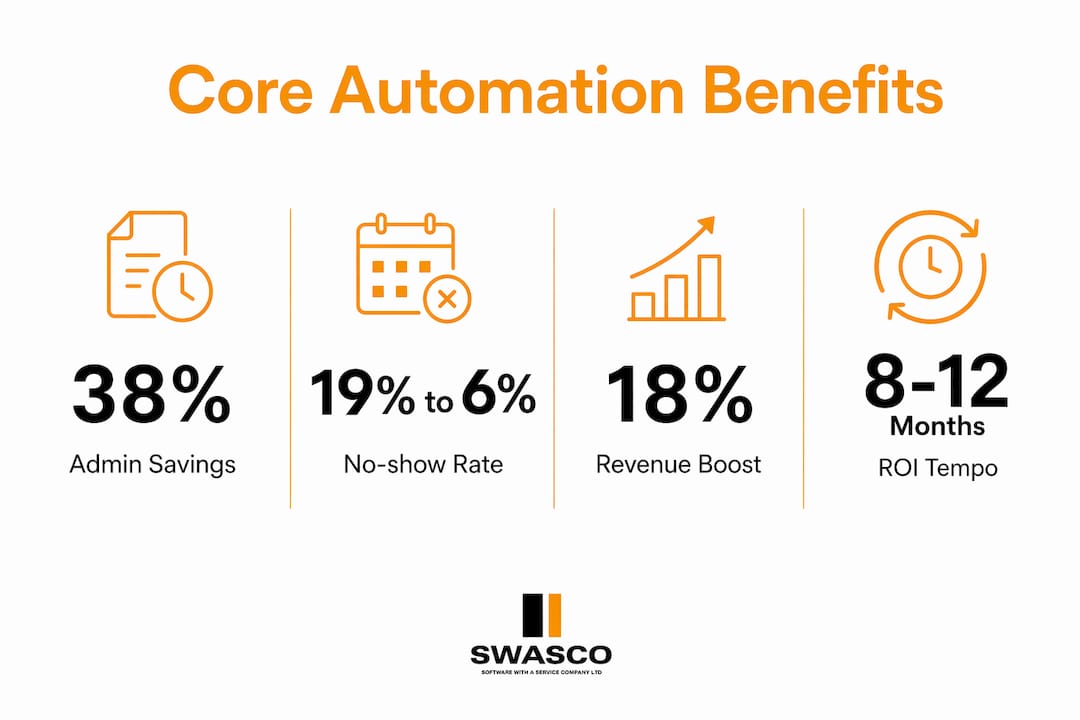
The impact of automation on grooming is clearest when you look at appointment capacity and no-show rates together. Automated scheduling systems increase weekly appointment capacity by 23% and cut no-show rates from 19% to 6%. That combination means more paying clients per week and fewer empty slots draining your revenue.
The admin reduction is equally significant. Automation cuts manual tasks by up to 38% and reduces data entry errors by over 80%. Fewer errors mean fewer refunds, fewer double bookings, and fewer frustrated clients.
Revenue gains extend beyond appointment income. Retail and service revenues lift by 18% when automated upsell prompts and personalised recommendations are built into the client journey. That figure rises further when you factor in the 22% increase in mobile grooming efficiency that structured automation delivers.
| KPI | Before automation | After automation |
|---|---|---|
| No-show rate | 19% | 6% |
| Weekly appointment capacity | Baseline | +23% |
| Manual admin tasks | Baseline | -38% |
| Data entry errors | Baseline | -80%+ |
| Retail and service revenue | Baseline | +18% |
Automation programmes typically pay for themselves within 8–12 months, with measurable benefits appearing within 2–3 months of implementation. That is a short payback period for a change that affects every part of your operation.
Pro Tip: Track your no-show rate before you implement any automation. That single metric gives you the clearest before-and-after comparison and the strongest case for continuing to invest.
What are the best practices for implementing automation in grooming?
A phased approach prevents the most common implementation mistakes. Meaningful automation programmes for SMBs take 3–6 months to implement, but working with an implementation partner compresses that timeline by 30–50%.
A practical roadmap looks like this:
- Days 1–30 (quick wins). Automate appointment confirmations and reminders. Set up automated payment collection. These changes deliver immediate no-show reductions and free up front-desk time within weeks.
- Months 2–3 (core automations). Connect your booking system to your invoicing and client management tools. Build a post-visit review request sequence. Introduce a lapsed-client rebooking workflow.
- Months 4–6 (strategic workflows). Add predictive reporting, upsell sequences, and churn prevention triggers. At this stage, your automation stack is generating business intelligence, not just saving time.
The most important strategic decision is where to start. Automating acquisition before retention is the biggest mistake grooming businesses make. Prioritising churn prediction and rebooking sequences delivers 2–3 times more growth impact than running paid campaigns to new clients. Fix the leaky bucket before you fill it.
Governance matters as much as the technology. Assign ownership of each automated workflow to a specific person. Set up error monitoring so failed messages or broken integrations are caught quickly. Review your automations every quarter to check they still reflect your current pricing, services, and client base.
One area where human judgement remains non-negotiable is client-facing interactions involving sensitive situations. Pet grooming carries a low AI displacement risk of 34% because animal handling and creative grooming require physical skill and empathy. Automation handles the admin. Your team handles the relationship.
Pro Tip: Always include a one-tap reschedule link in your reminder messages. Reminder sequences with reschedule links reduce no-shows to 2–5%. Most grooming businesses send reminders without this feature and leave significant capacity gains on the table.
For detailed guidance on setting up effective sequences, the guide on automating appointment reminders covers the technical setup in full.
How can automation insights sharpen your growth strategy?
Automation does not just save time. It generates data that tells you exactly where your growth is coming from and where it is leaking away.
AI-powered revenue intelligence identifies your most profitable services and clients, flags churn risks before they become cancellations, and surfaces upsell opportunities that manual tracking would miss entirely. This turns your booking history into a growth planning tool.
Specific applications include:
- Churn prevention triggers. When a regular client has not rebooked within their usual cycle, an automated message goes out with a personalised offer. This alone drives a 22% increase in personalised offer activations and measurably improves retention.
- Service profitability analysis. Your data shows which treatments generate the highest margin per hour. You can then adjust your marketing, your upsell prompts, and your scheduling priorities accordingly.
- Upsell sequencing. After a standard groom, an automated follow-up can recommend a conditioning treatment or a seasonal add-on based on the pet's profile. This is covered in depth in the AI grooming upselling guide.
- Demand forecasting. Booking pattern data lets you predict your quieter weeks and run targeted promotions before revenue dips, rather than reacting after the fact.
Automation turns raw data into revenue intelligence, unlocking offers and retention strategies that traditional methods miss. For growth-focused grooming businesses, this is where the real long-term value sits. Systems consultants at Nils Digital make a similar point about local service businesses: the businesses that scale past seven figures are almost always the ones that systematise their data before they scale their marketing.
Key takeaways
Automation drives grooming business growth by reducing no-shows, cutting admin, and converting booking data into revenue intelligence that supports smarter decisions at every stage.
| Point | Details |
|---|---|
| Start with retention, not acquisition | Rebooking and churn sequences deliver 2–3 times more growth impact than new-client campaigns. |
| Reminders need reschedule links | Including a one-tap reschedule link cuts no-show rates to 2–5%, a result most businesses miss. |
| Phased implementation works best | Quick wins in 30 days, core integrations by month 3, strategic workflows by month 6. |
| Data is the long-term asset | Automation generates revenue intelligence that identifies profitable services and at-risk clients. |
| Human touch remains non-negotiable | Automation handles admin; skilled groomers handle the physical work and client relationships. |
Why I think most grooming businesses are automating in the wrong order
James Paul here. After working with service businesses across multiple sectors, the pattern I see most often is this: owners invest in marketing automation before they have fixed their retention. They spend money bringing new clients in through the front door while existing clients quietly leave through the back.
The data backs this up. Retention-focused automation, specifically rebooking sequences and churn prevention triggers, consistently outperforms acquisition campaigns in terms of revenue per pound spent. Yet most grooming businesses I speak to have not set up a single lapsed-client workflow.
My honest view is that automation is infrastructure, not a quick fix. The businesses that get the most from it treat it the way a builder treats foundations: they lay it carefully, in the right order, and they do not rush to the visible parts before the base is solid. Start with reminders and rebooking. Measure the results. Then build upwards.
The future of grooming is not fully automated. It is skilled human groomers running AI-supported businesses that handle the admin invisibly. That combination is where the real competitive advantage lies in 2026.
— James Paul
How Talk2Aiva supports grooming businesses with end-to-end automation
Running a grooming business means your phone rings while your hands are full. Enquiries come in after hours. Bookings get missed. Revenue walks out the door before you even know it was there.
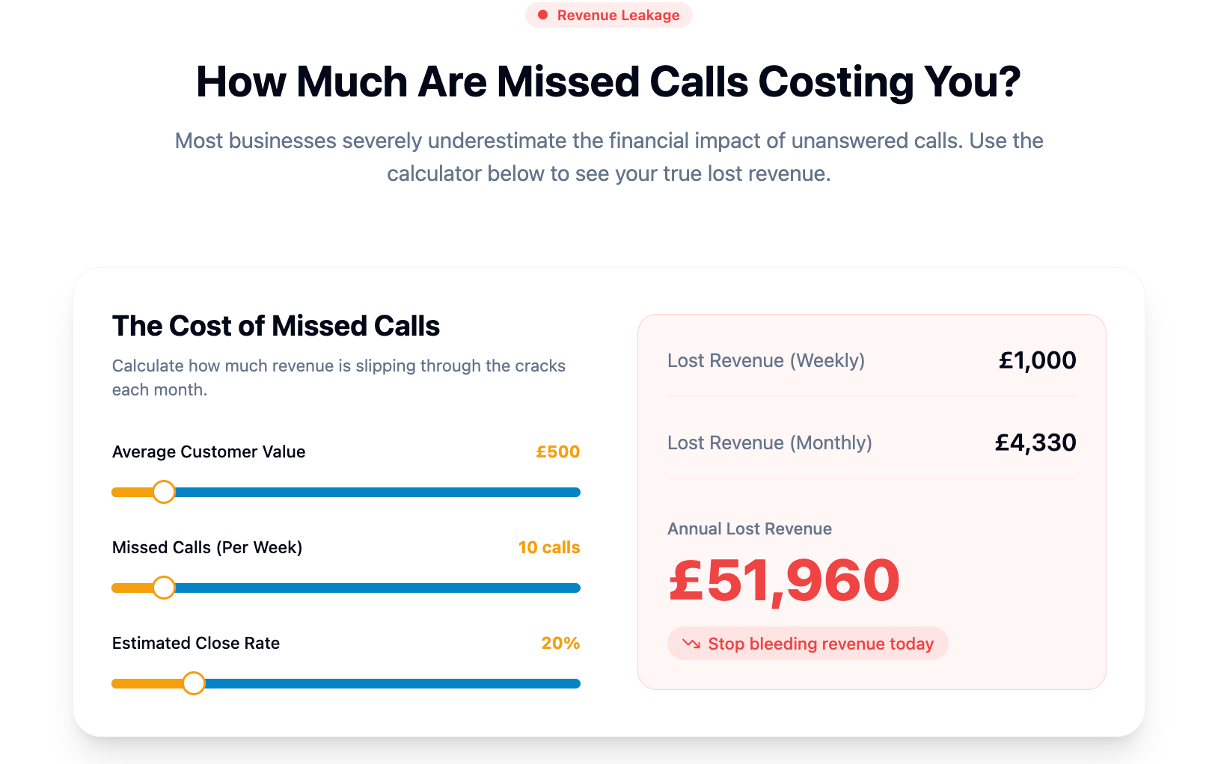
Talk2Aiva by SWASCO is built to close that gap. It handles inbound calls, qualifies leads, books appointments, and follows up with clients automatically, across phone, SMS, website chat, and social media, 24 hours a day. Every workflow is set up for you, with ongoing support included so you are never left managing the technology alone. If you want to see how Talk2Aiva's voice AI fits your business, the details are all there.
FAQ
What is the role of automation in grooming growth?
Automation drives grooming growth by removing manual bottlenecks in scheduling, reminders, and client management, freeing capacity and reducing no-shows without increasing staffing costs.
How much can automation reduce no-show rates in grooming businesses?
Automated reminder sequences with one-tap reschedule links reduce no-show rates to 2–5%, compared to an industry average of around 19% without automation.
How long does it take to see results from grooming automation?
Most businesses see measurable benefits within 2–3 months of implementation, with full return on investment typically achieved within 8–12 months.
Should I automate marketing or client retention first?
Automate retention first. Rebooking sequences and churn prevention workflows deliver 2–3 times more growth impact than acquisition campaigns and produce faster, more predictable revenue gains.
Does automation replace groomers or front-desk staff?
Automation handles repetitive admin tasks such as confirmations, reminders, and invoicing. Physical grooming and client relationships remain human-led, and pet grooming carries a low AI displacement risk of 34%.