
Artificial intelligence in property sales is defined as the use of automated systems to capture, qualify, engage, and follow up with leads across every stage of the sales pipeline. The role of AI in the property sales pipeline has shifted from a niche experiment to a core operational tool for agents and investors who want to stop losing deals to slow response times and manual bottlenecks. Platforms like AGIX Technologies and Perspective AI are already demonstrating measurable gains. AI-powered follow-up systems improve lead conversion rates to 4–6%, tripling the industry average of 1.5–2%. That gap represents real revenue sitting on the table for every agent still relying on manual processes.
How does AI improve lead capture and qualification in property sales?
The biggest failure point in most property sales pipelines is the front end. Replacing static contact forms with conversational AI intake increases qualified appointments by 2–4 times per listing page visit. That is not a marginal gain. It means an agent receiving ten enquiries per week could convert eight qualified appointments instead of two.
Conversational AI captures buyer intent, financing status, and purchase timeline before any agent picks up the phone. Static forms collect a name and an email address. AI intake collects the information that actually determines whether a lead is worth pursuing. The difference in data quality changes how agents prioritise their day.

The lead qualification workflow typically runs in three stages: the AI asks structured questions via chat or voice, scores the lead based on responses, and routes hot leads to an agent immediately while placing cooler leads into a nurture sequence. No lead falls through the gap because no human has to remember to follow up.
Key improvements AI delivers at the qualification stage:
- Instant response: AI engages a new enquiry within seconds, not hours.
- Structured data capture: Buyer motivation, budget, and timeline are recorded consistently for every lead.
- Automatic routing: High-intent leads reach an agent immediately; lower-intent leads enter a follow-up sequence.
- 24/7 availability: Enquiries submitted at 11pm on a Sunday receive the same quality response as those submitted on a Monday morning.
Pro Tip: Set your AI intake to ask three qualifying questions before offering a callback. Agents who receive pre-qualified leads close at a significantly higher rate than those who call cold.
What AI technologies drive lead engagement and follow-up automation?
Manual follow-up fails at scale because it depends on individual discipline. AI follow-up does not. The role of AI in property referral follow-up is to identify high-receptivity moments, such as the period immediately after a positive viewing or a successful completion, and trigger a referral request automatically. This is the referral machine concept: a system that converts satisfied clients into a consistent source of new business.
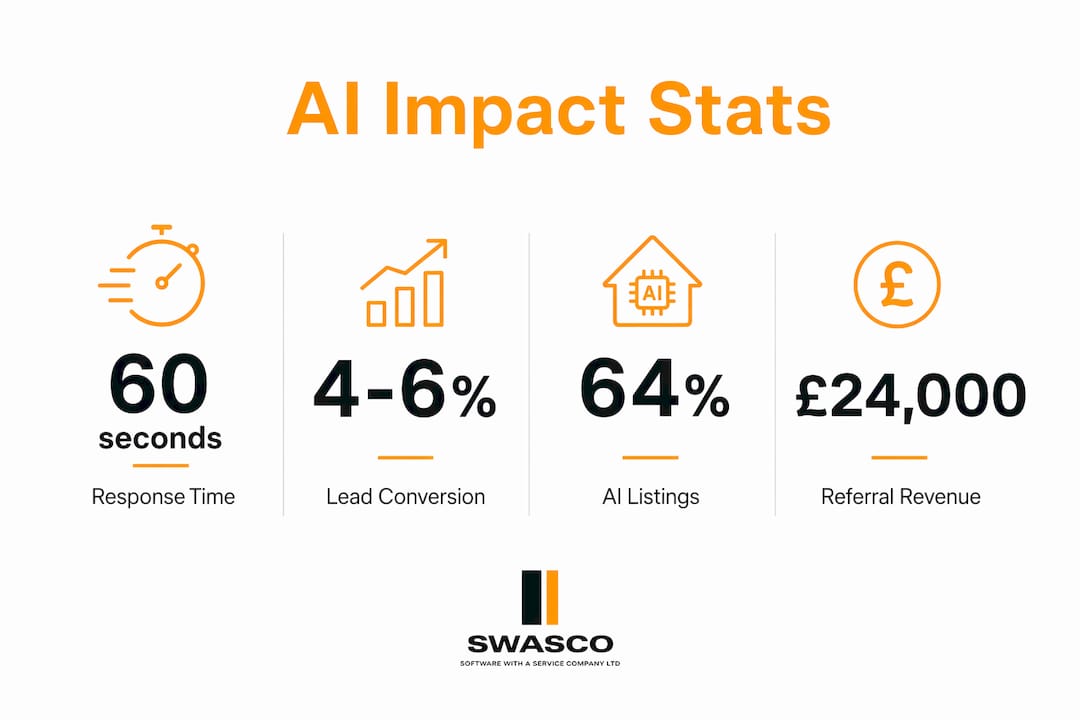
A well-built referral sequence converts 6 out of 20 nurtured clients into referrals, generating approximately £24,000 in revenue per 20 clients annually. That figure compounds over time as the pipeline grows. Most agents leave this revenue uncaptured because they rely on memory and goodwill rather than a system.
AI engagement tools track signals such as email opens, website revisits, and listing saves to determine when a lead is warming up. When those signals fire, the system sends a personalised message or alerts the agent to call. This is not spam. It is timed, relevant contact that feels natural to the recipient.
A complete AI follow-up system for property sales operates in four stages:
- Initial engagement: AI responds to the enquiry within 60 seconds, confirms receipt, and asks qualifying questions.
- Nurture sequence: Leads that are not yet ready receive automated, personalised touchpoints over days or weeks.
- Referral trigger: After a positive interaction or transaction, the system sends a referral request at the optimal moment.
- Re-engagement: Dormant leads receive a reactivation message when market conditions or their circumstances may have changed.
Pro Tip: Do not send referral requests on a fixed schedule. AI systems that trigger requests based on engagement signals, rather than calendar dates, convert at a far higher rate.
Which AI-powered CRM systems best integrate with real estate sales?
Effective real estate automation is a system layer, not a single chatbot. AGIX Technologies describes a layered architecture that includes ingestion agents, knowledge retrieval, lead qualification, automated appointment booking, CRM syncing, and escalation protocols. Each layer handles a specific task and passes data to the next. The result is a pipeline that runs without manual intervention for the majority of leads.
The table below compares the core capabilities of basic CRM tools against AI-enabled pipeline management systems:
| Capability | Standard CRM | AI-enabled pipeline system |
|---|---|---|
| Lead response | Manual, agent-dependent | Automated within 60 seconds |
| Qualification | Agent-led calls | Conversational AI intake |
| Appointment booking | Manual diary management | Automated scheduling with CRM sync |
| Follow-up | Reminders set by agent | Triggered by engagement signals |
| Escalation | Agent judgement | Sentiment detection with automatic alert |
| Reporting | Manual data entry | Real-time pipeline analytics |
Integration with legacy systems matters. An AI layer that cannot write data back to your existing CRM creates duplication and confusion. The best implementations connect AI agents directly to your CRM so that every interaction, qualification score, and appointment is logged automatically. You can read more about what this looks like in practice in this guide to CRM integration for agents.
Sentiment escalation is one of the most underrated features in AI pipeline management. When a lead expresses frustration or urgency, the system flags the conversation and alerts a human agent immediately. This prevents the AI from handling a situation that requires empathy and judgement, which protects the client relationship.
What are the measurable benefits of AI in the property sales pipeline?
The numbers behind AI adoption in property sales are not theoretical. AI-powered follow-up cuts average response time from 36 hours to under 60 seconds. That single change has a direct impact on conversion because leads contacted within five minutes are exponentially more likely to engage than those contacted hours later.
"60% of static contact form leads are never contacted, often because the response arrives after five hours. AI eliminates that delay entirely." — Perspective AI, 2026 trend report
Listing quality also improves with AI. As of Q4 2025, 64% of new MLS listings had AI-assisted descriptions, up from 8% in 2023. Those listings received 87% more shares and 80% more saves. More saves mean more enquiries, which feeds directly into the top of the pipeline.
AI also affects search visibility. Only 8.4% of US real estate agents appear in AI-generated answers, with the top 1% capturing 47% of citation share. Agents who build their presence across multiple review platforms and publish consistent local content gain a disproportionate share of AI-generated leads. This is a structural advantage that compounds over time.
| Metric | Without AI | With AI |
|---|---|---|
| Average response time | 36 hours | Under 60 seconds |
| Lead conversion rate | 1.5–2% | 4–6% |
| Listing saves (AI descriptions) | Baseline | +80% |
| Listing shares (AI descriptions) | Baseline | +87% |
| Leads never contacted | 60% | Near zero |
What are best practices for scaling AI in real estate sales workflows?
Phased implementation produces better results than deploying every AI feature at once. Vertical slicing means starting with one layer, such as intake, measuring its impact, and then adding retrieval, action, and review stages in sequence. This approach keeps the system auditable and makes it easy to identify what is working.
Key practices for a successful AI rollout in property sales:
- Start with intake. Conversational AI at the front end of your pipeline delivers the fastest return because it addresses the highest-failure point first.
- Track speed-to-lead. This is the single most important KPI in the early stages. If your AI is not responding within 60 seconds, something is misconfigured.
- Monitor MQL-to-SQL conversion. Marketing-qualified leads that convert to sales-qualified leads tell you whether your qualification logic is accurate.
- Avoid single-portal dependency. Agents who spread reviews across four or more platforms gain better AI search visibility than those concentrated on one. Diversify your digital presence.
- Keep humans in the loop. AI handles volume and consistency. Human agents handle complexity and relationship-building. Define the handoff point clearly before you go live.
The lead response time guide covers the most common configuration errors that slow down AI response and how to fix them before they cost you conversions.
Key takeaways
AI in the property sales pipeline delivers its greatest value by eliminating the response delay and qualification inconsistency that cause most leads to go cold before an agent ever speaks to them.
| Point | Details |
|---|---|
| Speed is the primary lever | AI cuts response time from 36 hours to under 60 seconds, directly increasing conversion rates. |
| Conversational intake outperforms forms | AI-powered intake generates 2–4 times more qualified appointments per listing page visit. |
| Referral systems compound revenue | A structured AI referral sequence converts 6 in 20 clients to referrals, worth approximately £24,000 per year. |
| Phased rollout reduces risk | Starting with intake and adding layers sequentially keeps KPIs measurable and the system auditable. |
| Visibility requires platform diversity | Agents on four or more review platforms capture a larger share of AI-generated search leads. |
Why most agents are still thinking about AI the wrong way
I have watched a lot of property professionals adopt AI tools and then wonder why nothing changed. The reason is almost always the same. They added a chatbot to their website and called it done. Real AI integration in property sales is not a widget. It is a system that touches every stage of the pipeline, from the first enquiry to the referral request six months after completion.
The referral piece is where I see the most untapped potential. Agents spend enormous energy acquiring new leads and almost no energy turning satisfied clients into a referral source. An AI system that tracks post-transaction sentiment and triggers a referral ask at the right moment is not complicated to build. It is just not something most agents have prioritised. The revenue impact, roughly £24,000 per year from 20 clients, is not a rounding error.
The other thing I would push back on is the idea that AI replaces the human relationship in property sales. It does not. What it replaces is the manual administration that stops agents from spending time on relationships. When your AI handles intake, qualification, follow-up, and booking, you get your day back. You spend it on viewings, negotiations, and client conversations rather than chasing cold leads and updating spreadsheets.
The agents who will dominate the next five years are not the ones with the most listings. They are the ones who build the most efficient pipeline. AI is the infrastructure that makes that possible.
— James Paul
How Talk2Aiva helps property professionals stop losing leads
If you recognise the gaps described in this article, Talk2Aiva by SWASCO is built to close them. Talk2Aiva is a fully guided AI receptionist and revenue recovery system that engages, qualifies, books, and follows up with leads 24/7 across calls, text, website chat, and social media.
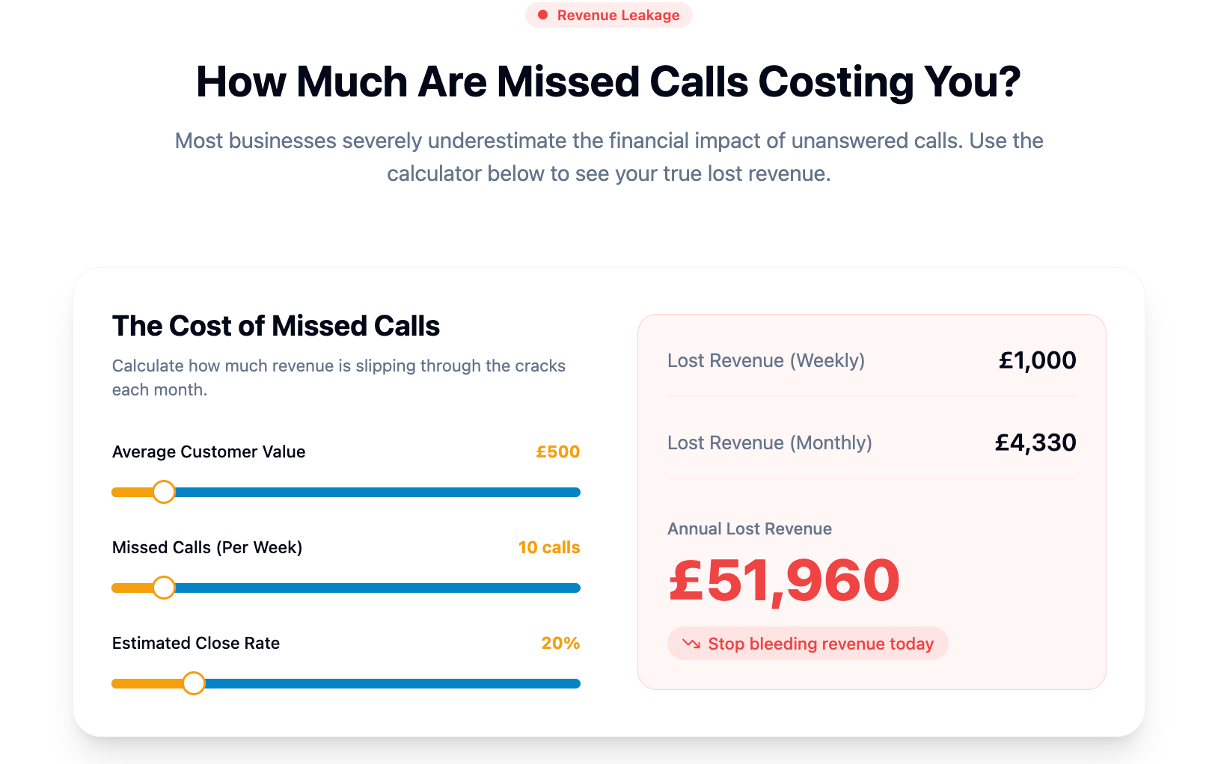
For property professionals, that means no more missed enquiries, no more leads going cold overnight, and no more manual follow-up sequences that depend on an agent remembering to send a message. The entire setup, from AI training to workflow building and live launch, is handled for you with ongoing support included. Explore Talk2Aiva's voice AI platform to see how it fits your pipeline, or review how the system works before you commit.
FAQ
What is the role of AI in the property sales pipeline?
AI automates lead capture, qualification, follow-up, and referral requests across every stage of the property sales pipeline. It reduces response times, improves data quality, and increases conversion rates by ensuring no lead is left uncontacted.
How much does AI improve lead conversion in real estate?
AI-powered follow-up systems improve lead conversion to 4–6%, compared to the industry average of 1.5–2%. The primary driver is response time, with AI contacting leads within 60 seconds rather than the manual average of 36 hours.
Can AI handle property referral follow-up automatically?
Yes. AI referral systems identify high-receptivity moments after positive interactions and trigger automated referral requests at the optimal time. A structured sequence converts approximately 6 out of 20 nurtured clients into referrals.
How do I start implementing AI in my property sales workflow?
Start with conversational AI intake on your listing pages, then add follow-up automation and CRM integration in stages. This phased approach keeps results measurable and reduces the risk of disrupting your existing process.
Why are most agents invisible in AI search results?
Only 8.4% of agents appear in AI-generated answers. Agents who build presence across multiple review platforms and publish consistent local content capture a far greater share of AI-generated leads than those relying on a single portal.