
To prevent double bookings, you need three layers working together: database-level enforcement for engineered systems, the right calendar settings for off-the-shelf tools, and operational guardrails on top. If you run a booking system, that means exclusion constraints and idempotency keys. If you use Outlook, Google Calendar, or a booking platform, it means specific settings, not hope. Either way, pair the fix with SMS reminders and confirmations to stop free slots going to waste.
TL;DR:
- Enabling auto-decline on resource mailboxes and using centralized calendar sources drastically reduces conflicts caused by overlapping bookings.
- Implementing database-level exclusion constraints with serializable transactions ensures atomicity and prevents race conditions in custom booking systems.
- Setting conflict policies to zero percent on scheduled resources and using appointment slots in Google Calendar help prevent double bookings without custom code.
- Using reminders with rebooking links and limiting booking authority to a small team decrease human errors and manual overlaps.
- Regularly testing concurrency and monitoring error rates maintain double booking prevention as your system scales and evolves.
Table of Contents
- Quick checklist to prevent double bookings today
- Developer fixes: atomic guarantees, exclusion constraints and idempotency
- Settings that stop conflicts in Outlook, Google Calendar and booking platforms
- Operational guardrails: buffers, holds, reminders and staff workflows
- How to test and monitor for double bookings under load
- When an AI receptionist is the right fix, not more engineering
- Database-level prevention and race-condition fixes in practice
- Author perspective: strict prevention first, smoother UX second
- Talk2Aiva: an operational alternative to stop double bookings
- Sources
- FAQ
Quick checklist to prevent double bookings today
Before touching any code, most businesses can cut conflicts sharply just by fixing settings and habits. These are the changes that pay off within the hour:
- Enable auto-decline on resource mailboxes. Meeting rooms and shared resources should refuse a second booking automatically, not flag it for someone to notice later.
- Centralise your calendar sources. If staff keep a personal calendar alongside the "real" one, disable the local copy. Two sources of truth guarantee eventual conflicts.
- Set buffer times between bookings. A 10 to 15 minute gap absorbs the small overruns that cause the next slot to overlap.
- Turn on confirmations and two-way SMS for high-risk bookings. Anything expensive, hard to reschedule, or resource-heavy should require a confirmed reply, not just a calendar invite.
- If you're building the system yourself, stop pre-checking availability and start inserting. Query-then-insert leaves a gap for two people to slip through at once. Insert first, and let the database reject the clash.
None of this is complicated, but it's the layer most businesses skip because it feels too basic to matter. It matters more than almost anything downstream.
Developer fixes: atomic guarantees, exclusion constraints and idempotency
The most common cause of a double booking in a custom-built system isn't bad luck. It's a code pattern: check availability, then insert the booking. Between those two steps, another request can slip in and book the same slot. Under load, this isn't rare. It's routine, and checking then inserting is inherently racy because the database never actually enforced anything, your application code did, and application code isn't atomic.
The fix is to move the final decision into the database itself:
- Store bookings with a
tstzrangecolumn representing start and end time, using half-open[)intervals so back-to-back bookings don't falsely register as overlapping. - Add an
EXCLUDE USING gistconstraint (with thebtree_gistextension enabled) onresource_id WITH =, stay WITH &&, so PostgreSQL itself refuses any row whose range overlaps an existing one for that resource. - Wrap the insert in a serialisable transaction with automatic retry. Combining exclusion constraints with serialisable transactions gives you protection that holds even under genuinely concurrent write bursts, not just sequential requests.
- Catch the resulting error code (Postgres
23P01) and translate it into a clean 409 Conflict for the client, rather than letting a raw database exception reach the user. - Add idempotency keys to your booking endpoint. If a client's request times out and retries, an idempotency key stops that retry creating a second booking rather than a duplicate.
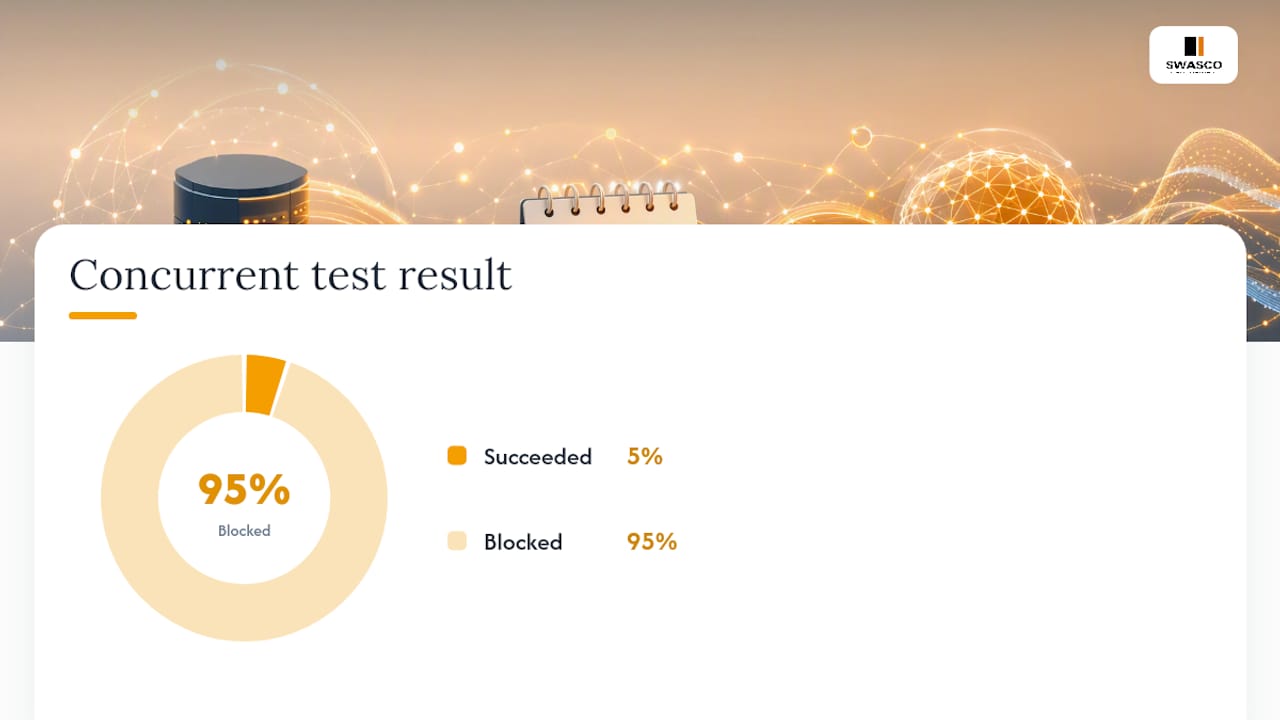
Pro Tip: Write a test script that fires 20 concurrent booking requests at the same slot and assert that exactly one succeeds. If your system passes that test, it will hold up in production; if it doesn't, you've found the bug before your customers did.
Where a booking touches other systems, such as payment capture or credit deduction, wrap the insert and those side effects in the same transaction wherever possible. A database constraint that blocks the booking doesn't undo a payment that already went through.
Settings that stop conflicts in Outlook, Google Calendar and booking platforms
Most businesses don't need to write code. They need to stop fighting their own calendar tool's defaults.
Outlook and Exchange: Set the allowable conflict rate on room and equipment resource mailboxes to 0%, so a second request is auto-declined outright rather than merely flagged. Exchange's calendar processing settings let administrators configure this directly, and larger organisations can script regular PowerShell audits to catch any resource where auto-decline has silently been switched off.
- Use resource mailboxes, not personal calendars, for anything bookable by more than one person.
- Run a monthly audit of conflict settings rather than assuming they stay configured correctly.
Google Calendar: Use bookable appointment slots rather than manually blocking out time, and share one authoritative calendar instead of maintaining several that need manual reconciliation. Sync settings should treat the primary calendar as the single source of truth.
Booking platforms: Centralise every channel through an API sync rather than a one-way calendar import, since one-way feeds go stale and create exactly the blind spots that cause overlaps. Configure availability rules to exclude time already blocked by external events.
For genuinely high-value bookings, keep a human gatekeeper who confirms manually. For routine, low-risk slots, automate acceptance and reserve the person's time for exceptions.
Operational guardrails: buffers, holds, reminders and staff workflows
Settings and code stop technical conflicts. Process stops the human ones.
- Centralise booking authority. Limit who can create or amend a resource booking to a small, named group; sprawling permissions are how "helpful" double entries happen.
- Use tentative holds with a short decision window. Give a customer or colleague 15 to 30 minutes to confirm before the hold releases automatically back into availability.
- Send two-way SMS reminders with a rebooking link. Reminders and easy online rescheduling measurably reduce no-shows and help reclaim freed capacity, turning a missed slot into a recovered one rather than a wasted one. Tools built for automating appointment reminders handle this cadence without manual chasing.
- Run a weekly backlog scrub. Long-dated tentative bookings quietly accumulate; releasing the unconfirmed ones weekly keeps your calendar honest.
- Only overbook where your own historical no-show data supports it. Airlines and clinics do this deliberately, but only with enough history to model the variance. Guessing is how deliberate overbooking becomes an accidental double booking.
Pro Tip: If cancellations spike on a particular day of the week, that's your signal for where a rapid-fill waitlist earns its keep, not a random broadcast to your full client list.
How to test and monitor for double bookings under load
Fixing the problem once doesn't mean it stays fixed. Ongoing checks catch regressions before customers do.
- Run scripted concurrency tests regularly, not just once at launch. Fire parallel booking attempts at the same slot and assert that only one commit succeeds every time.
- Monitor exclusion-violation and 409 error rates in your application logs. A rising rate isn't necessarily bad; it often means your constraint is doing its job under real contention. A rate of zero on a busy system is more suspicious.
- Run a daily audit query that checks confirmed bookings for any overlapping ranges per resource, and alert immediately if one turns up.
- Track four KPIs over time: conflict rate, 409 rate, reclaimed-slot rate after cancellations, and no-show rate following any change to your reminder cadence.
When an AI receptionist is the right fix, not more engineering
Not every business wants to build exclusion constraints. If bookings come in through calls, website chat, and social media separately, the real problem is often fragmentation, not a database bug. Fewer disconnected channels means fewer chances for two people to grab the same slot at once.
Some AI receptionist systems handle calls, SMS, website chat, and social media through one system with calendar sync, so a booking made on one channel is immediately visible on all the others — learn how to implement rezerwacje przez WhatsApp bez programisty. Onboarding, AI training, and ongoing optimisation may be offered, which matters if you'd rather not maintain a database schema. For a small team without in-house engineering, that's usually the faster route to zero conflicts than building the developer-grade fix yourself.
Database-level prevention and race-condition fixes in practice
The theory is straightforward; the practical detail is where most implementations quietly fail. A tstzrange and an EXCLUDE constraint only work if every booking path, admin panel included, actually goes through the same insert logic. A separate "quick add" screen that bypasses the constraint reopens the exact race condition you just closed.
The WHERE clause on your exclusion constraint matters as much as the constraint itself. Without one, a cancelled or tentative booking can still block a legitimate new one, because the database has no way to tell the difference between "this range is taken" and "this range used to be taken." Filtering the constraint to active statuses only, confirmed and pending, keeps cancelled rows from ghost-blocking real availability.
Serialisable transactions solve a subtler problem than the constraint alone: two transactions that each read a consistent snapshot of availability and both conclude a slot is free. The combined pattern of exclusion constraints plus serialisable isolation with retry catches both failure modes at once, the outright overlap and the phantom-read race, rather than relying on a single mechanism to catch everything.
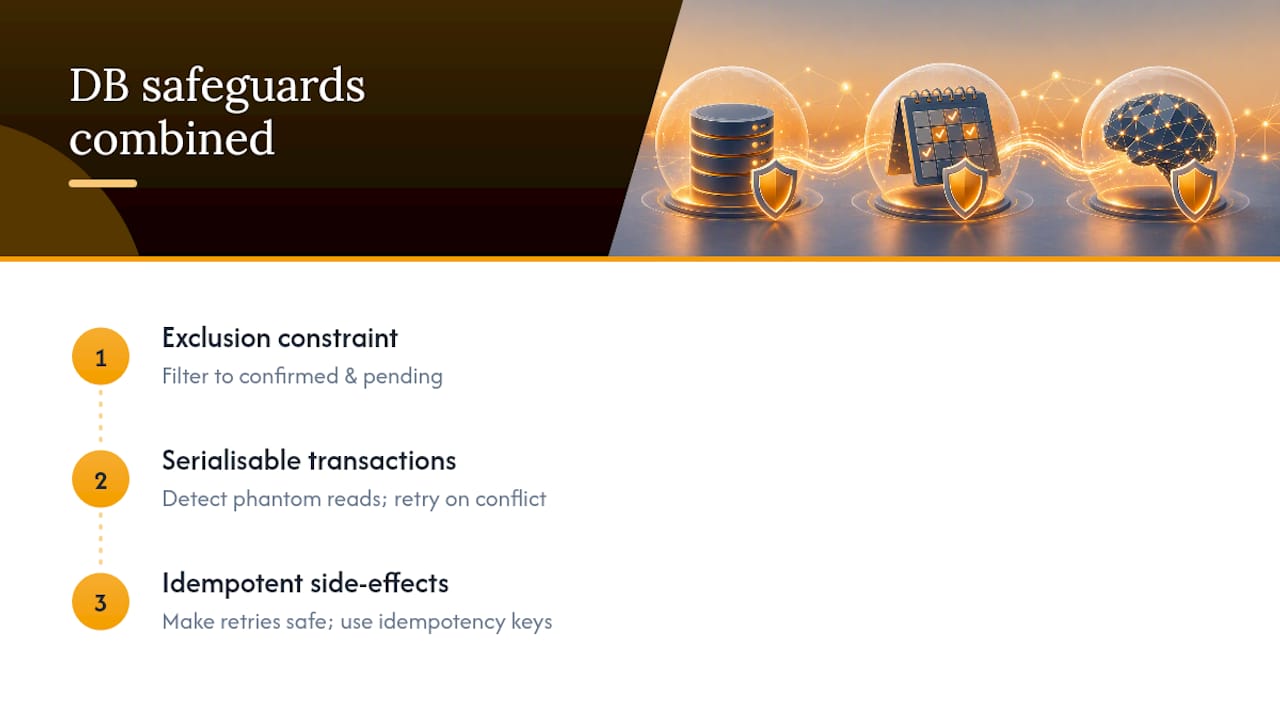
One detail developers miss: retries need to be safe to repeat. A serialisable transaction that fails and retries should not have partially applied side effects the first time round, which is exactly why idempotency keys and transactional side-effect handling belong in the same design conversation, not two separate ones.
Author perspective: strict prevention first, smoother UX second
Prioritise absolute overlap prevention before you polish the experience around it. A confirmed double booking costs you a customer relationship; a slightly clunky "that slot just went" message costs you nothing comparable. For small teams, one authoritative calendar often beats a technically elegant fix nobody maintains.
— James Paul
Talk2Aiva: an operational alternative to stop double bookings
Some comprehensive booking systems unify calls, SMS, website chat, and social media enquiries into one system with calendar sync, so a booking taken on any channel is confirmed instantly and visible everywhere else.
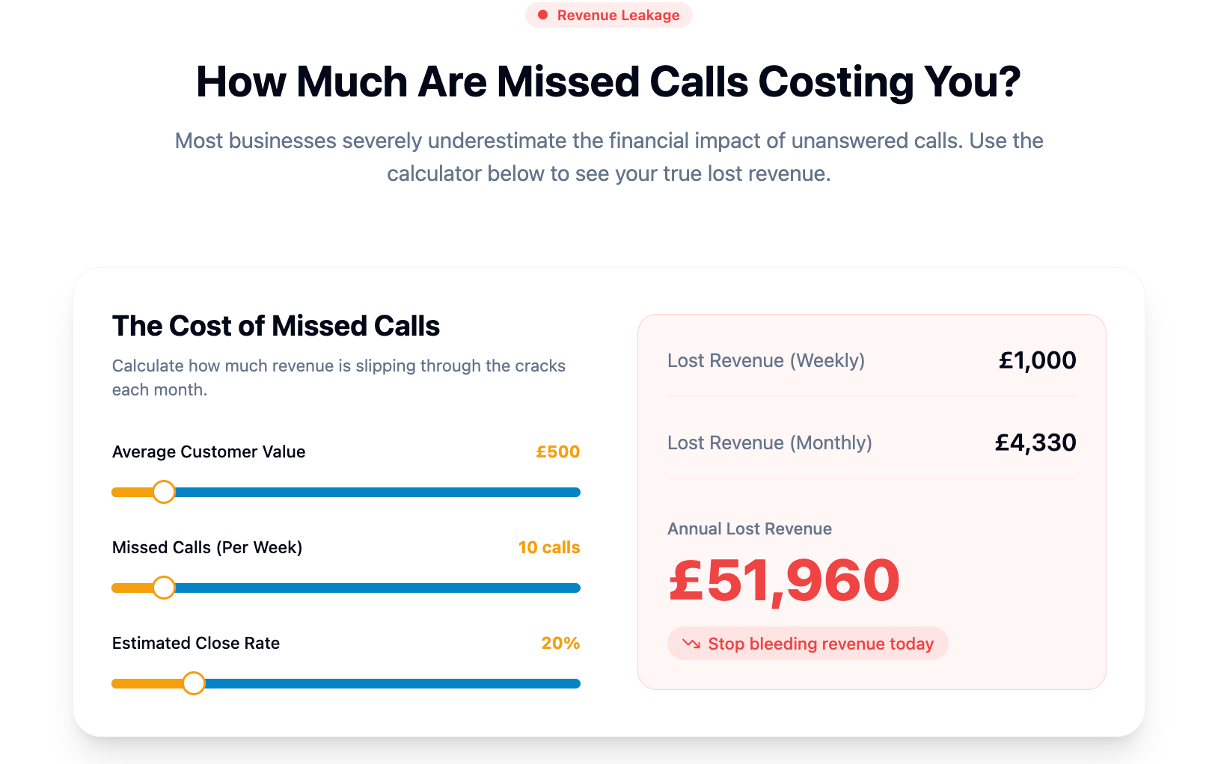
That matters most for service businesses where a receptionist, a website form, and a social media message can all be trying to fill the same slot at once. Talk2Aiva qualifies the enquiry, checks real availability, and confirms automatically, with automated follow-ups and review requests handled afterwards. Setup, AI training, and ongoing optimisation are included, so you're not left maintaining the system alone. If missed calls and clashing bookings are costing you revenue, Swasco.
Sources
- Preventing double-bookings with PostgreSQL exclusion constraints - DEV Community
- Study on online appointment systems and reminders (Frontiers in Digital Health, 2025)
- Double-Booking Prevention | The Booking Kit
- Vennio API Docs — prevent double-bookings
FAQ
How do I avoid double bookings?
Combine three layers: database-level constraints or platform settings that block overlaps automatically, buffer times and confirmations to catch human error, and reminders that reduce no-shows so freed slots get reused rather than wasted.
How can I prevent double bookings in Microsoft Bookings or Outlook?
Set the allowable conflict rate on resource mailboxes to 0% so a second request is auto-declined, and use Exchange's calendar processing controls rather than relying on staff to notice a clash manually.
How should a booking system be designed to avoid double booking?
Design the database, not the application code, as the final arbiter: a tstzrange column with an EXCLUDE USING gist constraint rejects overlapping rows even when two requests arrive at the same instant, which check-then-insert logic cannot guarantee.
How do I fix a double booking that's already happened?
Contact the affected party immediately with alternative times, then trace the cause: check whether your calendar sources are fragmented, your resource mailbox lacks auto-decline, or your booking code checks availability before inserting instead of after. A managed system like Talk2Aiva prevents the fragmentation version of this problem by keeping every channel synced to one calendar.
Do reminders actually reduce double bookings and no-shows?
Yes. Reminders paired with easy online rescheduling measurably reduce no-shows and help reclaim freed capacity, which indirectly reduces the pressure that leads to overbooking in the first place.