
Pest problems do not keep office hours. A wasp nest over the nursery door, rats heard in a kitchen ceiling at 10pm, cockroaches found in a takeaway before opening: these callers ring the first firm that answers, and they move on fast if nobody does. If you run a pest control business, after-hours enquiries are some of your most valuable and most easily lost jobs. This guide covers what makes a call urgent, what callers need from you, what the work is worth, and how to answer every call without running a night shift yourself.
TL;DR
- Out-of-hours callers are usually in distress and ready to book, so the first firm to respond tends to win the job.
- Genuine emergencies are a minority: active infestations in occupied rooms, food premises, wasp nests near entrances and anything forcing a closure. Many other calls can safely wait for the morning.
- A good first call collects a short, fixed set of details: postcode, property type, what was seen, where, since when, and what has already been tried.
- You do not need a 24-hour rota to capture this demand. An AI receptionist can answer, triage, book and alert you, around the clock.
- Talk2Aiva plans start at £970 per year, with setup and ongoing support included.
Table of Contents
- Why after-hours calls matter so much in pest control
- What counts as a real emergency
- When it can wait until morning
- What callers need to hear while they wait
- The details that make a first call useful
- What after-hours work is worth
- Landlords, tenants and letting agents
- Three ways to cover the phones, compared
- Our view: the missed call is the real emergency
- How an AI receptionist handles a 10pm pest call
- What Talk2Aiva costs
- A simple after-hours checklist for your business
- FAQ
- Sources
Why after-hours calls matter so much in pest control
Most trades are planned. Pest control is often not. People discover the problem in the evening, when the house is quiet, the kitchen light goes on and something runs across the floor. Or they find it first thing at the weekend, when your phones are off.

That changes how the caller behaves. They are not comparing five quotes over a week. They want a human voice, a clear next step and a time. If your call goes to voicemail, they ring the next name on the page.
The search results show the same thing. Pages ranking for this topic are almost all late-night and emergency call-out pages that lead with a 24/7 phone number. Buyers are looking for who will pick up, not for lengthy advice.
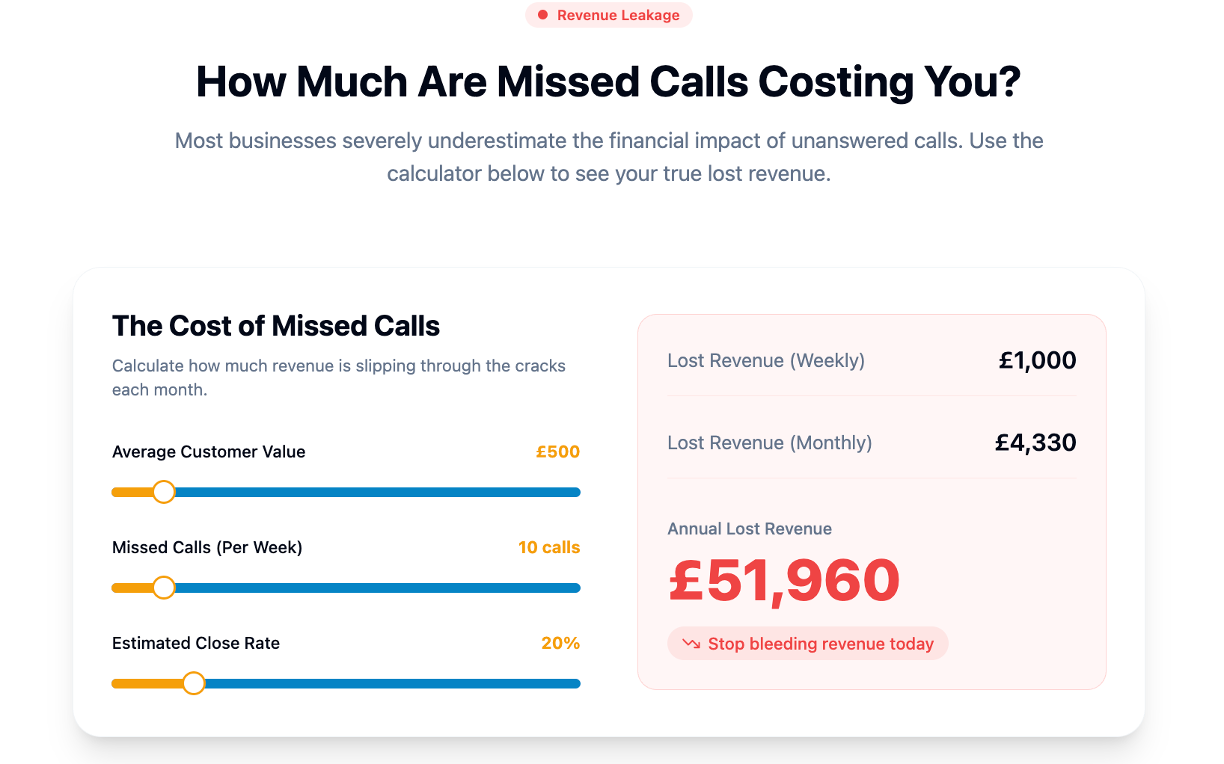
For a small firm the maths is stark. One missed call can be a single rat treatment, but it can also be a recurring commercial contract with a restaurant, a block of flats or a letting agent. Losing that first call at 9pm means losing everything that would have followed.
What counts as a real emergency
Not every pest call needs a technician at midnight. Knowing the difference helps you answer well, and it helps your customer too. Providers who handle urgent work commonly treat the following as warranting urgent advice:
- active rats or mice in occupied rooms
- wasp nests threatening entrances or public areas
- bed bugs spreading between rooms or accommodation units
- cockroaches in kitchens or food businesses
- trapped wildlife
- bird contamination near access routes
- any pest activity forcing a room or business area to close
Food premises
For food businesses the stakes are legal as well as practical. In 2024, South Oxfordshire District Council reported that cockroaches in food-preparation areas at a motorway service station created a significant contamination risk, and the affected units were closed immediately under a Hygiene Emergency Prohibition Notice. A restaurant owner who finds cockroaches before service has every reason to ring at once, and to keep ringing until someone answers.
Stings and allergic reactions
Some calls are not pest control calls at all. NHS guidance says most bee, wasp and hornet stings cause only slight swelling, but a generalised allergic reaction can involve swelling of the face, lips, tongue or airway, breathing difficulty, faintness or collapse. Anaphylaxis is an emergency that needs an immediate ambulance call. The Northern Care Alliance gives the same instruction: suspected anaphylaxis after a sting means calling 999 immediately.
Your call handling should reflect this. If a caller mentions someone struggling to breathe or swelling after a sting, the right answer is "call 999 now", not a booking slot. Build that into your script, whether a person or an AI is answering.
When it can wait until morning
Many out-of-hours calls are anxious rather than urgent. These usually can wait for the next working morning, as long as the caller feels heard and knows when you will come:
- a single mouse or rat sighting in a garage, shed or loft, with no sign of activity in living or food areas
- droppings found in an outbuilding
- an inactive wasp nest in a loft or shed, away from doors and play areas
- ants, fleas or moths, which are a nuisance rather than a risk
- a pest problem in an empty or unused part of a building
- quote requests and general questions
This is our judgement as people who work with service businesses, not a published rule, so adjust it to your own insurance, risk assessments and staffing. The principle is simple: triage on risk to people, food and access, then on distress.
The key is what happens to the waiting caller. A caller told "we will ring you at 8am, here is what to do tonight" stays with you. A caller who reaches voicemail does not.
What callers need to hear while they wait
The gap between the call and the visit is where you can build trust. A short, consistent set of safety instructions helps. Typical advice from emergency providers is to keep a safe distance from the affected area, avoid touching droppings or nests with bare hands, secure exposed food, avoid blocking access the technician may need, and avoid moving contaminated items or mixing several DIY products.

On products, the Health and Safety Executive is clear that members of the public should use only biocidal products intended for general-public use, follow the label, and never use products meant only for professionals. People and pets must be protected from harm. If a caller says they have already sprayed something, ask what it was. It affects what your technician will do.
The details that make a first call useful
A good after-hours call is a structured conversation. Industry guidance suggests the most useful information is the postcode and property type, what was seen or heard, the exact location, when it began, which rooms are affected, access constraints, vulnerable occupants or animals, and anything already tried.
In practice, that becomes a short checklist:
- Where: postcode and property type (house, flat, restaurant, office).
- What: what they saw or heard, and in which room.
- When: when it started and whether it is happening now.
- Who: children, elderly people, pets, or food being prepared nearby.
- Access: keys, gates, parking, who will be there.
- Already tried: poison, traps, sprays, or nothing.
- Contact: best number and the time they can be reached.
With those seven answers you can price, prioritise and allocate. Without them, someone has to ring back, and a ring-back at 7am to a customer who has already booked elsewhere is wasted effort.
What after-hours work is worth
Emergency work commands a premium. A UK cost guide notes that professional emergency call-outs carry an uplift over standard weekday rates, with genuine out-of-hours or weekend service costing considerably more because of the emergency response. Your own rate card should say what the uplift is, so the call handler can state it clearly at the start.
For reference on the standard end of the market, the Royal Borough of Kensington and Chelsea's published charges list £258.80 for a rat treatment, covering four visits and up to five rooms. Private firms set their own prices, but it gives callers a sense of scale, and it shows that a single rat job is a four-visit relationship, not a one-off.
What changes the price
Callers ask "how much?" in the first thirty seconds. Be ready to explain that the price depends on:
- the pest and the extent of the problem
- access to the affected areas
- the type of treatment needed
- the number of follow-up visits
- the time of day or week
Stating this honestly, and offering a fixed price once you have the seven details, wins more jobs than going quiet.
Landlords, tenants and letting agents
A large share of urgent calls come from renters, and many of them do not know who pays. This matters to you because the person calling may not be the person who authorises the work.
Citizens Advice explains that a tenant might be responsible if they caused the infestation, for example by not disposing of rubbish properly. The landlord will probably be responsible if the tenancy agreement says so, if the problem came from their failure to make repairs, or if the home is not safe to live in. It also notes that where an infestation is an emergency hazard under Awaab's Law, the landlord must make the home safe within 24 hours.
Councils give similar steers. Kensington and Chelsea tells tenants to contact their landlord or managing agent first, and says the council can investigate if the landlord does not act. Brent tells council tenants with mice, rats or cockroaches to contact Brent Housing Management.
So a good call handler asks one extra question: "Do you own the property or rent it?" If they rent, you can take the details, offer an inspection, and explain that the landlord or agent may need to approve the work. That also opens a door to the letting and estate agents who manage those properties, which is often where your steadiest repeat work sits.
Three ways to cover the phones, compared
Once you accept that calls matter at night, you have three realistic options.
| Option | What it does well | Where it falls short |
|---|---|---|
| You carry the phone yourself | Free, and you know the job | No rest, missed calls during jobs, burnout |
| Rota or on-call technician | Real person, real decisions | Wages and cover for holidays and sickness, and calls still drop during a job |
| AI receptionist | Answers every call instantly, follows your script, books and alerts you | Needs setting up properly and training on your services |
The first two both depend on a person being free at the moment the phone rings. A technician up a ladder or under a floor cannot answer. That is exactly when the caller needs an answer.
Our view: the missed call is the real emergency
We work with service businesses every day, and the pattern is the same in every trade. The work itself is not what goes wrong. The first contact is.
Pest control is an extreme case, because the caller is stressed and the job is often urgent and valuable. A missed call at 8pm is not a minor inconvenience. It is a customer choosing your competitor.
This is why we built Talk2Aiva as a fully guided system, not a box of software you have to figure out alone. We set it up with you, train it on your services and your triage rules, build the workflows, take it live and keep optimising it. For a pest controller, that means the AI can answer in a calm, human-sounding voice, ask the seven questions above, tell a caller what to do while they wait, book a visit into your calendar and send you a notification on your phone. It can also text or follow up by chat, so enquiries from your website or social media are not left until Monday.
A caller describing a breathing problem after a sting should be told to ring 999. A caller with a mouse in the garage should be reassured and booked for the morning. We would rather you decide those rules once, with us, than rely on whoever happens to pick up.
— James Paul
How an AI receptionist handles a 10pm pest call
Here is what a well-set-up call looks like from the caller's side.
- The phone is answered on the first ring, day or night.
- The assistant asks what has happened and where, and checks for any danger to people. If there is a medical emergency, it tells the caller to call 999.
- It collects the postcode, property type, location of the problem, when it started and what has been tried.
- It gives short safety advice: keep clear, do not touch droppings or nests, cover food, do not mix products.
- It states your call-out charge and, for true emergencies, books the earliest slot or alerts you straight away.
- For non-urgent problems, it books the first morning slot and confirms by text.
- Everything lands in one inbox, with a mobile notification, so you see the full picture before you ring back.
Afterwards, the system can chase unconfirmed quotes and ask satisfied customers for a review. Reviews matter in a trade where people choose in a hurry.
What Talk2Aiva costs
Talk2Aiva by SWASCO is a subscription with three tiers, each published as an annual price:
| Plan | Price |
|---|---|
| Software Suite | £970 per year |
| Ultimate AI Suite | £2,970 per year |
| Elite AI Suite | £4,970 per year |
Setup and ongoing technical support are part of the service, with done-for-you setup bundled into the higher tiers. Compare those figures with the value of a single commercial pest contract or a handful of emergency call-outs, and you can see how quickly one recovered customer starts to cover the cost.
You can see the plans and decide which suits your volume on our Talk2Aiva plans page.
If your phone rings out after 6pm, start with the Software Suite and grow from there. If you also want outbound calling, CRM integration and a fuller done-for-you build, look at the higher tiers. Either way, your first step is the same: stop sending customers to voicemail.
A simple after-hours checklist for your business
Before you change any technology, write down your own rules. It takes an hour and pays back every week.
- Define emergencies. List the situations that get a same-night visit and the ones that get a morning slot.
- Set your out-of-hours price. Decide the uplift and how you will state it.
- Write the safety script. Short, plain advice, with 999 for any allergic reaction.
- Decide the seven questions. Keep them the same every time.
- Name your decision-maker. Who is alerted, and how, for a true emergency?
- Add landlord rules. Who authorises work in rented homes, and who pays?
- Review weekly. Look at which calls came in after hours and what happened to each.
This checklist is also the training material for any receptionist, human or AI. The clearer it is, the better the result.
FAQ
Is it worth offering out-of-hours pest control?
For most firms, yes, as long as you price it properly. Emergency call-outs carry a premium over weekday rates, and urgent callers book quickly. You do not need to attend every call at night: answering every call, triaging it and booking the right slot captures most of the value.
Who pays for pest control in a rented home?
It depends on the cause and the tenancy agreement. Citizens Advice says a tenant may be responsible if they caused the problem, while a landlord is likely to be responsible if the agreement says so or if the problem came from unrepaired defects. Tenants should tell their landlord or managing agent first.
How much does it cost to get rid of rats?
Prices vary by firm and by property. As one published example, Kensington and Chelsea council charges £258.80 for a rat treatment covering four visits and up to five rooms. Private and out-of-hours prices are usually higher, so ask for a fixed quote after describing the problem.
Can an AI receptionist really handle pest control calls?
Yes, when it is set up around your services and rules. It can answer instantly, ask your triage questions, give safety advice, book into your calendar and alert you. At Talk2Aiva, we handle setup and training with you and keep supporting it after launch.
Sources
- South Oxfordshire District Council: cockroach infestation and Hygiene Emergency Prohibition Notice
- Royal Berkshire NHS: insect stings and bites
- Northern Care Alliance NHS: insect bites and stings
- Emergency pest control guidance
- HSE: using biocides overview
- A first pest-control call: the details that help
- TradeMatch UK: pest control cost guide
- Citizens Advice: pests or vermin in your rented home
- Royal Borough of Kensington and Chelsea: pests in rented accommodation
- Brent Council: pest control for your home
- RBKC: pest control treatments and charges