
Lead scoring is defined as the process of assigning a numeric value to each prospect based on their likelihood to convert into a paying client. For real estate agents, this means ranking every enquiry, portal registration, and viewing request so you spend your time on the people most likely to buy or sell. The technique combines two distinct data types: explicit data such as budget, location preference, and property type, and implicit data such as website visits, email opens, and viewing bookings. Lead scoring replaces the subjective gut feeling that most agents rely on with an objective, data-driven framework. The result is a system that tells you, at a glance, which leads deserve a call today and which ones need a nurture sequence instead.
What does lead scoring mean for agents in practice?
Lead scoring works by assigning points to specific actions and attributes, then totalling those points to produce a single priority rank. An agent might award 20 points to a lead who has a confirmed mortgage agreement in principle, 15 points to someone who has booked a viewing, and 5 points to someone who simply downloaded a property guide. The total score determines where that lead sits in your follow-up queue.
The most effective systems separate scoring into two axes: fit and intent.
- Fit (explicit data): Location match, budget range, property type preference, chain-free status, and timeline to move.
- Intent (implicit data): Number of property page views, email click-through rate, viewing bookings, and response speed to follow-up messages.
Blending fit and intent into a single score creates a misleading average. A lead with a perfect budget but zero engagement looks identical to a moderately engaged lead with a slightly lower budget. Scoring each axis separately and multiplying the two values produces a far more reliable priority rank.
Pro Tip: Set a clear "hot" threshold before you launch your scoring model. Optimal scoring systems aim for 5%–20% of leads to sit above that threshold at any one time. If more than 20% of your leads are "hot," your threshold is too low and your team will burn out chasing mediocre prospects.

Calibration matters as much as setup. Review your scoring model every quarter against actual closed deals. If high-scoring leads are not converting, your criteria need adjusting.
What are the benefits of lead scoring for real estate agents?
Lead scoring produces measurable gains in conversion and efficiency. AI-driven lead scoring systems improve conversion rates by up to 30% compared to static models. That figure reflects the compounding effect of contacting the right person at the right moment, rather than working through a flat list from top to bottom.
The practical benefits for agents are direct:
- Higher conversion rates. You contact your best prospects first, before they register with another agent.
- Less wasted time. Low-scoring leads receive automated nurture sequences rather than manual calls.
- Better client experience. Timely, relevant follow-up signals professionalism and builds trust.
- Objective prioritisation. Scoring removes personal bias from the decision about who to call next.
- Scalable outreach. You can handle a larger lead volume without sacrificing quality of contact.
The timing argument is particularly compelling. Salespeople who engage prospects during their active buying window are five times more likely to win the deal. In real estate, that window can be as short as 48 hours after a portal enquiry. A scoring system that flags those leads immediately gives you a structural advantage over agents who work from a static spreadsheet.
What lead scoring methods should agents know about?
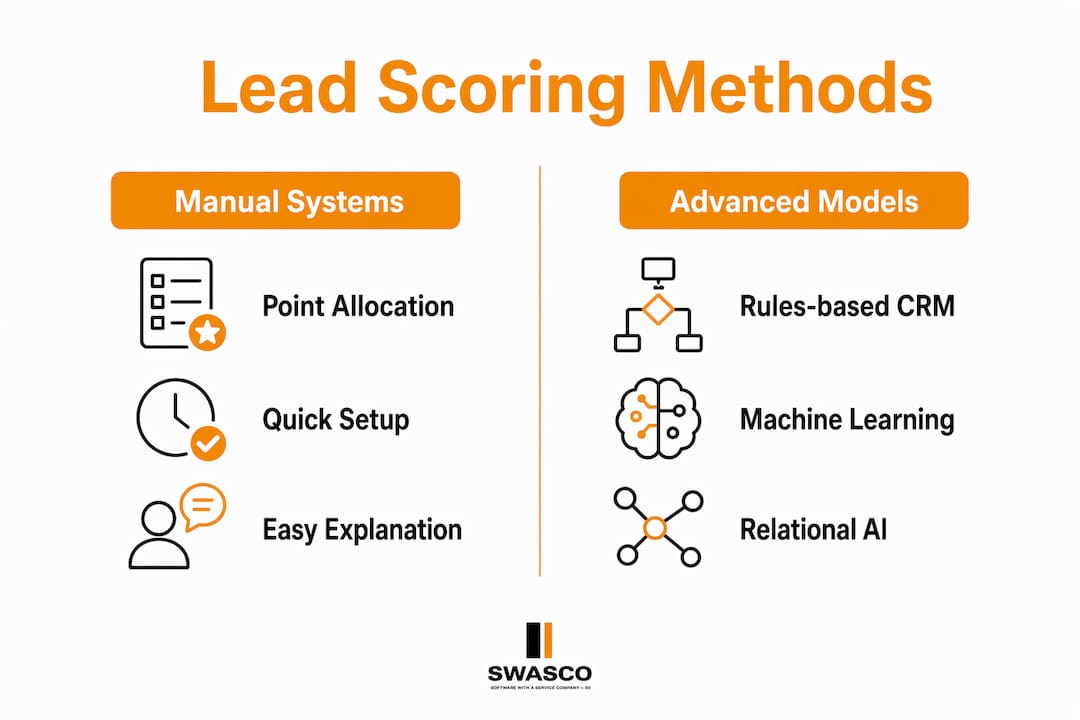
Lead scoring methods range from simple manual systems to machine learning models. Each has a different accuracy level and maintenance requirement.
Manual point systems
Manual scoring assigns fixed points to criteria you define yourself. It is quick to set up and easy to explain to your team. The weakness is bias. The criteria you choose reflect your assumptions, not necessarily what your data shows. Static manual point systems are prone to this kind of bias, and they do not update when market conditions change.
Rules-based CRM scoring
Most CRM platforms offer rules-based scoring, where you configure triggers such as "add 10 points when a lead books a viewing." This is more consistent than manual scoring and removes day-to-day human error. The limitation is rigidity. Rules cannot adapt to new patterns without manual reconfiguration.
Predictive machine learning models
Predictive models train on your historical CRM data to identify which combinations of attributes and behaviours actually led to closed deals. The model assigns weights dynamically rather than relying on your assumptions. This approach is significantly more accurate, particularly for agents with a large lead database. Understanding the broader AI impact on business ROI helps frame why this investment pays off at scale.
Relational AI models
Relational models go further by analysing network connections within your data. Colleague conversion signals can increase lead conversion probability by 3–5 times beyond standard behavioural scoring alone. In a real estate context, this means that if one person in a household or referral network converts, others in that network are statistically far more likely to follow.
Pro Tip: You do not need a machine learning model to start. Build a manual system first, collect 6–12 months of data, then migrate to a rules-based or predictive model once you have enough closed deals to validate your criteria.
How can agents implement an effective lead scoring system?
A working lead scoring system requires five clear steps. Skipping any one of them produces a model that scores confidently but converts poorly.
-
Define your ideal client profile. List the explicit attributes that your best past clients shared: location, budget, property type, chain status, and timeline. This profile becomes the foundation of your fit score.
-
Integrate behavioural data. Connect your CRM to your website, email platform, and portal feeds. Effective lead scoring distinguishes explicit data from implicit behavioural data to tailor nurture strategies. Without behavioural data, you are scoring on fit alone and missing intent entirely.
-
Set your scoring thresholds. Decide what score constitutes a "hot" lead, a "warm" lead, and a "cold" lead. Align these thresholds to your team's actual capacity. If one agent can handle ten hot leads per week, your threshold should produce no more than ten.
-
Validate against closed deals. Validated scoring models are tested against past closed deals to confirm that higher scores correlate with actual conversions. Run this check before you go live and repeat it every quarter.
-
Automate routing for hot leads. When a lead crosses your hot threshold, the system should trigger an immediate follow-up task or, better still, an automated response. Speed is the variable that most agents underestimate.
-
Combine scoring with human qualification. Scoring automates prioritisation; human qualification verifies readiness and suitability. A high score tells you who to call. The conversation tells you whether they are genuinely ready to proceed.
Pro Tip: Build a "re-engagement" rule into your model. If a lead's score drops below a set threshold after 30 days of inactivity, trigger an automated check-in message. Many agents lose warm leads simply because no one followed up after the initial enquiry.
How is AI changing lead scoring for agents in 2026?
AI has shifted lead scoring from a static administrative task into a dynamic, self-improving system. The practical changes for agents are significant.
- Dynamic weighting. AI models retrain on new closed deals automatically, adjusting which signals matter most as your market shifts.
- Edge case handling. Rigid rules miss unusual patterns. A lead who visits your site at midnight, reads six property listings, and never fills in a form looks cold by standard rules. An AI model recognises the behavioural cluster as high intent.
- Relational signals. As noted, colleague conversion data lifts conversion probability by 3–5 times. AI models can detect these network patterns at scale, something no manual system can replicate.
- Continuous updating. Market conditions in 2026 shift faster than annual model reviews can track. AI systems update in near real time, keeping your priority queue accurate.
- Faster lead response. AI-powered routing means a hot lead triggers an immediate response, not a task that sits in a queue until Monday morning. You can read more about qualifying property leads automatically to see how this works in a real estate workflow.
The compounding effect is real. AI-driven models produce up to 30% higher conversion rates than static systems. That gap widens as your lead volume grows, because AI scales without the accuracy degradation that manual systems suffer.
Key takeaways
Lead scoring is the most direct way for agents to convert more leads without increasing their working hours, provided the model separates fit from intent and is validated against real closed deals.
| Point | Details |
|---|---|
| Separate fit and intent | Score explicit and implicit data on two axes and multiply them for accurate prioritisation. |
| Set a calibrated threshold | Aim for 5%–20% of leads above the hot threshold to balance workload and opportunity. |
| Validate against closed deals | Test your model against past conversions before going live and review it every quarter. |
| Speed wins hot leads | Agents who contact leads during their active buying window are five times more likely to close. |
| AI improves accuracy over time | Predictive models retrain on new data, keeping scores accurate as market conditions change. |
Why most agents score leads wrong (and what actually works)
The most common mistake I see agents make is treating their lead score as a final verdict. A score of 85 out of 100 does not mean the lead is ready to sign. It means the lead deserves your attention first. That distinction matters enormously in practice.
The second mistake is collapsing fit and intent into a single number. I have watched agents chase a lead with a perfect budget who had not engaged with a single piece of content in three weeks, simply because their composite score looked strong. Scoring fit and intent separately, then multiplying, would have flagged that lead as warm rather than hot. The call could have gone to someone who had booked two viewings that week.
The third mistake is setting the threshold once and never revisiting it. Markets move. Buyer behaviour in a rising rate environment looks nothing like behaviour in a stable one. Your scoring model needs to reflect that. I would argue that quarterly validation against actual closures is the single most underused practice in real estate sales.
The agents who get the most from lead scoring are the ones who treat it as a living system rather than a setup task. They review it, challenge it, and adjust it. They also understand that a score is the start of a conversation, not a substitute for one. The role of AI in lead qualification is to make that conversation happen faster and with better information. The human judgement that follows is still yours.
— James Paul
How Talk2Aiva helps agents act on lead scores instantly
Real estate agents who score leads well but respond slowly still lose deals. The gap between a hot score and a live conversation is where revenue disappears.
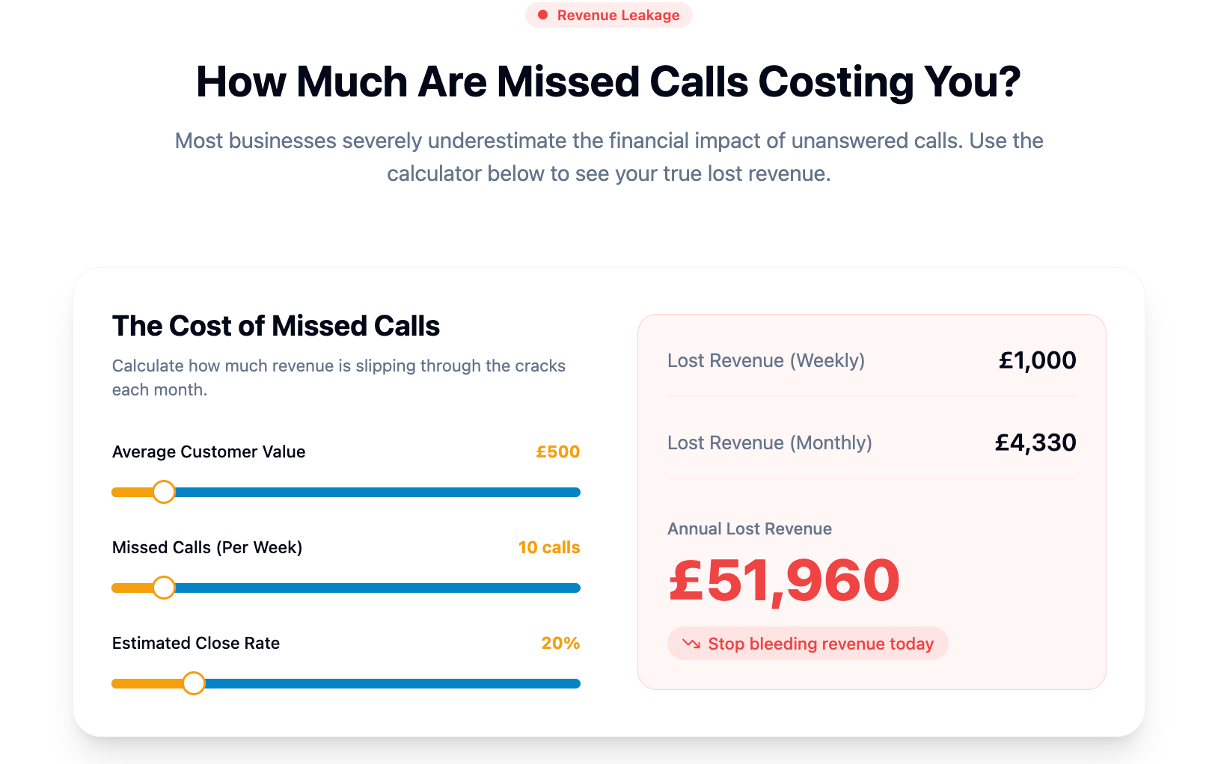
Talk2Aiva by SWASCO closes that gap. The platform engages, qualifies, and routes leads the moment they enquire, across calls, text, website chat, and social media, 24 hours a day. Hot leads receive an immediate response before a competitor picks up the phone. You get a prioritised queue with context already captured, so every conversation starts from a position of knowledge. See how the automation works and how it connects lead scoring to instant follow-up for estate agents. Setup, training, and ongoing support are included, so you are not left to figure it out alone.
FAQ
What is lead scoring in simple terms?
Lead scoring assigns a numeric value to each prospect based on how likely they are to convert. Higher scores indicate leads that deserve faster, more direct follow-up.
How does lead scoring work for real estate agents?
Agents award points for explicit attributes such as budget and location, and for behaviours such as viewing bookings and email engagement. The total score determines follow-up priority.
What percentage of leads should be classed as "hot"?
Between 5% and 20% of leads should sit above the hot threshold at any one time. A higher proportion usually means the threshold is set too low.
Is lead scoring the same as lead qualification?
No. Scoring automates prioritisation by ranking leads objectively. Qualification is the human conversation that confirms whether a lead is genuinely ready and suitable to proceed.
How does AI improve lead scoring accuracy?
AI models train on historical closed deals to weight signals dynamically, detect behavioural patterns that rigid rules miss, and update automatically as market conditions change.