
Improving lead response time is the single most effective action an estate agency can take to increase client engagement and win more instructions. Responding within 5 minutes makes you 100 times more likely to connect with a lead than waiting 30 minutes. That figure alone should reshape how your agency treats every new enquiry. Yet a Homeflow study found UK agents average almost 4 business hours to respond, with only 30% of enquiries receiving any reply at all. The gap between what the data demands and what most agencies deliver is where instructions are lost every single day.
How to improve lead response time in estate agency
Lead response time is the interval between a prospect submitting an enquiry and receiving a meaningful reply. In estate agency, "meaningful" is the operative word. Faster bad replies do not improve the client experience. The response must match the channel, match the intent, and carry clear ownership. Speed without quality simply delivers a poor experience faster.
The industry benchmark is a reply within 5 minutes. Lead quality drops 80% after that window closes. That means the majority of leads an agency receives are already cooling before most agents have even opened their inbox. The practical goal is not just to reply quickly but to reply with the right message, through the right channel, with a clear next step attached.

Two terms matter here. Lead response time refers to the speed of first contact. Lead engagement quality refers to how well that contact captures intent and moves the prospect forward. Best practice for lead response in 2026 requires both working together.
What tools and technology reduce lead response times?
Automation is the only reliable way to hit a sub-5-minute response standard at scale. A human team cannot monitor every channel around the clock without significant cost. Automation enables responses in under 2 minutes regardless of time of day, without adding headcount. One agency cut response times from 3 hours to 14 seconds by deploying an AI assistant to handle enquiries 24/7.
The core technology stack for fast lead response includes:
- Automated first-response systems that acknowledge enquiries instantly and confirm receipt across email, SMS, and web chat
- Conversational AI that qualifies leads in real time by asking intent-based questions before a human agent gets involved
- CRM integration that logs every enquiry, assigns it to an agent, and triggers follow-up tasks automatically
- Omnichannel coverage across phone, email, SMS, WhatsApp, and social media so no channel goes unmonitored
- Push notifications that alert the assigned agent the moment a high-intent lead arrives
Conversational AI captures more client context than static web forms, delivering up to 40% higher lead conversion through richer qualification. That is a direct result of asking the right questions at the right moment, rather than waiting for a human to call back hours later.
Pro Tip: Set your automated first response to include one qualifying question, such as "Are you looking to sell, let, or value your property?" The answer immediately segments the lead before any human time is spent.
The table below compares the key feature categories to look for when evaluating lead response technology.
| Feature category | What it does | Why it matters |
|---|---|---|
| Instant acknowledgement | Confirms receipt within seconds | Keeps the lead warm while agents prepare |
| AI qualification | Asks intent questions automatically | Prioritises leads before human contact |
| Omnichannel coverage | Handles phone, SMS, email, chat | Prevents leads falling through channel gaps |
| CRM sync | Logs and assigns leads automatically | Removes manual data entry delays |
| Push notifications | Alerts agents to hot leads in real time | Ensures high-intent leads get immediate attention |
How should you prioritise leads by intent and behaviour?
Not all leads deserve the same response speed or format. High-intent leads such as valuation requests and landlord instructions require an immediate phone call. Low-intent leads, such as a general property browse or a saved search alert, can enter an automated drip sequence without any agent time at that stage.
Behavioural intelligence makes this distinction possible at scale. Tracking how a prospect interacts with your listings, which pages they visit, how long they spend on a valuation page, and whether they open your emails reveals intent before they even make contact. Agencies using behavioural intelligence observed engagement-related conversion increases from 18.6% to 21.6%. That uplift comes from focusing human effort on the leads most likely to instruct.
The practical criteria for classifying a lead as high-intent include:
- Requesting a valuation or market appraisal
- Asking about landlord services or property management
- Returning to the same listing multiple times within 48 hours
- Opening follow-up emails and clicking through to property details
- Submitting a viewing request for a specific property
Low-intent leads, by contrast, benefit from a structured drip sequence that keeps your agency visible without consuming agent time. The goal is to nurture them until a behavioural signal indicates they are ready to act.
Pro Tip: Build a simple lead scoring model in your CRM. Assign points for each high-intent action, such as 10 points for a valuation request and 3 points for a listing view. Any lead crossing a threshold of 15 points triggers an immediate agent notification.
What is the step-by-step system for faster lead follow-up?
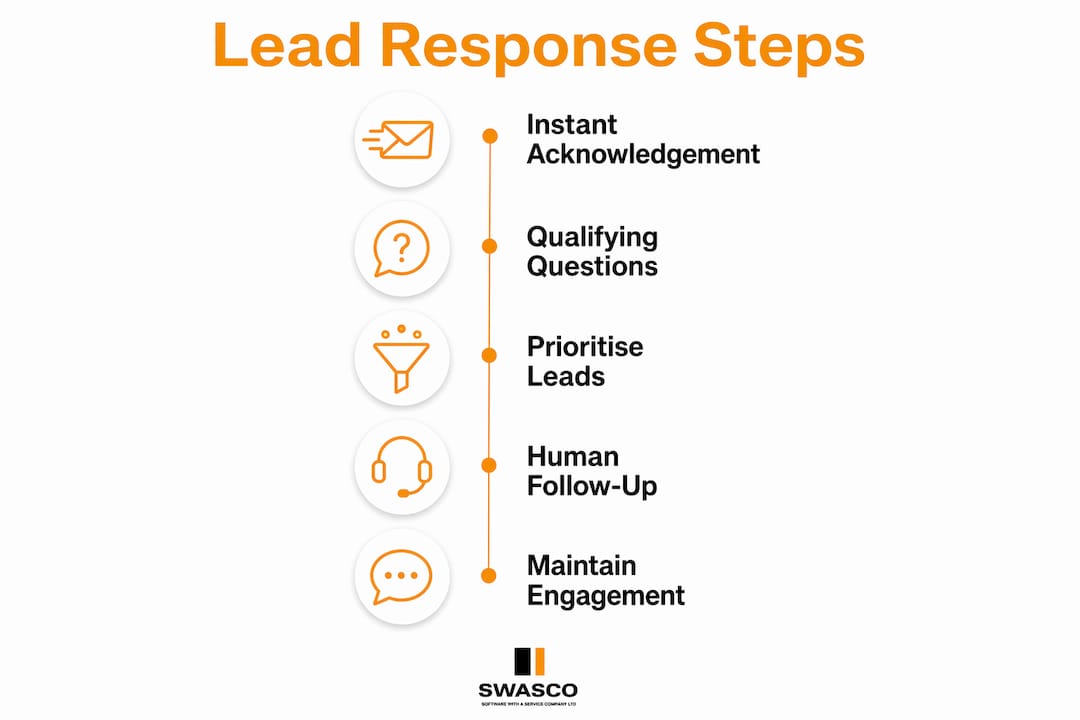
A repeatable system removes the guesswork from lead response. The following sequence reflects best practices for lead response in 2026 and applies to both sales and lettings enquiries.
-
Instant automated acknowledgement. The moment an enquiry arrives, an automated message confirms receipt. This message should be personalised to the enquiry type and include one qualifying question. Personalised automated responses outperform generic acknowledgements in both engagement and categorisation accuracy.
-
Intelligent triage. The AI or CRM system categorises the lead based on the enquiry type, the channel used, and any qualifying answers provided. High-intent leads are flagged immediately. Low-intent leads enter a nurture sequence.
-
Push notification to the assigned agent. For high-intent leads, the responsible agent receives an immediate alert with the lead's details and qualifying answers. This removes the need to check a shared inbox manually.
-
Human follow-up within 5 minutes. The agent calls the lead directly. If there is no answer, a voicemail is left and an SMS is sent within the same minute. 90% of SMS messages are read within 3 minutes, making it the most reliable fallback channel.
-
Structured multi-touch follow-up sequence. If the first contact attempt fails, the system schedules further attempts across calls, emails, and SMS. Average sales representatives make only 1.3 attempts before giving up. A structured sequence of 5–7 contacts across 10 days significantly increases connection rates.
-
Qualification and handoff. Once contact is made, the agent completes qualification using a consistent script aligned to the lead's stated intent. The lead is then moved to the appropriate pipeline stage in the CRM.
You can use a lettings lead qualification checklist to standardise what agents ask at this stage and reduce variation in response quality.
What mistakes slow down lead response in estate agencies?
The most common error is treating an automated acknowledgement as a complete response. Tracking receipt, acknowledgement, and meaningful response separately is what actually improves service quality. An agent who sees "automated reply sent" in the CRM and moves on has not responded. They have only bought a few minutes of goodwill.
Other frequent mistakes that cost agencies instructions include:
- Ignoring lead intent signals. Treating a valuation request the same as a general enquiry wastes agent time and frustrates high-value prospects.
- Single-channel coverage. Relying on email alone misses leads who enquire via phone, WhatsApp, or social media. An omnichannel approach is the only way to capture every contact.
- Underestimating out-of-hours enquiries. Nearly 40% of agents took over 24 hours to respond to viewing requests. Many of those enquiries arrived outside office hours and received no automated response at all.
- Giving up too early. Most agents make one or two contact attempts and then mark the lead as cold. A structured follow-up sequence dramatically improves contact rates.
- No ownership model. When every agent can see a lead, no agent feels responsible for it. Assign leads to named individuals with clear accountability.
For a detailed breakdown of where agencies go wrong, the guide on common lead response mistakes covers each pitfall with practical fixes.
Pro Tip: Audit your last 50 enquiries. Record the time from enquiry submission to first meaningful human contact. The result will almost certainly reveal a gap larger than you expect, and it will tell you exactly where your system needs attention.
Key takeaways
Speed and quality together determine whether an estate agency converts enquiries into instructions. Responding within 5 minutes, using AI to qualify leads, and following a structured multi-touch sequence are the three practices that separate high-performing agencies from the rest.
| Point | Details |
|---|---|
| Five-minute response window | Lead quality drops 80% after 5 minutes; automate to hit this benchmark consistently. |
| Prioritise by intent | High-intent leads need an immediate phone call; low-intent leads enter a nurture sequence. |
| Omnichannel coverage | Cover phone, SMS, email, and WhatsApp to prevent leads falling through channel gaps. |
| Structured follow-up | Make 5–7 contact attempts across 10 days; most agents give up after 1.3 attempts. |
| Separate acknowledgement from response | An automated reply is not a response. Track meaningful human contact as a separate metric. |
Speed is not enough: what I have learned about lead response in estate agency
The agencies I see winning instructions in 2026 are not simply the fastest to reply. They are the most consistent. Speed matters enormously in the first 5 minutes, but after that window, quality and persistence take over. I have watched well-resourced agencies lose instructions to smaller competitors simply because the smaller agency had a system and the larger one relied on individual effort.
The shift I find most underappreciated is behavioural intelligence. Most agents still treat all enquiries as equal. The data says otherwise. A prospect who has visited your valuation page three times in a week and opened your last two emails is not the same as someone who clicked a Rightmove listing once. Treating them identically is a waste of your best agents' time and a missed opportunity with your hottest prospects.
AI is changing what is possible here, but not in the way most people expect. The value is not in replacing agents. It is in giving agents better information faster. When an agent picks up the phone to a lead, they should already know what that lead has looked at, what they asked in the automated chat, and how they were categorised. That context turns a cold call into a warm conversation.
My honest advice: stop measuring response time as a single number. Measure it in three stages. How long until acknowledgement? How long until qualification? How long until meaningful human contact? Each stage tells you something different about where your process is breaking down. Fix the right stage and your conversion rate will follow.
— James Paul
How Talk2Aiva handles lead response for estate agencies
Estate agencies that rely on manual processes to manage enquiries are losing instructions every week to agencies that have automated the first response, the qualification, and the follow-up.
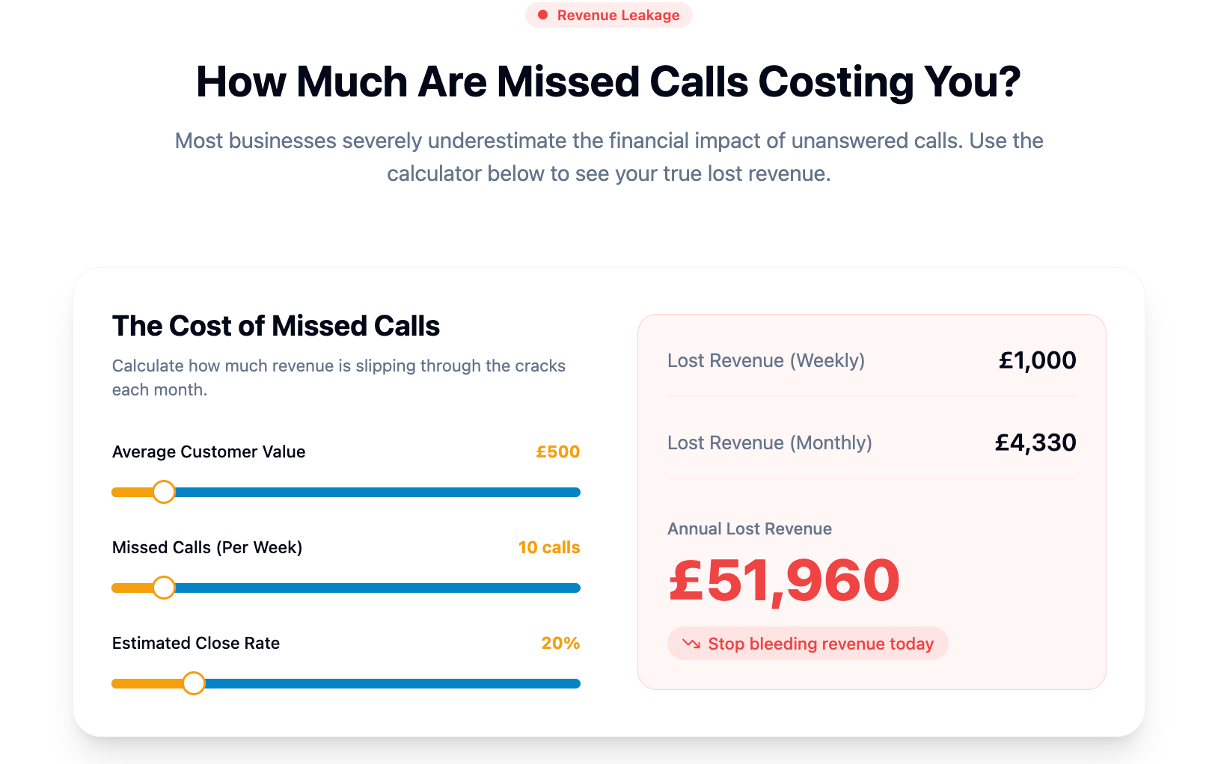
Talk2Aiva by SWASCO gives your agency a fully managed AI receptionist that responds to every enquiry within seconds, qualifies leads with intent-based questions, and routes hot prospects directly to your agents with full context attached. It covers calls, SMS, web chat, and social media, so no enquiry goes unanswered regardless of when it arrives. Setup, training, and ongoing support are all included. If you want to see how it works for estate agencies, visit the Talk2Aiva platform and request a walkthrough.
FAQ
What is a good lead response time for estate agents?
The industry benchmark is 5 minutes or under. Lead quality drops 80% after this window, making sub-5-minute response the standard to target for high-intent enquiries.
How can estate agents respond to leads outside office hours?
Automated AI systems handle out-of-hours enquiries by acknowledging the lead instantly, asking qualifying questions, and alerting the assigned agent at the start of the next working day with full context included.
What is the difference between lead acknowledgement and lead response?
Acknowledgement confirms receipt of an enquiry. A meaningful response qualifies the lead's intent and proposes a clear next step. Tracking both separately is what improves actual service quality.
How many follow-up attempts should an agent make?
A structured sequence of 5–7 contact attempts across 10 days is the best practice standard. Most agents make only 1.3 attempts before stopping, which means the majority of reachable leads are never actually contacted.
Does conversational AI improve lead conversion in estate agency?
Yes. Conversational AI delivers up to 40% higher lead conversion compared to static forms by capturing richer qualification data in real time and routing leads to agents with full context already gathered.