
Google reviews automation works by triggering review requests at the right moment, splitting happy customers from unhappy ones, and using AI to draft replies for a human to approve. Done properly, it lifts review volume without adding to your workload.
TL;DR:
- Trigger requests should be linked to the true completion event, such as a job finished or appointment closed, to maximize review response rates.
- Routing feedback based on star ratings prevents public rating damage by directing unhappy customers to private forms before posting reviews.
- Using a human approval step for AI-drafted replies helps maintain appropriate tone, especially for negative reviews, reducing reputation risks.
- Collecting and analyzing key metrics like request-to-click and response times ensures the review workflow remains effective and improves over time.
- Starting small with one trigger and one channel allows for better tuning of timing and wording before scaling the review automation system.
Table of Contents
- What is google reviews automation, and why does it matter?
- Quick checklist: what to automate right away
- Step-by-step setup: build a reliable review automation workflow
- Best triggers and channel strategy (when and how to ask)
- Feedback-split, templates and wording that convert
- Monitoring, reply workflow and escalation (AI plus human gate)
- How Talk2Aiva supports review automation
- What I'd actually recommend if you're starting from scratch
- How Talk2Aiva helps with your review workflow
- Sources
What is google reviews automation, and why does it matter?
Google reviews automation removes the guesswork from asking for feedback. Instead of a manager remembering to text a happy client at the end of the week, a trigger fires the moment a job finishes, an appointment ends, or a delivery lands. The request goes out automatically, on the channel the customer prefers, and the reply (if there is one) gets logged so nobody has to check three different inboxes to find it.
That matters because reviews are one of the main ways people decide which local business to call. Online recommendations sit among the most common methods people use to discover or recommend local businesses, which means a thin review profile is a genuine acquisition problem, not just a vanity metric. Manual review requests fail for a mundane reason: staff get busy, forget, or feel awkward asking. Automation removes that dependency entirely.
The mechanics rest on three moving parts working together:
- Triggered requests — an event (job done, appointment closed, order delivered) fires the ask automatically, at the right moment.
- Feedback-split routing — happy customers go to the public Google review link; unhappy ones go to a private form first.
- AI-assisted replies — a draft response gets generated instantly, then a human approves it before it goes live.
None of this replaces good service. It just makes sure good service gets recorded where prospective customers can see it.
Quick checklist: what to automate right away
Before building anything complex, get these fundamentals running. They cover most of the value with the least engineering effort.
- Pick one trigger and stick to it. Tie the request to the true completion event, job finished, invoice paid, appointment closed, not an arbitrary time of day.
- Make the ask one click. A pre-filled star rating and a direct link to your Google Business Profile review page removes friction that kills completion rates.
- Store channel preference. If a customer has previously replied to SMS, use SMS again. Don't force everyone onto email by default.
- Split feedback before it goes public. Route four and five star sentiment to the public review link; route one to three star sentiment into a private form.
- Add deduplication and opt-out logic. Nobody should get asked twice for the same job, and anyone who opts out should stay out.
- Track five numbers. Requests sent, click-through rate, completion rate, average response time, and rating trend over time.
Pro Tip: Run the checklist against your last 20 completed jobs manually before automating anything. If you can't answer "what event should trigger this?" cleanly for all 20, your trigger definition needs work before your workflow does.
Step-by-step setup: build a reliable review automation workflow
Building a review automation flow is less about clever technology and more about getting the sequencing right. Skip a step here and you either annoy customers or end up with duplicate, messy data six months in.
Step 1: Identify the correct trigger event. The most common mistake is triggering on the wrong moment, a booking confirmation instead of a completed appointment, or an order placed instead of an order delivered. Test timing on a small batch first. For hospitality and quick-turnaround services, the trigger should fire close to the moment of experience. For deliveries or installations, waiting a day or two often produces better completion rates because the customer has had time to actually use what they paid for.
Step 2: Implement idempotency and rate limits. Every transaction needs a boolean flag showing whether a request has already been sent for that specific job, so a system hiccup or a re-synced record never triggers a second ask. Layer a customer-level rate limit on top, a 30-day window between requests is a sensible default, so frequent buyers don't get asked every time they interact with you.
Step 3: Decide channel logic and fallbacks. Default to SMS when you hold a verified mobile number, since it typically converts fastest for a quick task like leaving a review. Fall back to email when you don't. If a customer has replied to WhatsApp before, use it again rather than switching them to something new.
Step 4: Build the feedback-split form. This is the single most important structural decision in the whole workflow. Rather than deciding in advance who gets asked based on how happy you assume they are, collect a quick star rating on your own form first, then route based on the answer. SitePoint's implementation guide sets this out clearly: four and five star respondents get sent straight to the Google review link; one to three star respondents land in a private feedback form instead.
Step 5: Wire up logging and notifications. Every request sent, every click, every completed review, and every reply needs to land somewhere auditable, a CRM record or a shared spreadsheet works fine. An n8n workflow template demonstrates this well: new reviews trigger a Slack alert for the team and get logged to Google Sheets automatically, so nothing slips through unnoticed.
Step 6: Add AI-draft replies with a human approval gate. Use an AI model to generate a first-pass reply to every new review, then require a person to check it before it posts. Zapier's guide to Google Business Profile reply automation shows this exact pattern, a new review triggers an AI-drafted response, which then either auto-publishes or waits for approval depending on the rating. Build a clear escalation path for anything below four stars so a real person handles it, not a template.
The full sequence, condensed:
- Trigger fires on true completion
- Idempotency check and rate limit applied
- Channel selected from stored preference or sensible default
- Star rating captured, feedback split into public or private path
- Every step logged and surfaced to the team
- AI drafts the reply, a human approves or escalates it
Best triggers and channel strategy (when and how to ask)
Timing changes completion rates more than almost anything else in the workflow. A request sent at the wrong moment gets ignored even from a genuinely happy customer.
Hospitality and quick-service businesses do best asking immediately, while the experience is still fresh and the customer is still on-site or just leaving. Deliveries, installations, and home services convert better with a delay of two to 72 hours, giving the customer time to actually use whatever they bought before you ask them to judge it.
Channel choice follows a similar logic:
- SMS tends to convert fastest for a short, single-action task like clicking a review link, particularly when the customer's mobile number came from the booking itself.
- Email works better for longer-cycle services where the customer expects a written follow-up anyway, such as legal or financial work.
- WhatsApp suits businesses whose customers already message them on it, salons and trades often fall into this bracket.
- QR or NFC at point of service works well for in-person businesses, a printed code on a receipt or a tap point near checkout captures the moment while the customer is still standing there.
Store the customer's channel preference the first time they respond, then default sensibly when you have no history, SMS when you hold a phone number, email otherwise. For reminders, one gentle follow-up after 48 to 72 hours is usually enough. Beyond that, stop. A second nudge past that window reads as pestering rather than persistence, and it damages the relationship more than a missing review ever would.
Feedback-split, templates and wording that convert
The feedback-split pattern is the backbone of any credible review automation workflow, and it works by asking a small question before the big one. Collect a simple star rating on your own micro-survey first. Four and five stars route straight to the public Google review link; one to three stars route to a private remediation form instead. This protects your public rating while still giving unhappy customers somewhere to be heard.
A request template that actually gets clicked usually has four components:
- A personalisation token — the customer's name and, ideally, a reference to what you did for them.
- A short, direct ask — one sentence, no preamble.
- A single one-click link — pre-filled where possible, no login friction.
- An honest time estimate — "takes about 30 seconds" sets expectations and reduces drop-off.
AI tools can speed up drafting these templates and keep tone consistent across hundreds of sends, but a human should still glance over the first batch before it goes live, particularly the private remediation replies, where tone matters more than speed.
Pro Tip: Test your review link on a mobile device before launching. A desktop-optimised link that forces a login screen on phones will quietly kill your completion rate, and you'll never know why the numbers look flat.
One guardrail matters more than any template wording: never decide in advance who gets asked based on how happy you think they'll be. The split happens on the form, after the fact, not by filtering out customers you suspect had a bad experience. Pre-selecting who gets invited is both a policy risk and a bad habit that hides real problems from you.
Monitoring, reply workflow and escalation (AI plus human gate)
A review automation setup that ends at "request sent" is only half finished. The other half is what happens once reviews start arriving.
Set up a monitor trigger, either a Google Business Profile webhook or a scheduled sync, that catches new reviews the moment they post and pushes an alert to a shared Slack or Teams channel. From there, the reply logic can split by rating:
- Four and five star reviews can auto-publish an AI-drafted reply without a human gate, since the risk of a bad response is low and speed matters for engagement.
- Reviews under four stars should always hold for manual review before anything posts, AI speeds up drafting, but a person should approve anything below that threshold.
- One to three star feedback caught via the private form should route straight to an assigned staff member with a follow-up deadline, not just sit in a queue.
Four metrics tell you whether the whole system is actually working: request-to-click rate, click-to-completion rate, average rating movement over time, and response time on negative feedback. A workflow with logging built in from the start makes these numbers trivial to pull. One built without it means guessing.
Around 60% of consumers say online reviews and recommendations rank among the top ways they discover local businesses, which is precisely why the reply side of this workflow deserves the same rigour as the request side. A fast, human-checked response to a bad review often does more for trust than the review itself.
How Talk2Aiva supports review automation
Some providers map the trigger events specific to your business, whether that's a completed booking, a finished job, or a closed enquiry, then build the request and feedback-split workflow around it. Onboarding, AI training, and workflow building may be handled as part of setup, rather than left for you to configure alone.
- Guided onboarding to identify your correct trigger events and channel preferences
- AI training to help drafted replies match your tone before anything reaches a customer
- Workflow building covering triggers, feedback-split routing, and logging
- Ongoing optimisation and technical support to help the workflow improve after launch, not just at go-live
What I'd actually recommend if you're starting from scratch
Start small. Pick one trigger, one channel, and run a pilot on your next 50 completed jobs before you touch anything else. Watch request-to-completion conversion, not vanity metrics like total requests sent, because that number tells you whether the timing and wording are actually working.
The feedback-split pattern with a human approval gate on replies isn't a nice extra. It's the difference between a workflow that protects your reputation and one that quietly creates a compliance headache. Get that part right first.
— James Paul
How Talk2Aiva helps with your review workflow
Some providers offer a guided alternative to piecing together review automation yourself from a stack of no-code tools and hoping the triggers behave. Instead of wiring up webhooks, testing idempotency logic, and manually approving every AI-drafted reply yourself, some offer to handle the setup, train the AI on your tone, and keep the workflow running with ongoing support included.
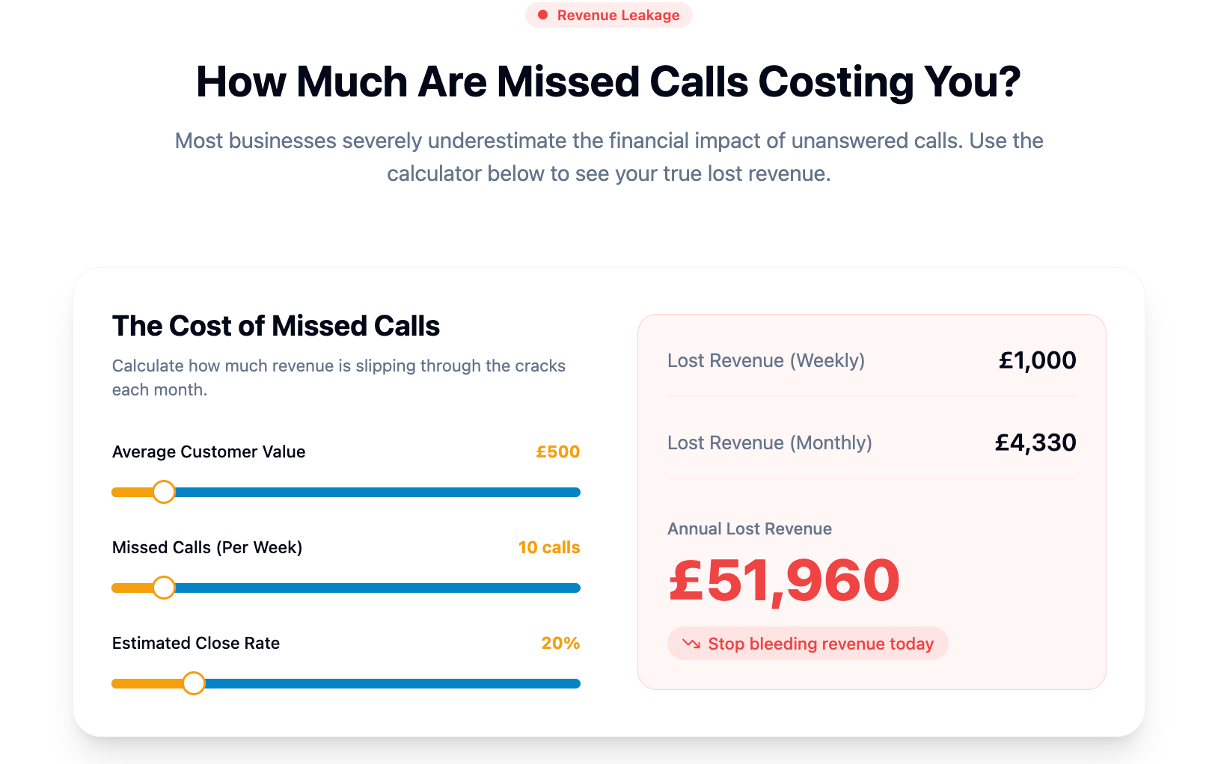
That means fewer missed leads overall, since a conversational AI platform that automates review requests can also answer calls, texts, and web chat around the clock, catching enquiries that would otherwise go unanswered while you're busy running the business. Review requests fire automatically after every completed job, replies get drafted and routed for approval, and everything logs back to one place instead of three.
If you'd rather have this built for you than build it yourself, book a walkthrough of Talk2Aiva and see how the setup would map onto your specific triggers and channels.
Sources
- Statista — Local business recommendation methods
- Zapier — How to automatically respond to Google Business Profile reviews
- SitePoint — How to get more Google reviews automatically: a developer's implementation guide
- n8n — Automate Google Business reviews with AI responses, Slack alerts & Sheets logging