
Client retention in real estate is defined as the practice of maintaining active, ongoing relationships with past clients to generate repeat business and referrals. For London estate agents, it is the single most underdeveloped revenue source in the business. Only 12% of buyers actually rehire their previous agent, despite 88% saying they intend to. That gap exists because 91% of agents go silent after closing. The estate agent client retention tips in this guide close that gap with a disciplined, data-backed approach to communication, personalisation, and follow-up that works in the competitive 2026 London market.
What makes a strong estate agent client retention strategy?
The foundation of any effective retention strategy is consistent, multi-channel communication that delivers genuine value. Agents who retain clients do not wait for a reason to call. They build a structured contact cadence of 12 or more annual touchpoints, mixing automated content with personal outreach. That frequency keeps you present in a client's mind without feeling intrusive.

The channels you use matter as much as the frequency. Phone calls, SMS, email, and social media each serve a different purpose. SMS reaches clients who ignore email. Calls build trust that texts cannot replicate. Email delivers detailed market updates efficiently. A strong retention strategy uses all three rather than defaulting to one.
The ratio of your outreach content also matters. Aim for 80% informational and 20% promotional. Clients disengage when every message feels like a pitch. When you send a school catchment area update or a stamp duty reminder with no ask attached, you become the adviser rather than the salesperson.
- Consistent cadence: Aim for at least 12 contacts per year per client, spread across channels.
- Value-first content: Market updates, local property news, and life event reminders outperform promotional messages.
- Personalised triggers: Use behavioural and life event data to time your outreach to moments that matter.
- Post-closing engagement: Set expectations at the final walkthrough that you will stay in touch. Most agents never do this.
- Automation plus personal touch: Automate the scheduling and content delivery, but keep calls and handwritten notes personal.
Pro Tip: At the final walkthrough, tell your client directly: "I will be in touch every few months with updates relevant to your property." That single sentence sets the expectation and makes your follow-up feel welcome rather than unexpected.
Which follow-up techniques actually retain clients?
Speed is the most underused retention tool at the lead stage. Responding within 5 minutes increases conversion by 21 times compared to a 30-minute delay. That window closes fast in London, where buyers and sellers are often speaking to multiple agents simultaneously.
For new leads, the "10 Days of Pain" framework is the most structured approach available. It involves daily multi-channel contact until a conversation begins, then reduces frequency as the lead warms. Daily texting beyond one week reduces effectiveness and risks a spam perception. The goal is intensity early, then a sustainable cadence.
For past clients, the monthly market update call is the single highest-ROI retention activity. Monthly calls for 200 contacts take approximately 30 minutes and far outperform gifts or seasonal cards in building genuine loyalty. A 15-minute annual property review call surfaces life changes, flags new needs, and reinforces your advisory role.
- Respond within 5 minutes to new enquiries. Use SMS or a call, not email.
- Apply the "10 Days of Pain" framework for new leads: daily multi-channel contact until the conversation starts.
- Send monthly market updates via email or SMS. Keep them local and specific to the client's area or property type.
- Book a 15-minute annual property review call with every past client. Ask about life changes, not just property plans.
- Use SMS for past client outreach. SMS response rates reach 40–60% for past clients, compared to 5–10% for email.
- Follow up on every referral with a personal thank-you call, not an automated message.
- Track open and click rates on email campaigns to identify which clients are actively engaged and prioritise your calls accordingly.
Pro Tip: Keep a simple spreadsheet of every past client's last contact date. If any name has not been contacted in 60 days, call them that week. The system does not need to be complex to work.
How to build emotional loyalty through personalised engagement
Personalisation in 2026 goes well beyond birthday emails. Emotional connection and value drive loyalty far more reliably than transactional rewards or generic gestures. Clients who feel genuinely understood by their agent refer more, return sooner, and spend more per transaction.
The FORD framework is one of the most practical tools for relationship-centric conversations. FORD stands for Family, Occupation, Recreation, and Dreams. When you open a call by asking about a client's children's school move or their recent promotion, you signal that you remember them as a person, not a transaction. That distinction is what separates advisers from order-takers.
Clients increasingly ignore brand names in purchase decisions. What they respond to is relevant, timely information that helps their immediate situation. Sending a council tax band update to a client who recently bought in a new borough, or flagging a planning permission change near their investment property, creates a moment of genuine usefulness that no competitor can replicate.
- Use behavioural triggers: Note when a client views your market update email and follow up with a call within 24 hours.
- Monitor life events: School admissions deadlines, lease renewals, and inheritance events are all signals to reach out.
- Provide situational information: Tax reminders, school ratings, and local infrastructure news are all high-value, no-pitch contacts.
- Use the FORD framework on every call to gather and record personal details for future conversations.
- Send property performance updates to landlord clients quarterly. Show them yield data and comparable rents without waiting for them to ask.
For practical guidance on letting agent follow-up that combines personalisation with automation, the principles above apply directly to both sales and lettings pipelines.
What common mistakes cause agents to lose clients?
The most common retention failure is post-closing silence. 91% of agents do not contact past clients after the transaction ends. The client moves on, forgets the agent's name, and uses whoever answers first when the next need arises.
The second mistake is confusing transactional gestures with relationships. Sending a bottle of wine at Christmas or a generic "Happy New Year" text does not constitute a retention strategy. Occasional gifts and holiday cards are insufficient without consistent, substantive monthly contact to support them.
"Loyalty is not bought with trinkets. It is earned through consistent, relevant contact that makes the client's life easier."
- No structured cadence: Agents who rely on memory to follow up will always under-contact their database.
- Over-reliance on automation: Automated emails alone do not build trust. Personal calls and notes must sit alongside them.
- Ignoring SMS: Agents who only use email miss the channel with the highest open and response rates.
- Failing to set post-closing expectations: Clients who are not told to expect follow-up often perceive it as intrusive when it arrives.
- Treating all clients identically: High-value clients and active referrers deserve more frequent, more personal contact than the general database.
Understanding how to follow up property leads systematically gives you a structured process that removes the guesswork from cadence planning.
How to use technology without losing the personal touch
Technology works best in retention when it handles scheduling and delivery, freeing you to focus on the conversations themselves. A CRM platform lets you segment your database by property type, location, purchase date, and life stage, then trigger the right message at the right time. That segmentation is what makes automated outreach feel personal rather than generic.
The table below shows how different contact types map to the most appropriate channel and frequency.
| Contact type | Best channel | Recommended frequency |
|---|---|---|
| Market update | Email or SMS | Monthly |
| Annual property review | Phone call | Yearly |
| Life event acknowledgement | Phone call or handwritten note | As triggered |
| New listing alert | SMS | As relevant |
| Referral thank-you | Phone call | Within 24 hours |
SMS integration is the most underused technology in estate agency retention. With a 98% open rate versus email's 20%, SMS is the fastest way to re-engage a dormant client. Automated SMS sequences can deliver monthly market snapshots, then flag any client who clicks through for a personal follow-up call.
Ongoing advisory relationships produce 5–10 times the lifetime revenue of transactional interactions. That figure makes the case for investing in CRM and automation tools clearly. The technology does not replace the relationship. It protects the time you need to build it.
For agents exploring how AI fits into this picture, the role of AI in property sales covers practical applications for predicting churn and automating touchpoint scheduling without sacrificing the human element.
Key takeaways
Consistent, value-driven outreach across multiple channels is the most reliable method for retaining real estate clients and closing the gap between client intention and repeat business.
| Point | Details |
|---|---|
| Post-closing silence is the primary cause of client loss | 91% of agents go silent after closing, which is why only 12% of buyers actually rehire their agent. |
| 12+ annual touchpoints is the industry standard | Mix automated content with personal calls to maintain presence without feeling intrusive. |
| SMS outperforms email for past client engagement | SMS response rates reach 40–60% versus 5–10% for email, making it the highest-impact channel. |
| Emotional loyalty beats transactional gestures | Use the FORD framework and behavioural triggers to build genuine connection, not just brand awareness. |
| Technology should free time for personal contact | CRM and automation handle scheduling and delivery; calls and notes build the trust that retains clients. |
What I have learned about retention in London's property market
London is not a forgiving market for agents who rely on reputation alone. I have watched talented agents lose entire client databases simply because they had no system. They assumed past clients would come back. Most did not.
The agents who consistently grow their repeat and referral business share one habit: they treat follow-up as a non-negotiable business process, not an optional extra. They do not wait to feel inspired to call a past client. They have a list, a schedule, and a script. The calls take 10 minutes. The results compound over years.
What surprises most agents is how little clients expect. A monthly market update call that lasts five minutes is enough to stay top of mind. The bar is genuinely low because almost no one clears it. That is the opportunity.
The agents I respect most in this market have stopped thinking of themselves as salespeople between transactions. They position themselves as property advisers who happen to facilitate sales. That shift in identity changes every conversation. Clients call them first because they trust them, not because they remember their name from a sold board.
If you take one thing from this guide, make it this: build a contact cadence and protect it. Automate what you can. Make the calls yourself. The revenue follows.
— James Paul
How Talk2Aiva helps estate agents retain more clients
Losing a past client to a competitor because you were too busy to follow up is one of the most avoidable revenue losses in estate agency. Talk2Aiva by SWASCO is built to stop exactly that from happening.
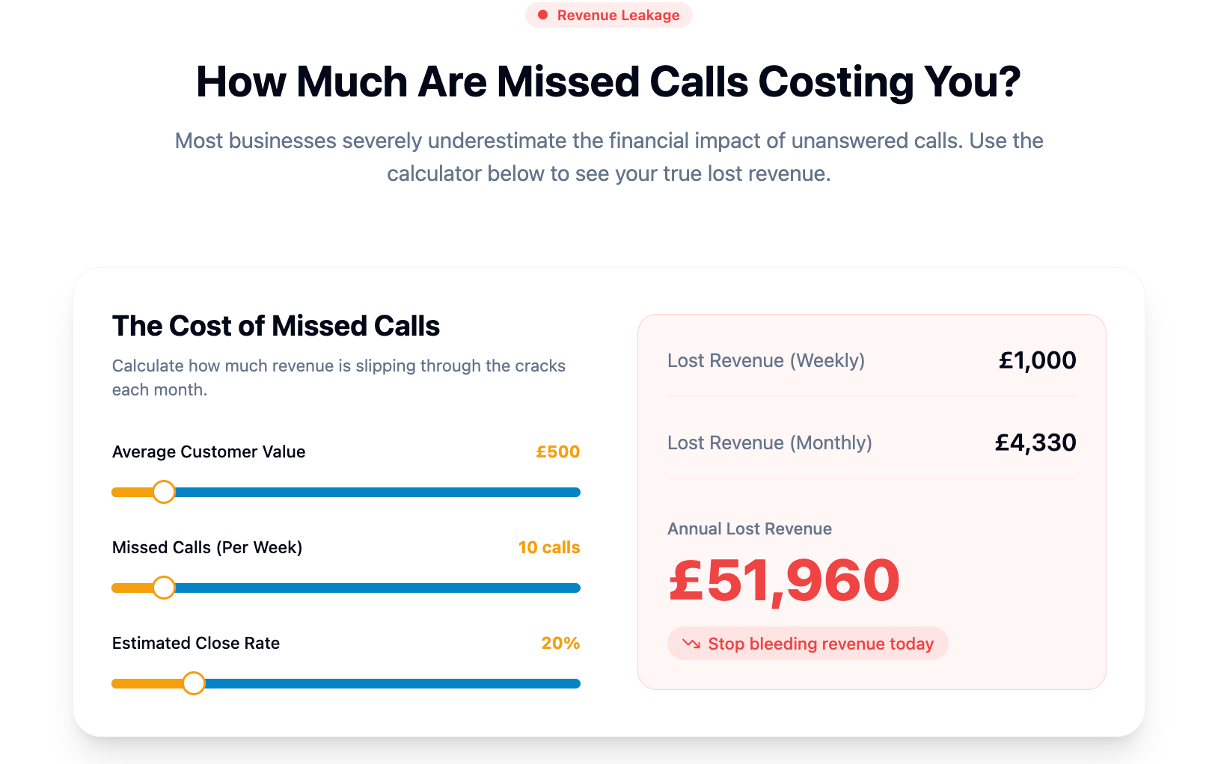
Talk2Aiva handles inbound enquiries, qualifies leads, books appointments, and sends follow-up messages across calls, SMS, and web chat, 24 hours a day. For London estate agents managing a large database, that means no enquiry goes unanswered and no past client falls through the cracks. The AI receptionist and automation tools are set up and supported for you, so you can focus on the conversations that close deals. See how it works and find out how Talk2Aiva fits your agency's retention process.
FAQ
Why do so few buyers rehire their estate agent?
Only 12% of buyers rehire their previous agent because 91% of agents make no contact after closing. The intention to rehire exists, but post-closing silence breaks the relationship before the next need arises.
How many times should an estate agent contact past clients each year?
Industry best practice is a minimum of 12 annual touchpoints, combining automated market updates with personal calls. An annual property review call of around 15 minutes is particularly effective for surfacing new client needs.
What is the best channel for re-engaging past real estate clients?
SMS is the most effective channel for re-engaging past clients. SMS open rates reach 98% and response rates for past clients sit at 40–60%, compared to 5–10% for email.
What is the FORD framework in real estate?
FORD stands for Family, Occupation, Recreation, and Dreams. Estate agents use it as a conversation guide to build personal rapport on client calls, moving beyond property talk to create genuine emotional connection.
How does automation help with client retention without feeling impersonal?
Automation handles scheduling, content delivery, and SMS sequences, freeing agents to focus on personal calls and handwritten notes for high-value clients. The key is using automation to trigger personal contact, not to replace it.