

Best practice is straightforward: capture validated contact and matter details, apply a brief anti-money laundering (AML) triage, then score and prioritise every enquiry for same-day human follow-up. Conveyancing lead qualification only works when those three steps happen in sequence, not in isolation.
At first contact, your intake process (whether that's a receptionist, an intake form, or an automated assistant) needs to capture:
- Full name and a verified phone number
- Postcode, transaction type, and tenure
- Approximate property value and mortgage status
- Chain position (are they waiting on a sale before they can proceed?)
Two numbers should sit on every fee-earner's dashboard: your response SLA (how fast a genuine lead gets a human call back) and your risk-recording rate (the percentage of new matters with a completed client and matter risk assessment on file before work starts).
Key Takeaways
Conveyancing lead qualification succeeds when validated intake data, a brief AML triage, and a simple scoring rubric combine to trigger fast, prioritised human follow-up.
| Point | Details |
|---|---|
| Capture eight core fields | Name, phone, email, postcode, transaction type, tenure, value, mortgage status, chain position. |
| Score before you call | Rank intent, value, timeframe, risk, and referral strength to decide who gets called first. |
| Record risk assessments | Every matter needs a documented client and matter risk assessment before work starts. |
| Respond within your SLA | Call back within 15 to 30 minutes during business hours to stop leads cooling. |
| Automate capture, keep human triage | Tools like Talk2Aiva can capture and validate leads 24/7 while escalating risk cases to a fee-earner. |
Table of Contents
- Which lead channels deliver different quality leads
- Intake checklist: exact data points and quick verification steps
- Lead scoring and prioritisation: a compact rubric you can implement now
- Client and matter risk assessment: what regulators require
- Response workflows: SLAs, scripts and handoffs
- Re-engagement, referrals and former clients
- Metrics: the minimum KPIs to judge performance
- Technology-enabled qualification: automation with human handover
- Author perspective: piloting better intake with minimal disruption
- Getting this workflow running without adding headcount
- Sources
Which lead channels deliver different quality leads
Not all enquiries are worth the same effort. SEO-driven leads tend to arrive with more research already done and convert steadily, but they take months to build. Paid search delivers instant volume, at a cost per click that eats margin fast if your intake process is slow. Portal leads (Rightmove-style referral partnerships) are frequently price-comparing across three or four firms simultaneously. Referrals from estate agents and past clients convert best of all, with far less qualification friction.
A workable channel treatment looks like this:
- SEO leads: ask fewer verification questions, they've usually self-selected already
- Paid search: verify intent hard and fast, many are still shopping
- Portals: assume multi-quoting, lead with your fastest response time as the differentiator
- Referrals: fast-track past the initial screening, straight to matter risk assessment
Smaller firms with tighter margins should weight budget toward referrals and SEO. Larger firms with dedicated intake staff can absorb paid search's higher qualification workload. A channel scorecard comparing cost per qualified lead across SEO, paid search and portals gives you the operational fit picture rather than guesswork.
Intake checklist: exact data points and quick verification steps
Every conveyancing client assessment starts with the same core fields, whether you're capturing them on a call, a webform, or through an AI-driven chat. Get these eight down accurately and everything downstream (scoring, risk assessment, fee quoting) gets easier:
- Full name and verified phone number
- Email address
- Postcode of the property
- Transaction type (purchase, sale, or both)
- Tenure: freehold or leasehold
- Approximate property value
- Mortgage status (cash buyer, agreed in principle, not yet applied)
- Chain position and readiness
These eight fields form the backbone of effective conveyancing lead qualification, and firms that skip any of them typically discover the gap mid-transaction, when it's expensive to fix.
Beyond the basics, flag high-value extras early: Shared Ownership or other government scheme involvement, first-time buyer status, whether the lead's lender sits on your firm's panel, and their stated timescale. A first-time buyer with a mortgage offer in hand and a four-week deadline is a very different lead from a "just curious" enquiry with no chain and no timeframe.

Verification doesn't need to be heavy-handed. A call-back to the number given (rather than relying on a form submission alone) catches a surprising number of mistyped numbers and speculative enquiries. A quick postcode lookup confirms the property exists and gives you a rough value sense-check against what the lead quoted.

Pro Tip: Ask for the postcode before you ask for the budget. People round their budget up or down depending on who's asking, but a postcode either checks out or it doesn't.
Lead scoring and prioritisation: a compact rubric you can implement now
A scoring grid turns gut feeling into a repeatable process. Score each enquiry across five factors: intent, property value, timeframe, risk flags, and referral strength. Weight timeframe and intent highest, since a highly qualified lead with no urgency still needs nurturing rather than a same-day call.
A workable action tier looks like this:
- High score: call within one hour, prioritise senior fee-earner time
- Medium score: email plus a call attempt the next working day
- Low score: enter an automated nurture sequence, revisit in two to four weeks
- Disqualified: politely decline or redirect, don't burn conveyancer time
Fee shoppers reveal themselves through pattern, not a single question. Someone who leads every exchange with "what's your cheapest quote" and won't confirm a moving date or mortgage status is comparison shopping, not instructing. That's different from a genuinely price-sensitive first-time buyer who still answers your qualifying questions in full. Deprioritise the former without penalising the latter; a scoring model that treats every price question as a red flag will quietly filter out legitimate cost-conscious clients too.
Client and matter risk assessment: what regulators require
This is not optional paperwork you bolt on later. Under Regulations 28(12) and 28(13) of the Money Laundering Regulations, client and matter risk assessments must be carried out and recorded at the start of the relationship, and the outcome dictates how much due diligence that matter requires.
Statistic in context: the SRA doesn't publish a single compliance failure rate, but its guidance is explicit that the assessment step itself, not just the outcome, must exist on file for every matter. A missing risk assessment is itself a finding on inspection, regardless of whether the underlying transaction was legitimate.
Build a short triage into qualification rather than treating AML as a separate, later stage. Watch for common high-risk triggers during intake:
- Politically exposed person (PEP) status, disclosed or discoverable
- Complex or layered property ownership structures
- Connections to high-risk third countries
- Inconsistent or hard-to-verify identity documents
- Vague or shifting explanations of source of funds
Where any of these surface, escalate immediately to enhanced due diligence rather than letting the matter proceed on standard checks. Worked examples of low-risk matter templates are a useful reference point for what "recorded and justified" actually looks like on file.
Response workflows: SLAs, scripts and handoffs
Speed converts. A phone call back within 15 to 30 minutes during business hours, and a text or email acknowledgement within five minutes outside them, keeps a lead warm rather than letting it cool while they call your competitor. Firms that treat lead quality and response time as inseparable consistently convert better than those chasing volume alone.
Your first-contact script needs three jobs done in under two minutes: confirm the transaction is real and current, set a clear expectation on fee structure and next steps, and book a specific action (a call, a document upload, an appointment).
- Confirm postcode, transaction type, and timescale
- State your fee approach plainly, no vague "it depends"
- Book the next step before ending the call
Pro Tip: Pair an automated booking link with a confirmation text. It halves no-shows without needing a human to chase the diary.
Re-engagement, referrals and former clients
Cold leads aren't your best return on effort. Research suggests converting an existing customer succeeds roughly 70% of the time, against around 20% for a brand-new prospect, and conveyancing follows the same pattern. Former clients moving again, or referring family, already trust your firm.
- Set alerts to flag past clients who list a property or make contact again
- Route estate agent referrals through the same qualification steps, don't wave them through unchecked
- Automate a simple "thinking of moving?" check-in at 18 to 24 months post-completion
- Track referral source on every file so partner relationships can be measured, not assumed
Metrics: the minimum KPIs to judge performance
Four numbers tell you whether qualification is working: cost per qualified lead, conversion from qualified lead to instruction, time to first contact, and yield per channel. Review monthly, not quarterly, changes in intake behaviour show up fast.
- Cost per qualified lead rising with flat conversion signals a channel or scoring problem
- Time to first contact creeping past your SLA is the earliest warning sign of fallout
- Yield per channel tells you where to shift next month's spend, not just this month's
Technology-enabled qualification: automation with human handover
A guided AI receptionist can capture enquiries 24/7 across phone, chat, and SMS, validate the core data points automatically, and book directly into your calendar, then hand anything flagged as high-risk or high-value straight to a fee-earner. That combination (automated capture, immediate human triage) is what surfaces genuine instructions while filtering fee shoppers.
Before trialling any provider, ask directly: where does captured data sit, what triggers escalation to a human, and does the workflow map to your AML triage rather than working around it?
| What to check | Why it matters |
|---|---|
| Data egress | Confirms who owns and can export your enquiry data |
| Escalation rules | Determines when a human, not a bot, takes over |
| AML integration | Ensures risk flags don't get lost in automation |
Author perspective: piloting better intake with minimal disruption
Run any intake change as a four-week pilot on one channel before rolling it firm-wide. Involve your most sceptical fee-earner from day one, not after launch, resistance usually comes from feeling a score overrides their judgement rather than informs it. Watch conversion rate and time to first contact weekly, not monthly.
The real cultural blocker isn't the scoring model, it's fee-earners quietly overriding scores without recording why. Build in a one-line override reason field and review it monthly. High-risk matters should always escalate to a named senior contact, never sit in a general queue waiting for whoever's free.
— James Paul
Getting this workflow running without adding headcount
Building the intake, scoring, and AML triage described above usually means new software, new scripts, and staff training before it works reliably. Talk2Aiva shortcuts that build by giving you a guided AI receptionist that already captures name, contact details, transaction type, and chain position on every call, text, or web chat, then hands off anything flagged high-risk or high-value straight to your team.
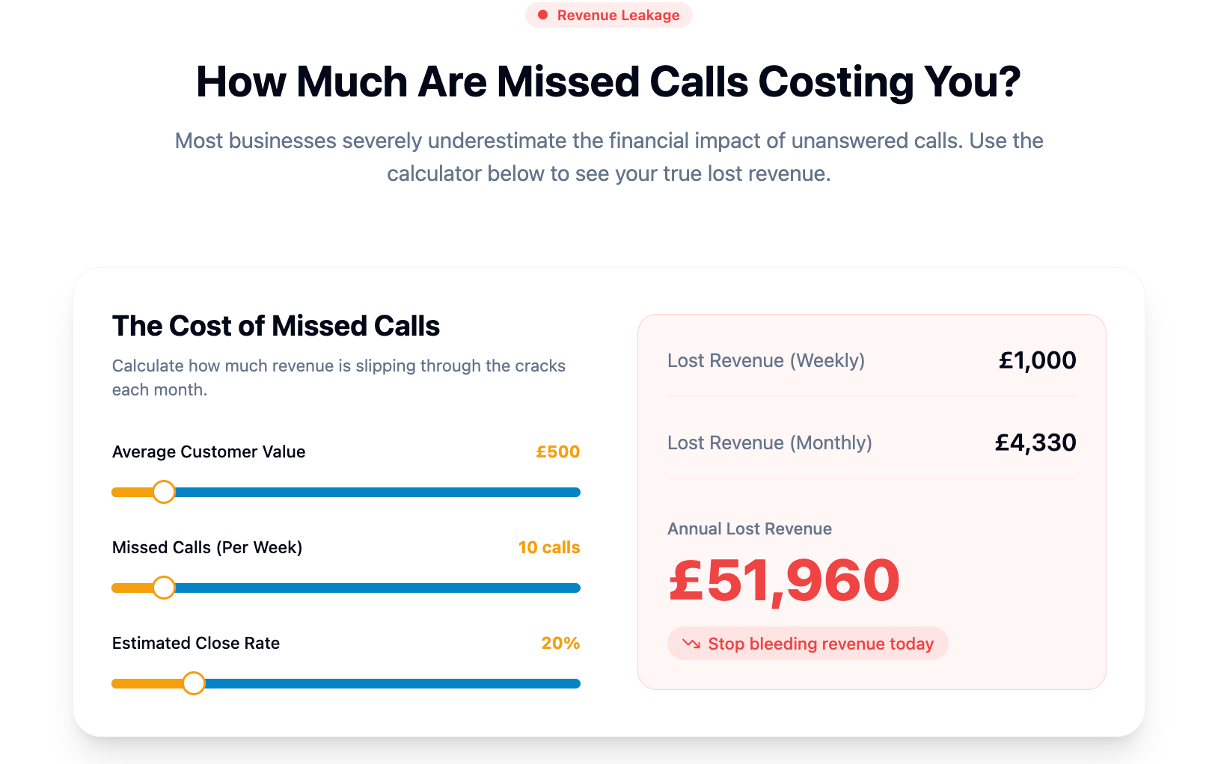
Setup, AI training, and workflow building are handled for you, not left as a DIY project, so your response SLA improves from week one rather than after months of configuration. Automated onboarding and identity workflows pair naturally with the same triage logic this article recommends, and ongoing technical support means the system adapts as your risk criteria change. For broader context on automating client-facing onboarding, Envision Marketing Agency's guide to AI onboarding covers the wider principles at play.
If missed calls or slow first-contact times are costing you instructions, book a demo through Swasco and see how the workflow maps onto your own intake process.
Sources
- Client and matter risk assessments | Solicitors Regulation Authority
- New Vs. Repeat Customers: Where Should You Focus Your Marketing? | Forbes
- Lead quality matters more than volume | Martindale-Avvo blog
- Solicitor