
Conversational AI is software that understands and responds to human language in real time, using Natural Language Processing (NLP) and Large Language Models (LLMs) to hold context across multi-turn dialogues and automate routine customer interactions. For small business owners asking what does conversational AI mean for their business, the short answer is this: it is the technology that lets you engage, qualify, and respond to customers around the clock without hiring extra staff. Unlike older rule-based chatbots that followed rigid scripts, modern conversational AI adapts to what a customer actually says. Support ticket volumes drop by 40–70% within the first month of deployment. That figure represents real labour cost savings and genuine availability gains for businesses that cannot afford a full-time reception team.
What does conversational AI mean for small business operations?
Conversational AI combines several technologies to produce natural, context-aware responses. Understanding those components helps you judge whether a given tool will actually fit your business.
The core building blocks are:
- Natural Language Processing (NLP): Reads and interprets what a customer types or says, including informal phrasing and spelling errors.
- Large Language Models (LLMs): Generate human-sounding replies based on patterns learned from vast amounts of text data.
- Intent recognition: Identifies what the customer wants, such as booking an appointment or asking about pricing.
- Context management: Remembers earlier messages in the same conversation so the AI does not ask the customer to repeat themselves.
- Multi-channel integration: Operates across website chat, phone calls, SMS, and social media from a single system.
The contrast with older technology is significant. A scripted chatbot presents a menu of options and breaks the moment a customer phrases something unexpectedly. True conversational AI in 2026 is context-aware and capable of multi-step workflows. It can take a customer from "I need a quote" through to a confirmed appointment without human intervention.
Conversational AI also grounds its responses in your specific business data. You train it on your services, pricing, and policies. That means it answers questions about your business, not generic ones. This is what separates a well-deployed AI receptionist like Talk2Aiva from a generic off-the-shelf chatbot.

Pro Tip: List your top five customer contact reasons before evaluating any AI tool. If the AI cannot handle at least three of those five with clear, consistent answers, it is not the right fit for your business.
What are the key benefits of conversational AI for small businesses?
Small businesses gain disproportionate value from conversational AI compared to large enterprises. A single deflected support ticket in a small team represents a meaningful chunk of someone's working day.
-
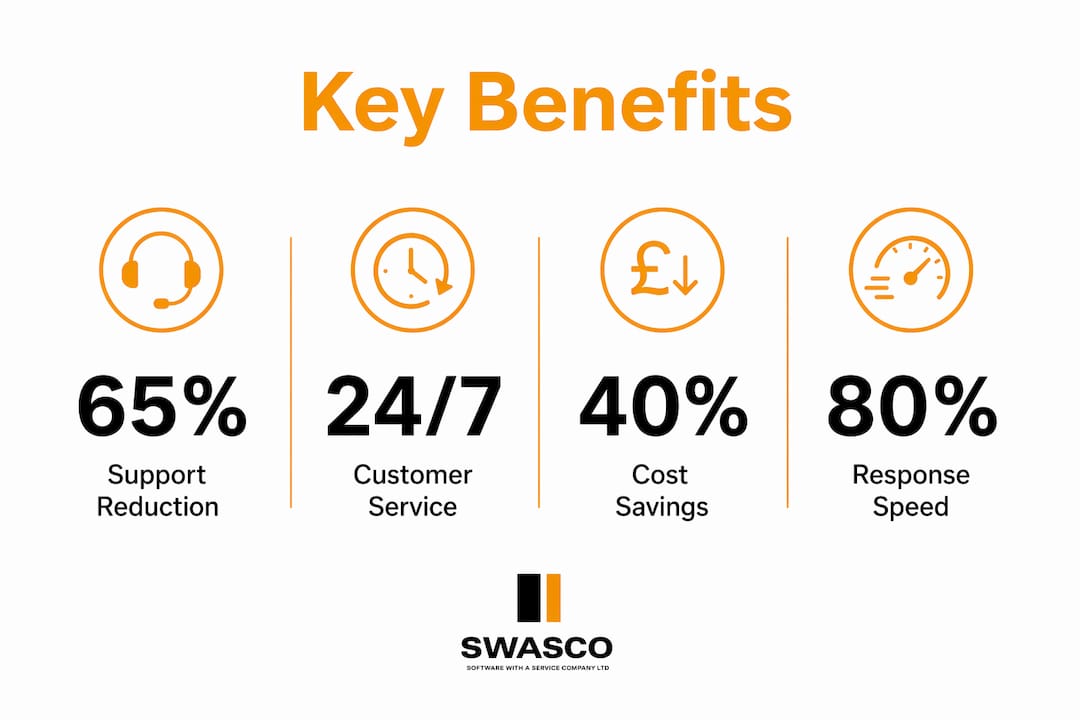
Reduced workload and labour costs. A 40–70% reduction in support ticket volume translates directly into fewer hours spent on repetitive queries. For a business owner answering the same five questions every day, that time compounds quickly.
-
Round-the-clock availability. Conversational AI provides instant, consistent, 24/7 responses without shift constraints. A customer who enquires at 11PM on a Sunday gets an immediate, accurate reply rather than a voicemail.
-
Consistent response quality. Conversational AI delivers consistent quality regardless of time of day or agent fatigue. Human agents vary; AI does not. This matters in regulated industries where a wrong answer carries real consequences.
-
Better lead qualification. AI handles the early stages of a sales conversation, asking the right questions and routing warm leads to you. This connects directly to AI-driven lead qualification workflows that keep your pipeline moving without manual effort.
-
Sustained customer intent. Generic auto-responders lose the momentum of a customer's interest. Conversational AI sustains the 'heat' of customer intent by maintaining tone and context throughout the exchange.
Stat to know: Businesses deploying conversational AI report support ticket reductions of 40–70% within the first month. For a small team, that is the equivalent of recovering hours of productive time every week.
Pro Tip: Avoid running multiple disconnected AI tools across your business. Consolidating AI into a single platform that shares context between agents prevents fragmented customer experiences and keeps your data coherent.
What are the limitations and misconceptions of conversational AI?
Conversational AI is not a universal fix. Knowing where it falls short saves you from a costly mistake.
The most common misconception is that conversational AI and legacy chatbots are the same thing. They are not. A legacy chatbot follows a decision tree. If a customer's message does not match a pre-set trigger, the conversation fails. Conversational AI excels at high-volume, repetitive interactions with clear outcomes. It is less effective for low-volume, relationship-driven, or high-stakes interactions that require human judgement.
A second misconception is that AI replaces your team entirely. It does not. It handles the repetitive, well-defined tasks so your team can focus on the work that genuinely requires a human. Think of it as a capable first point of contact, not a replacement for your best people.
The table below clarifies the practical differences between conversational AI and traditional rule-based chatbots:
| Feature | Conversational AI | Traditional chatbot |
|---|---|---|
| Language understanding | Interprets natural, varied phrasing | Requires exact keyword or menu selection |
| Context retention | Remembers earlier messages in the conversation | Resets with each message |
| Multi-step workflows | Handles booking, qualifying, and follow-up in one flow | Limited to single-step responses |
| Handling unexpected input | Adapts and continues the conversation | Breaks or loops back to a menu |
| Training | Learns from your business data | Relies on manually written scripts |
| Best suited for | High-volume, repetitive, clearly defined queries | Simple FAQ deflection only |
Choosing the wrong tier is the most expensive procurement mistake. Failing to map your top five customer contact reasons to AI capabilities before buying is the primary cause of failed deployments. Fit determines whether you see rapid return on investment or a costly write-off.
How do you implement conversational AI in a small business?
Implementation does not require a technical background. Most small business AI platforms are built for no-code setup with monthly pricing, which contrasts sharply with enterprise platforms that demand long contracts and specialist developers.
A practical approach follows these steps:
- Map your contact reasons. Write down the five most common reasons customers call, message, or email you. These are your primary use cases.
- Prioritise high-volume, clear-outcome tasks. Appointment booking, lead qualification, pricing enquiries, and support deflection are ideal starting points. These are the interactions where AI delivers the fastest results.
- Choose an integrated platform. A system that unifies chat, voice, and workflow agents in one place prevents the fragmented experience that comes from stitching together separate tools. AI-powered call handling is one area where integration makes a measurable difference.
- Train the AI on your business. Feed it your services, FAQs, pricing, and policies. Generic responses erode customer trust. Specific, accurate answers build it.
- Start with one channel, then expand. Deploy on your website chat first, measure the results, then roll out to phone and social media. This keeps the process manageable and lets you refine responses before scaling.
- Review and improve regularly. Check conversation logs weekly in the early weeks. Identify where the AI gives weak answers and update its training data. This iterative process is what separates businesses that see strong results from those that do not.
The goal is AI that supports your team, not one that creates new problems. Common AI implementation pitfalls are well documented, and most come down to misaligned expectations or poor tool selection rather than the technology itself.
Key takeaways
Conversational AI delivers measurable value for small businesses when deployed on the right tasks, with the right platform, and with realistic expectations about what the technology can and cannot do.
| Point | Details |
|---|---|
| Core definition | Conversational AI uses NLP and LLMs to hold context across multi-turn dialogues, unlike scripted chatbots. |
| Primary benefit | Support ticket volumes reduce by 40–70% in the first month, saving labour costs and freeing up your time. |
| Critical limitation | AI handles repetitive, high-volume tasks well but cannot replace human judgement in complex or sensitive interactions. |
| Implementation priority | Map your top five customer contact reasons before selecting any tool to confirm the fit is genuine. |
| Platform choice | A single integrated platform that shares context across channels outperforms multiple disconnected tools every time. |
Why most small businesses get conversational AI wrong the first time
The businesses I see struggle with conversational AI share one trait: they bought a tool before they understood their own customer contact patterns. They picked something that looked impressive in a demo, deployed it on their website, and then wondered why customers kept dropping off mid-conversation. The technology was not the problem. The fit was.
The businesses that see fast results do the opposite. They spend an hour listing their most common enquiries, check whether the AI can handle those specific scenarios accurately, and then deploy on a single channel before expanding. That disciplined approach sounds obvious, but most owners skip it because they are excited to get started.
The other mistake I see regularly is running three or four separate AI tools that do not talk to each other. A customer chats on the website, then calls, and the AI on the phone has no idea what was discussed. That fragmented experience is worse than no AI at all. Consolidation is not a nice-to-have. It is the difference between AI that builds customer confidence and AI that destroys it.
Conversational AI also has a compounding effect that most owners underestimate. The first month feels modest. By month three, the time savings, the leads captured overnight, and the consistent follow-up start to add up in ways that show clearly on the bottom line. The businesses that stick with it and keep refining their AI's responses are the ones that look back six months later and cannot imagine operating without it.
— James Paul
How Talk2Aiva helps small businesses put this into practice
Small business owners who understand conversational AI still face a practical challenge: setting it up correctly and keeping it working well takes time and expertise most owners simply do not have spare.
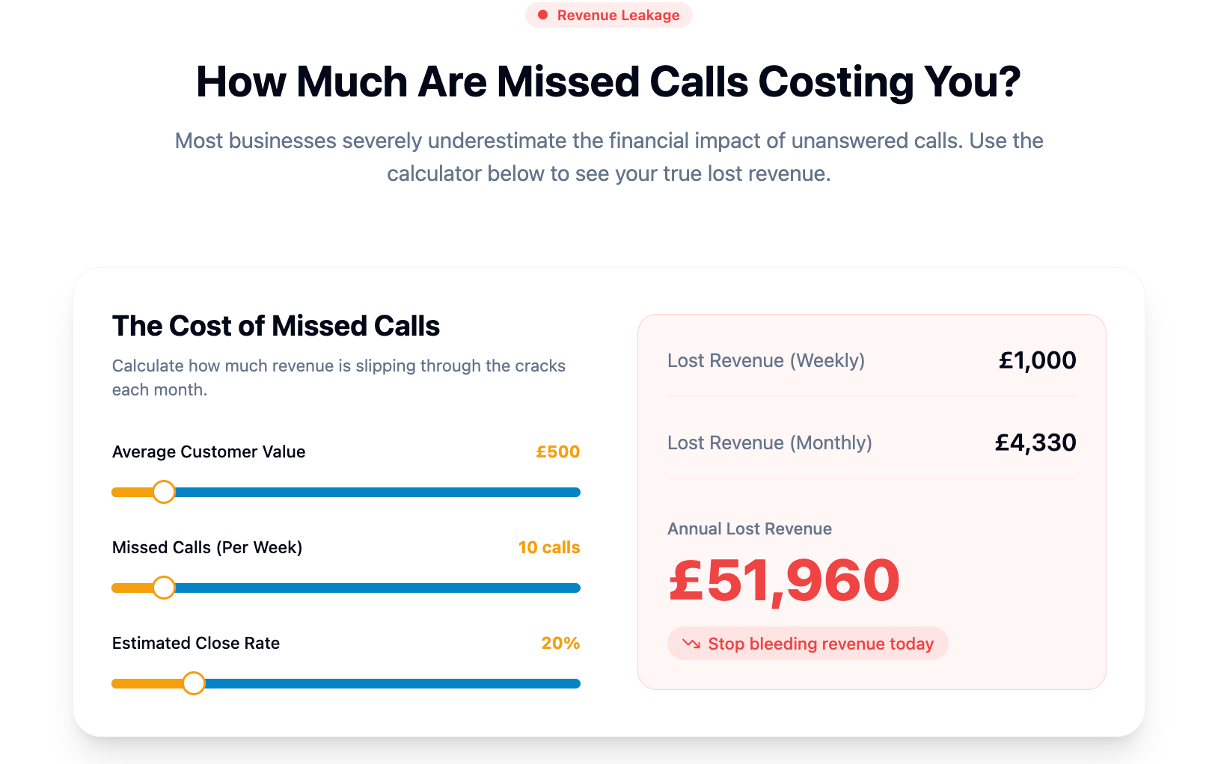
Talk2Aiva by SWASCO is built specifically for service-based businesses that want to stop losing revenue from missed calls and delayed responses. It handles inbound enquiries, qualifies leads, books appointments, and follows up with prospects across calls, SMS, website chat, and social media, all from one integrated platform. Setup, AI training, and ongoing support are included, so you are not left to figure it out alone. If you want to see how voice AI for small business works in practice, Talk2Aiva is a strong place to start.
FAQ
What is conversational AI in simple terms?
Conversational AI is software that understands natural language and responds in context, using NLP and LLMs to hold multi-turn dialogues. It differs from older chatbots by adapting to what a customer actually says rather than following a fixed script.
How does conversational AI differ from a standard chatbot?
A standard chatbot follows pre-written decision trees and fails when customers phrase things unexpectedly. Conversational AI retains context across a full conversation and handles multi-step workflows such as booking and lead qualification without breaking.
What tasks is conversational AI best suited for in a small business?
Conversational AI performs best on high-volume, repetitive tasks with clear outcomes, including appointment booking, pricing enquiries, lead qualification, and out-of-hours support. It is less suited to complex, relationship-driven interactions that require human judgement.
How quickly can a small business see results from conversational AI?
Businesses typically see a 40–70% reduction in support ticket volume within the first month of deployment. The return accelerates as the AI is refined based on real conversation data.
Do I need technical skills to set up conversational AI?
Most small business platforms are designed for no-code setup with guided onboarding. Solutions like Talk2Aiva include full setup, AI training, and ongoing technical support, so no technical background is required.