
A good chat greeting does four things in two or three lines: it says who you are, tells the visitor what happens next, asks one easy question and sounds like a person wrote it. Below you will find chat greeting examples for the situations a UK service business actually faces: a first-time visitor, a late-night enquiry, a returning customer, a pushy tyre-kicker and a lead who has gone quiet. Copy them, change the brackets and make them yours.
TL;DR
- Keep the first message short: one greeting, one expectation, one question.
- Say what will happen next, such as who replies and roughly when, so visitors are not left guessing.
- Write a different greeting for out-of-hours, new visitors and returning customers.
- If an AI answers, say so plainly. The ICO's AI transparency guidance expects people to be told in clear, everyday language.
- A greeting only works if someone or something answers the reply quickly. Script the next three messages, not just the first.
Table of Contents
- What a good chat greeting actually does
- The simple formula behind every good greeting
- Website chat greeting examples for first-time visitors
- Greeting examples for different industries
- Out-of-hours chat greeting examples
- Adapting your greeting for new and returning customers
- Greetings that set expectations and invite a reply
- Closing a chat well
- Mistakes that make chat greetings fail
- Our view: the greeting is only the first 10 seconds
- Where Talk2Aiva fits
- FAQ
- Sources
What a good chat greeting actually does
Most greetings on the web are wasted. "Hi, how can I help?" is polite, but it asks the visitor to do all the work. They have to work out what you offer, whether anyone is there and what to type.
Think of the greeting as the front door of your shop. It should confirm they are in the right place, show that someone is home and make the next step obvious.
For a service business, this matters more than for most. Your visitor is often a person with a problem right now: a leaking roof, a dog with matted fur, a toothache, a house chain about to collapse. They will message two or three businesses and usually go with the first that answers well. A greeting that gets a reply is the first step in not losing that job.
Business-English guidance for customer service suggests short, easy-to-read chat messages and warm openers such as "Hi, thanks for reaching out". That fits what we see: people read chat on phones, in a hurry, and skim.
The simple formula behind every good greeting
Every example in this article follows the same four parts. Once you know them, you can write your own in five minutes.
- Welcome. A greeting and your business name. "Hi, you've reached Northside Dental."
- Expectation. Who is replying and how fast. "I'm Aiva, the virtual assistant, and I can reply straight away."
- Value. What you can do in this chat. "I can check availability, book you in or answer questions about prices."
- Prompt. One easy question. "What can we help you with today?"
You do not need all four every time. A returning customer needs fewer words. An out-of-hours visitor needs a clear expectation. A visitor on a pricing page needs a prompt that matches the page.
Tone: friendly without being gushing
British customers tend to respond best to warm and plain. Skip the exclamation-mark pile-ups and the forced jokes. One exclamation mark is enough. Use contractions ("we'll", "I'm") because they sound human. Avoid corporate phrases like "Your query is important to us".
A polite but efficient tone is the foundation of good customer-service English, as the same customer-service English guide puts it. Friendly and brisk beats chatty and slow.
Website chat greeting examples for first-time visitors

These work on a homepage or general page, when you know nothing about the visitor.
1. The simple welcome
Hi, welcome to [Business name]. We're here to help. What can we do for you today?
2. The helpful menu
Hi, thanks for visiting [Business name]. Are you looking to book, get a quote or ask a question?
Offering three choices removes the blank-box problem. People tap rather than type.
3. The speed promise
Hi, you've reached [Business name]. We reply within a minute during opening hours. What can we help with?
Only use this if it is true. A promise you cannot keep is worse than no promise.
4. The AI-assistant greeting
Hi, I'm [Name], [Business name]'s virtual assistant. I can answer questions, check availability and book you in, and I'll pass anything complicated to the team. What do you need?
Saying it is an assistant is honest, and it also sets sensible expectations. Under UK data protection law, the ICO's guidance says that if AI is used and privacy information doesn't make that clear, it may breach UK GDPR transparency requirements. Tell people plainly, and put the detail in your privacy notice rather than burying it in small print.
5. The page-aware greeting
Looking at our prices? I can explain what's included or get you a quote in a couple of minutes. Which service are you interested in?
Matching the greeting to the page is one of the easiest upgrades. A visitor on a pricing page is a different person from one on a contact page.
Greeting examples for different industries
A greeting should sound like your trade. Here are versions for the kinds of business we work with most.
Emergency and home services
Roofers, tree surgeons, pest control and junk removal visitors want speed and a human-sounding next step.
6. Urgent callout
Hi, you've reached [Business name]. Is this an emergency, such as a leak, a fallen tree or an active infestation? Tell us your postcode and we'll get someone to you as soon as we can.
7. Quote request
Hi, thanks for getting in touch. To give you a quote, can you tell me what the job is and your postcode? Photos help too if you have them.
Appointment-based businesses
Dentists, salons, gyms, dog groomers, aesthetics practitioners and studios.
8. Booking
Hi, welcome to [Business name]. Would you like to book an appointment? Tell me which treatment and what days suit you, and I'll find a slot.
9. New client
Hi, is this your first visit? I can tell you what to expect, how much it costs and book you in.
10. Pet services
Hi, thanks for messaging [Business name]. What breed is your dog and what are you after: a full groom, a bath and brush, or a trim?
Asking a specific, easy question like this gets a reply far more often than "How can I help?"
Estate agents, conveyancers and finance brokers
Here the visitor is making a high-value decision and wants to feel they are talking to someone competent.
11. Letting enquiry
Hi, thanks for your interest in [Property or area]. Are you looking to rent or buy, and when would you like to move?
12. Conveyancing enquiry
Hi, welcome to [Firm name]. Are you buying, selling or remortgaging? I'll ask a few quick questions so the right person can come back to you with a quote.
13. Finance enquiry
Hi, thanks for contacting [Business name]. What are you looking to fund, and roughly how much? We'll match you with the right adviser.
Notice that none of these ask for a phone number or email in the first message. Ask for contact details only after you have given something useful.
Out-of-hours chat greeting examples
A visitor who messages at 9 pm on a Sunday is often your best lead: they are ready and the competitor's office is shut. An out-of-hours greeting should do three jobs: be honest about the time, still be useful and promise a specific next step.
14. Honest and specific
Hi, our team is offline until 8.30 am on Monday. I can still help with prices, availability and bookings now, or take your details so we can call you first thing.
15. For emergencies
Hi, you've reached [Business name] outside opening hours. If this is an emergency, tell me what's happening and your postcode and I'll flag it as urgent right now.
16. Message capture only
Thanks for getting in touch. We're closed at the moment, but leave your name, number and what you need, and we'll reply by [time] on [day].
If you cannot answer out of hours at all, option 16 is the minimum. Never leave the box saying "We're online!" when nobody is. It is the fastest way to turn a lead into a bad review.
Adapting your greeting for new and returning customers
The same words should not greet a stranger and a regular. If your chat tool knows who someone is, from a previous conversation, a booking or a logged-in account, use that.
17. Returning customer
Welcome back, [First name]. Would you like to rebook, or is there something else we can help with?
18. After a recent job
Hi [First name], good to hear from you. Is this about your [service] on [day], or something new?
19. Lead who enquired before but didn't book
Hi [First name], thanks for coming back. Last time you were asking about [service]. Shall I pick up where we left off?
Personalising works only if the data is right. Calling someone by the wrong name or referring to the wrong service is worse than a generic hello. If you are not sure, keep it general.
Greetings that set expectations and invite a reply
Research on support chat suggests that messages should guide the customer to the next step and clarify the issue efficiently. In practice, three habits help.
- Tell them what happens next. "I'll ask three quick questions, then book you in." People relax when they can see the end.
- Ask one question at a time. A greeting with three questions gets none answered.
- Make replying easy. Offer quick-reply buttons for the common choices: Book, Quote, Opening hours, Something else.
A greeting plus the next three messages
A greeting is the start of a conversation, so script what follows it. Here is a short flow for a dog groomer.
- Greeting: "Hi, thanks for messaging [Business name]. What breed is your dog and what would you like done?"
- Qualifying question: "Lovely. When was their last groom? That helps us choose the right appointment length."
- Booking offer: "We have Thursday at 10 am or Saturday at 1 pm. Which suits you?"
- Confirmation: "You're booked in for Thursday at 10 am. We'll text a reminder the day before. Anything else we should know, such as nervous behaviour or allergies?"
The same pattern works for most service businesses: welcome, qualify, offer, confirm.
Closing a chat well
People also ask for a good closing line. The best ones recap what happens next and leave the door open.
20. Booking closer
You're all set for [day, time]. If anything changes, just message us here. Thanks for choosing [Business name].
21. Quote closer
Thanks, I've got everything I need. [Name] will send your quote by [time]. Is there anything else I can help with?
22. Handover to a person
I'm passing you to [Name], who can help with this properly. They'll have our conversation so you won't need to repeat yourself.
23. Follow-up for a quiet lead
Hi [First name], just checking in on your enquiry about [service]. Would you like me to hold a slot for you this week?
24. Review request
Thanks for choosing us. If you were happy with the service, a quick review would really help a small business like ours: [link].
25. Polite no
Thanks for asking. We don't cover [area or service], but we hope you find the right person quickly.
Mistakes that make chat greetings fail
- Popping up instantly and covering the page. Give people a few seconds, or trigger the chat when they show interest, such as on a pricing page.
- Pretending to be human. If it is an assistant, say so.
- Long greetings. If it does not fit on a phone screen without scrolling, cut it.
- No out-of-hours version. Visitors read "online" as a promise.
- Asking for personal details too early. Give value first.
- Sounding like a form. Read it aloud. If you would not say it to a customer standing at your counter, rewrite it.
- Writing the greeting and ignoring the reply. A slow answer destroys a good opening.
Our view: the greeting is only the first 10 seconds
We build AI receptionists for service businesses, so we see what happens after the greeting. A perfect line does nothing if the next message arrives four hours later.
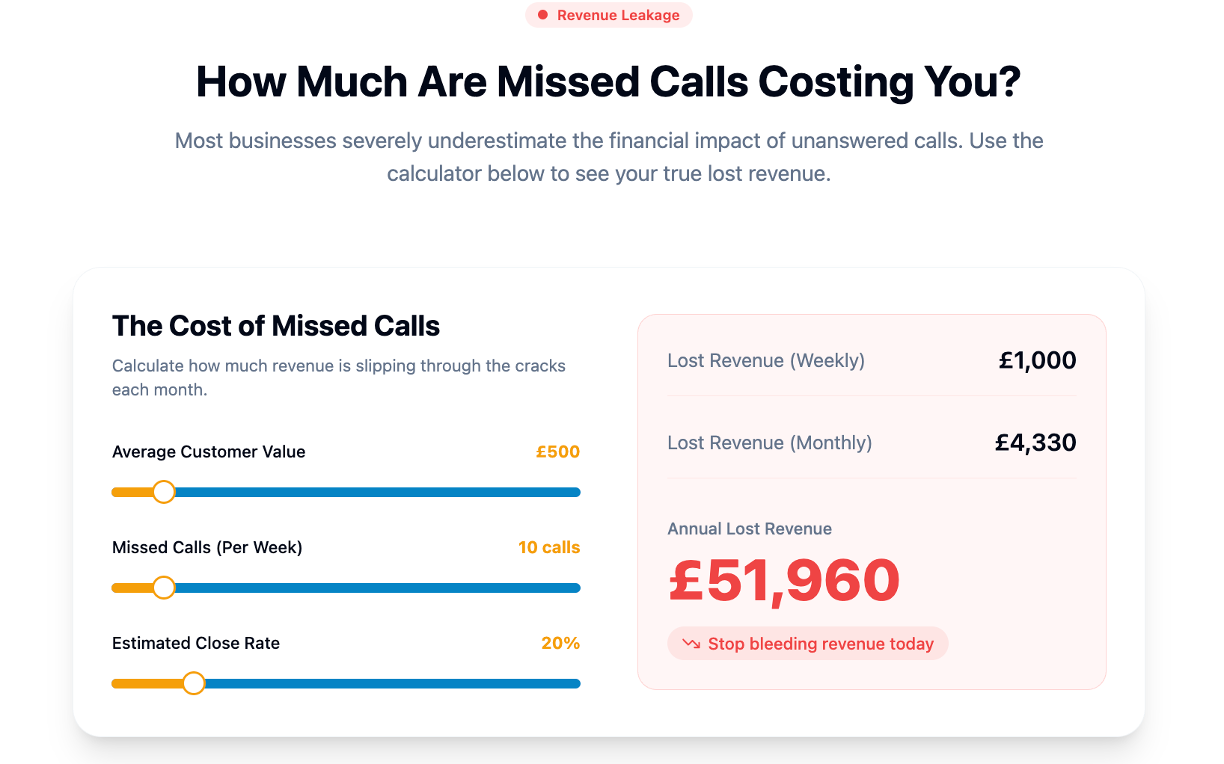
The businesses that lose the most revenue are not the ones with weak copy. They are the ones that cannot reply in the moment: the roofer up a ladder, the groomer with a dog in the bath, the dentist with a patient in the chair. The enquiry comes in, nobody sees it, and the customer moves on to the next business.

That is why we think of a chat greeting as part of a larger flow: greet, qualify, book, follow up. Each step needs to happen fast and sound like your business. So when we set up Talk2Aiva for a business, we do not hand over a blank template. We write the greeting and the follow-on questions around how that business talks and what its customers ask, then keep refining them from real conversations.
Our advice is simple. Write your greeting using the formula above, test it on your own phone and then make sure someone, or something, can answer every reply, day or night. Be open that an assistant is answering, and make it easy to reach a person when the job needs one.
— James Paul
Where Talk2Aiva fits
If you are writing greetings because enquiries are slipping through, the greeting is only half the fix. Talk2Aiva by SWASCO answers calls, texts, website chat and social media messages, qualifies leads, books appointments into your calendar and follows up automatically, with setup and ongoing technical support included.
There are three annual plans, so you can start with what you need: the Software Suite at £970 per year, the Ultimate AI Suite at £2,970 per year and the Elite AI Suite at £4,970 per year. See the plans and what each includes and we will help you set up greetings like the ones above, tuned to your trade.
FAQ
What is a good greeting for a website chat?
A good greeting names your business, says who is replying and asks one easy question. For example: "Hi, welcome to [Business name]. I can answer questions or book you in. What can I help with today?" Keep it to two or three short lines so it reads easily on a phone.
What should an out-of-hours chat greeting say?
It should say that the team is offline, when they will be back and what the visitor can still do now. If an assistant can book or answer questions, say so. If not, collect a name, number and request, and promise a reply time you can keep.
Do I have to tell customers they are talking to an AI?
You should. The ICO's guidance on AI says people need clear, plain-language information about how AI is used with their personal information, and it warns that failing to communicate AI use may breach UK GDPR. A short line such as "I'm [Name], the virtual assistant" at the start of the chat is a simple way to be upfront. Check your own obligations with the ICO or a legal adviser if you handle sensitive data.
How long should a chat greeting be?
One to three short sentences, usually under 30 words. The aim is to get a reply, not to explain everything. Put detail in the follow-up messages once the visitor has told you what they want.
Should I use the same greeting for every visitor?
No. Use at least three: one for new visitors, one for out-of-hours and one for returning customers. If your system knows which page someone is on, add a version for high-intent pages such as pricing and booking.