
An AI phone agent answers and acts on phone calls autonomously, booking appointments, qualifying leads, and routing callers without a human picking up. It's built for service businesses that lose revenue to missed calls and slow follow-up. If your team can't answer every ring during peak hours or after 6pm, this is worth understanding properly.
TL;DR:
- AI phone agents can handle an unlimited number of calls outside peak hours, reducing missed leads and increasing appointment bookings around the clock.
- Response speed and call quality depend on latency, concurrency limits, and effective fallback rules, which are critical to natural-sounding conversations.
- Implementation success relies on clear goals, technical readiness, proper escalation procedures, and a pilot scope covering your most common inquiry types.
- Integration with CRM and calendar systems ensures automated bookings and follow-ups, which centralize contact management and improve conversion rates.
- Automated handling yields the most benefit on repetitive, predictable calls, while emotionally complex inquiries still require well-designed escalation and oversight.
Table of Contents
- What is an AI phone agent, and how does it differ from IVR or a chatbot?
- How does an AI phone agent work: telephony, speech and integrations?
- Where does an AI phone agent create the most value?
- How do you implement an AI phone agent: a practical checklist?
- Why service businesses choose Talk2Aiva for AI phone agent deployment
- When automation earns its place, and when it doesn't
- Get started with Talk2Aiva
- Sources
What is an AI phone agent, and how does it differ from IVR or a chatbot?
An AI phone agent is software that listens to a caller, understands what they want in natural spoken language, and completes a task on the spot, whether that's booking a slot, answering a pricing question, or transferring the call with context attached. This is a fundamentally different job to older automated systems.
Press-1 IVR menus route calls based on rigid button presses. Text chatbots handle typed conversations on a website. Neither one holds a fluid, spoken conversation or takes real action inside your calendar or CRM. Modern AI phone agents can answer inbound calls, understand caller intent through natural language, and hand off to human staff with full context attached, which is the capability gap that separates this technology from a glorified answering machine.
You'll typically encounter two variants:
- Inbound receptionist agents that answer every call, qualify the caller, and book or transfer as needed.
- Outbound agents that confirm appointments, chase no-shows, or follow up on missed enquiries.
Done properly, businesses see fewer missed leads, faster qualification, and a caller experience that doesn't involve holding music. Our guide to AI-powered call handling covers how this plays out for service businesses specifically.
How does an AI phone agent work: telephony, speech and integrations?
Three layers work together, and understanding each one helps you ask the right questions when evaluating a provider.
The telephony layer handles the actual phone call: a business number, a SIP or DID (Direct Inward Dial) provider, and routing rules that decide which calls the agent picks up versus which go straight to a human. This is largely invisible to the caller but determines reliability and call quality.
The conversation stack is where the intelligence sits. Speech-to-text (STT) converts the caller's voice into text, a natural language understanding layer or large language model works out intent, a dialog manager decides what to say or do next, function-calling lets the agent actually perform an action (check a calendar, pull a customer record), and text-to-speech (TTS) turns the response back into voice. Some providers run this in the cloud for flexibility; others, following the pattern shown by on-device projects like Ferri, keep the model local to the device and reduce how much data leaves the building. Similarly, projects such as PokeClaw demonstrate local LLMs controlling phone actions without external data transmission.
Integrations decide what the agent can actually do rather than just say. A CRM connection means it can check if a caller is an existing customer; a calendar connection means it can book a real appointment slot rather than promising a callback.
- Latency (how fast the agent responds) directly affects how natural the call feels.
- Concurrency limits determine how many calls it can hold at once.
- Fallback rules define what happens when the agent doesn't understand.
Pro Tip: Ask any provider what happens on a bad line or a strong regional accent before you sign anything. The fallback behaviour matters more than the demo does.
Where does an AI phone agent create the most value?
The clearest wins show up wherever a business currently loses calls to capacity, timing, or slow response.
- Round-the-clock first response. A receptionist agent answers every call, including evenings and weekends, which stops leads going to a competitor who happened to pick up first.
- Faster lead qualification. The agent asks the right questions immediately rather than waiting for a callback, and speed-to-lead is one of the biggest levers in conversion for service businesses.
- Appointment booking and no-show recovery. The agent books directly into your calendar and can chase confirmations automatically, recovering slots that would otherwise sit empty.
- High-volume deflection. During a marketing spike or seasonal surge, the agent absorbs call volume your team physically can't handle.
Once live, track a handful of numbers rather than dozens: autonomous resolution rate (calls fully handled without a human), conversion lift on qualified leads, and average handling time per call. These three tell you whether the agent is actually working, or just answering the phone politely.
How do you implement an AI phone agent: a practical checklist?
Treat this like any operational rollout, not a software toggle. A structured pilot beats a big-bang launch every time.
- Set goals and success metrics first. Decide what "working" looks like (autonomous resolution rate, booked appointments, reduced missed calls) before you talk to any vendor.
- Check your technical readiness. You'll need a business number or SIP/DID provider, CRM and calendar access, and API or webhook capability so the agent can act rather than just talk.
- Define escalation rules. Human-in-the-loop guidance for voice agents is consistent on this point: build warm transfer with a full transcript handed to the human agent, so callers never repeat themselves.
- Handle consent properly. For UK businesses, this means respecting the Telephone Preference Service, honouring opt-outs immediately, and keeping records of consent for any outbound calling.
- Scope a pilot. Cover your top five inbound call types, test edge cases and fallbacks, and set an acceptance target, often somewhere around 60 to 70% autonomous resolution depending on sector, before wider rollout.
- Understand the billing shape. Some providers charge flat subscription fees, others usage-based pricing, and most factor in resource for ongoing training and optimisation, not just the initial build.
Pro Tip: Don't pilot with your hardest call type. Start with your most common, most predictable enquiry, prove the resolution rate, then expand scope.
Why service businesses choose Talk2Aiva for AI phone agent deployment
Talk2Aiva by SWASCO is built specifically for this rollout path: guided onboarding, AI training on your actual call scenarios, workflow building, a live launch, and ongoing optimisation rather than a one-off setup you're left to manage alone.
It covers the channels service businesses actually use, not just the phone:
- Inbound and outbound calls
- SMS
- Website chat
- Social media enquiries
Everything routes into a unified inbox, with CRM and calendar sync so bookings and follow-ups happen without manual re-entry. That integration layer matters: enterprise voice platforms consistently list CRM and calendar connections as central to delivering measurable results, rather than a nice extra bolted on afterwards.
The support model is done-for-you rather than self-serve. Setup, training, and ongoing technical support are bundled in, which matters most in month two, once the novelty of "we have an AI receptionist" wears off and you need someone to refine the workflows as your call patterns shift. You can read more about the full onboarding process and the Voice AI platform itself.
When automation earns its place, and when it doesn't
Automation pays off fastest on repetitive, predictable calls: booking confirmations, opening hours, basic qualification questions. It pays off slowest, and can actively damage trust, on emotionally complex or unusual calls where a caller needs to feel heard by a person, not routed by a workflow.

The mistakes I see most often aren't technical. They're operational: no clear escalation path, follow-up workflows built once and never revisited, and success measured by "calls answered" instead of calls actually resolved or converted. None of that is an argument against the technology. It's an argument for governing it properly.
Before launch, insist on three things: documented consent handling, an audit trail of what the agent said and did, and a monthly review of transcripts against your acceptance criteria. Businesses that skip that last step tend to notice problems only once a customer complains, not before.
— James Paul
Get started with Talk2Aiva
Talk2Aiva is the alternative to hiring extra reception staff or losing leads to voicemail: one guided system that answers, books, and follows up around the clock, with setup and ongoing support included rather than left to you to figure out.
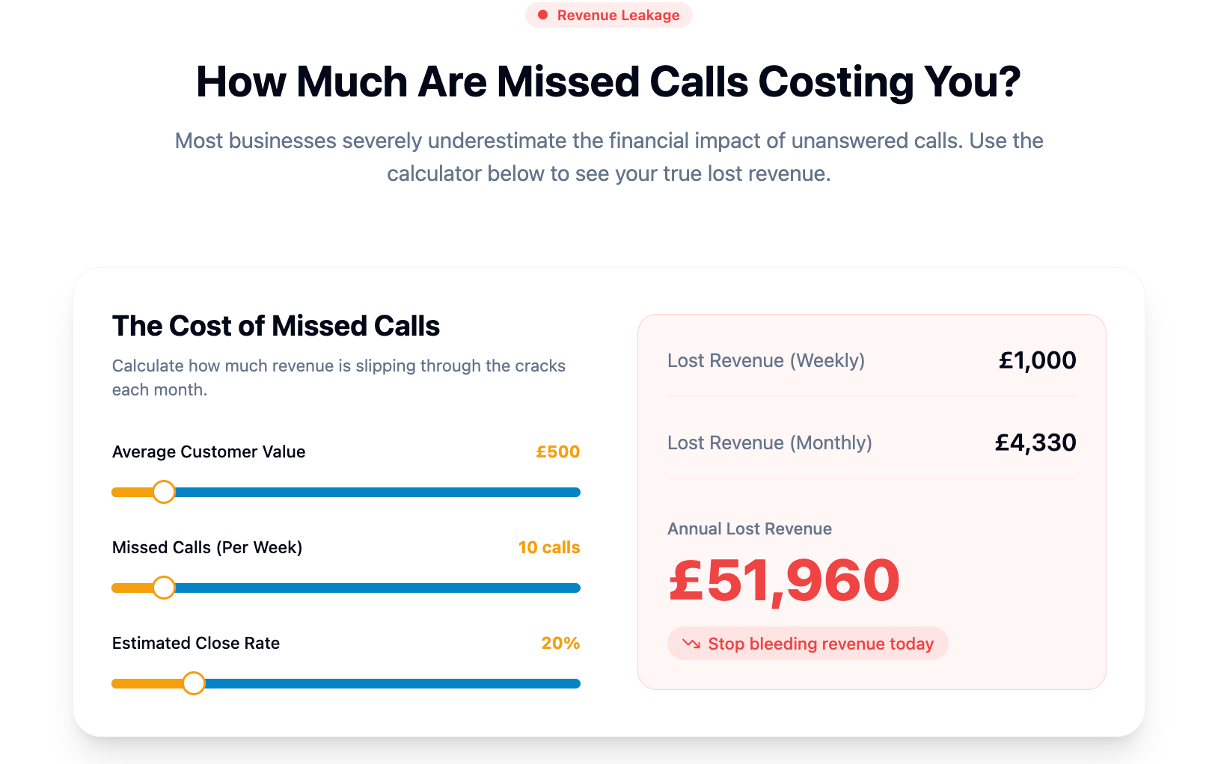
Before a demo, it helps to have a rough sense of your monthly call volume, your most common enquiry types, and who holds admin access to your CRM and calendar; that's what shapes the pilot scope. The Swasco landing page has a straightforward demo request and contact form, and the team walks through what a pilot looks like for your specific call patterns before anything gets built. From there, a typical path runs demo, scoped pilot, onboarding, and live launch, with optimisation continuing well after go-live rather than stopping at handover. If you're also weighing up internal knowledge tools alongside voice, Cloud 9's work on AI chatbots and knowledge assistants is a useful parallel read. Book a look at what your call flow could handle before the next missed call becomes a missed customer.
Sources
The technical detail in this guide draws on platform documentation from Dialpad's AI phone agent overview, which covers speech recognition, routing, and handoff mechanics in more depth. For the privacy and on-device architecture discussion, Ferri's open-source mobile agent project and the PokeClaw on-device automation project are both worth a closer look if data residency is a priority for your business. On escalation design specifically, LiveKit's human-in-the-loop guidance is the clearest breakdown of why warm transfer with transcript handoff matters.
For related reading on this site, see our guides on service-based AI and what it means for your business and training conversational AI for accuracy.
- AI Phone Agent | Dialpad
- Ferri — Open-Source Mobile AI Agent
- DustinReynoldsPE/PokeClaw (on-device phone automation)
- Human-in-the-loop guidance for voice agents | LiveKit blog