
AI for phone calls is software that answers, makes or supports calls using a natural-sounding voice. It understands what the caller says, replies in real time, and captures the details or books the job. For a service business, the practical use is simple: every call gets picked up, even when your team is on a job, with a customer or closed for the night.
This guide is written for owners and managers of service-based businesses in the UK. It covers what AI can handle on a call, where it should hand over to a person, the rules you must follow, and what it costs.
TL;DR
- AI for phone calls answers inbound calls 24/7, qualifies the caller, books appointments and follows up by text, so missed calls stop turning into lost revenue.
- In the UK, consumer-law duties apply to an AI agent exactly as they do to a human, and your business stays responsible for what it says.
- Tell callers when they are speaking to AI where silence could mislead them, and test the system before it goes live.
- Keep a human route for urgent, emotional or high-value calls.
- Our plans start at £970 per year, with setup and ongoing support included.
Table of Contents
- What AI for phone calls actually is
- Why missed calls cost more than they look
- What AI can handle on a business call
- Where a human should still step in
- The UK rules you need to know
- Is AI calling legal in the UK?
- What to check before you switch it on
- How much does AI for phone calls cost?
- Perspective: why guided beats DIY
- Who gets the most from it
- A simple rollout plan
- Talk2Aiva plans and pricing
- FAQ
- Sources
What AI for phone calls actually is
An AI call assistant is a voice-based system that interacts with callers either on its own or alongside live staff. According to one UK telecoms glossary, it can understand speech, respond naturally, route calls, answer questions and capture information.
That is a long way from the old "press 1 for sales" menu. A caller speaks normally. The AI works out what they want, answers from the information you have trained it on, and acts: booking a slot, taking a message, sending a link or passing the call on.
There are two main types:
- Inbound AI answers the calls you receive. This is where most small businesses start, because the money is in the calls you currently miss.
- Outbound AI makes calls for you, such as following up an enquiry or confirming an appointment. It carries extra legal rules, covered below.
Both work best when they are connected to the rest of your communication, not bolted on as a separate gadget.
Why missed calls cost more than they look
A missed call rarely leaves a voicemail. The caller rings the next business on the list. For a roofer, a tree surgeon, a dental practice or an estate agent, one lost enquiry can be worth hundreds or thousands of pounds.
The pattern is the same across trades and practices:
- A groomer has both hands on a dog and cannot pick up.
- A garage is mid-repair and the phone rings out.
- A conveyancer is on another call while a new client tries to get through.
- A gym or yoga studio is closed at 9pm, when people actually decide to join.
You are not being careless. You simply cannot be in two places at once. AI covers the gap. If you want to stop bleeding revenue from calls you never knew you missed, this is the quickest fix.
What AI can handle on a business call
A well-set-up AI receptionist can do most of the routine work that eats your day.
Answer and greet
It picks up instantly, in your business name, at any hour. There is no queue, and it can take several calls at the same time.
Qualify the enquiry
It asks the questions you would ask. For a tree surgeon: what work is needed, where, and how urgent? For an estate agent: is the caller buying, selling, renting or letting? For a dentist: new patient or existing, and is it an emergency?
Book the appointment
Connected to your calendar, it offers real available slots and confirms them. No back and forth, no double bookings.
Follow up
If someone does not book, it can follow up by text. After the job, it can ask for a review. Many businesses never do this consistently by hand.
Answer common questions
Opening hours, prices you are happy to share, parking, what to bring, service areas. The AI answers from what you have told it.
Pass it to you
Urgent calls, complaints and complex requests go to a person, with a summary of what was said so the caller does not have to repeat themselves.
Where a human should still step in
AI is not the right answer to every call. One UK small-business writer who trialled an AI receptionist found it can pay for itself on after-hours calls but may lose the best leads on urgent or expensive enquiries. Their wider advice is to use AI as backup rather than a full replacement for premium services and for emotionally loaded or high-value calls.
Sensible rules for any business:
- Define your escalation list. Burst pipes, a dental emergency, a complaint, a bereavement-related conveyancing matter: these go to a person fast.
- Set a high-value trigger. If a caller mentions a large job, route them to you or send you an instant alert.
- Give callers an easy way out. If someone asks for a human, they get one, or a guaranteed call back.
- Review calls weekly at first. Listen to a sample and fix what the AI got wrong.
The UK rules you need to know
This is not legal advice, and for a specific situation you should speak to a solicitor or your data protection adviser. These are the main points UK businesses meet.
Consumer law applies to AI as it does to people
The Competition and Markets Authority published guidance on complying with consumer law when using AI agents on 9 March 2026. Its key points for you:
- Consumer-law duties apply whether a customer deals with a human or an AI.
- You remain responsible even when a third party supplies the AI.
- Disclose AI use where customers might otherwise be misled.
- Train the AI to respect customers' statutory and contractual rights.
- Test it before deployment and keep human oversight.
In practice, treat the AI like a new employee. You would not let a new starter quote prices or promise outcomes without training and supervision. The same goes here.
Recording and monitoring calls
The Investigatory Powers (Interception by Businesses etc. for Monitoring and Record-keeping Purposes) Regulations 2018 allow businesses to monitor calls for specific purposes, such as establishing facts, maintaining quality standards or preventing crime. You must make reasonable efforts to inform the people involved. A short line at the start of the call, such as "calls may be recorded and handled by our AI assistant", does the job.
Voice data and privacy
Voice recordings and transcripts are personal data. The ICO's sandbox report on a voice-technology product warns that voice data and transcripts can be intrusive depending on use. It recommends clear, neutral transparency information, data minimisation and a justification for processing voice data. Collect only what you need, say what you do with it, and keep it no longer than necessary.
Outbound and marketing calls
If you want AI to ring people, be careful. Under Regulation 19 of PECR, an automated calling system playing recorded material for direct marketing needs the called subscriber's prior consent, and you must not hide your identity or leave no number to contact you on. Calling back someone who has just enquired is a very different thing from cold-calling a list. If you plan any outbound campaign, take advice first.
Is AI calling legal in the UK?
Yes, using AI to answer or support calls is not illegal in itself. What matters is how you use it: honesty with callers, respect for their rights, lawful handling of their data, and proper consent for any marketing calls. The rules above are the ones to build your setup around.
What to check before you switch it on
Use this list whether you build your own system or buy one.
- Script and knowledge. Does the AI know your services, areas, hours and what you will not do? Gaps here cause wrong answers.
- Disclosure. Is there a clear line telling callers about AI and recording?
- Pricing rules. What may it quote, and what must it leave to you?
- Calendar connection. Does it book into real availability?
- Escalation. Who is alerted, how fast and by what channel?
- Testing. Ring it yourself, from different phones, with awkward questions, accents and background noise.
- Data. Where are recordings and transcripts stored, and who can see them?
- Ongoing review. Who listens, tunes and fixes it after launch?
The last point is where most DIY setups fall down. A voice AI that is left alone drifts. Prices change, services change, and the script goes stale.
How much does AI for phone calls cost?
Prices vary widely because products are built differently. Broadly, you will meet four models:
- Per-minute or per-call billing. Cheap at low volume, unpredictable in a busy month.
- Flat monthly fee with a pool of minutes. Predictable, but overage charges can apply.
- Developer platforms. Low unit cost, but you build, connect and maintain everything yourself.
- Done-for-you systems. A subscription that includes setup, training and support.
The headline price is only part of the cost. Ask what is missing:
- Is setup included, or do you configure it yourself?
- Does it include text, web chat and social messages, or only voice?
- Is there a calendar and CRM connection?
- Who fixes it when something breaks?
- Is there a limit on minutes or calls?
The cheapest tool that you never finish configuring costs more than a fuller system that works from week one. Work out what a single missed job is worth to you, then compare that against the annual price.
Perspective: why guided beats DIY
We built Talk2Aiva around one observation: most small businesses do not fail with AI because the technology is bad. They fail because nobody has time to set it up, train it and keep it right.
A voice agent is not a switch you flick. It needs your services, your tone, your booking rules and your escalation points. It needs testing on real calls. And it needs adjusting after launch, because real callers say things nobody predicted.
That is why setup, AI training, workflow building, launch, optimisation and technical support are part of what we do, not an add-on. We think a plumber, a groomer or a dentist should run their business, not learn prompt writing.

We also think voice alone is not enough. Enquiries arrive by call, text, website chat and social media. If your AI answers the phone but a Facebook message sits unread for two days, you are still losing work. So we put everything in one unified inbox, with real-time calendar booking, follow-ups and review requests.
One more point, and it is a firm one: AI should handle the routine so people can handle what matters. Keep a human route for urgent and high-value calls. The best results come from the two working together.
— James Paul
Who gets the most from it
The businesses that see the quickest return share a profile: calls are frequent, hands are busy, and each lead is worth real money. Typical examples include:
- Estate and letting agents juggling viewings and valuations
- Dentists, aesthetics practitioners and other appointment-led practices
- Garages, MOT centres, tyre shops and car repair centres
- Roofers, tree surgeons, pest control and junk removal firms
- Salons, gyms, yoga, dance and martial arts studios
- Conveyancing firms and commercial finance brokers
- Dog groomers and wedding photographers
If you recognise yourself here, start with your inbound calls and your out-of-hours enquiries. That is usually where the biggest leak is.
A simple rollout plan
- Measure the leak. For two weeks, log missed calls and unanswered messages. Estimate what an average job is worth.
- Write your call flow. List the five most common reasons people ring and what the ideal answer to each is.
- Set boundaries. Decide what the AI can quote, book and promise, and what goes straight to you.
- Launch on after-hours first if you are nervous. Then extend to busy periods and full cover.
- Review and tune. Listen to calls weekly for the first month, then monthly.
Talk2Aiva plans and pricing
Talk2Aiva is a guided AI receptionist and revenue recovery system. It answers and engages leads across calls, text, website chat and social media, qualifies them, books appointments and follows up, with setup and ongoing technical support included.
There are three plans, published at the time of writing as annual prices:
| Plan | Price |
|---|---|
| Software Suite | £970 per year |
| Ultimate AI Suite | £2,970 per year |
| Elite AI Suite | £4,970 per year |
Done-for-you setup and ongoing support are bundled into the higher tiers. See the plans and choose the one that fits your business.
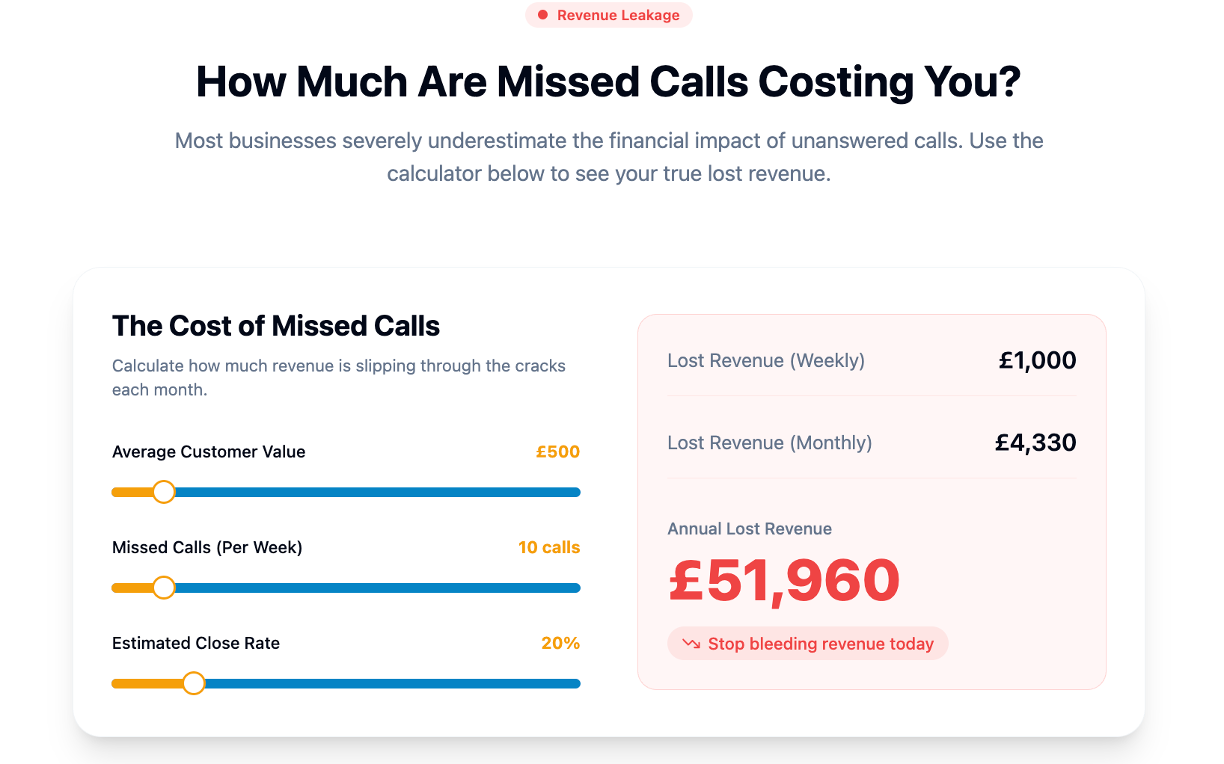
If one recovered job a month would cover the cost, the maths is easy. Check the current plans on our site before you decide.
FAQ
What is an AI call assistant?
It is software that answers or makes phone calls using a natural voice. It understands what callers say, responds, captures information and can book appointments or pass the call to a person. Many also send follow-up texts.
Is AI calling illegal in the UK?
No, but rules apply. CMA guidance says consumer law covers AI agents and the business stays responsible. Marketing calls using recorded or automated material need prior consent under PECR, so take advice before running outbound campaigns.
How much does an AI call answering service cost?
It depends on the model: per call, per minute, a flat monthly fee or a done-for-you subscription. Check what is included, especially setup, support and channels beyond voice. Our plans are £970, £2,970 and £4,970 per year.
Will callers know they are speaking to AI?
Modern voices sound natural, but you should not rely on that. Where callers could otherwise be misled, tell them. A short greeting that mentions AI and call recording is simple and keeps you on the right side of the guidance.
Can AI replace my receptionist?
For routine calls, often yes, and it never takes a day off. For urgent, emotional or high-value calls, keep a person in the loop. Most businesses get the best result by using AI for cover and speed, and people for judgement.
Sources
- What Is an AI Call Assistant? (Telemedia Glossary)
- Complying with consumer law when using AI agents (GOV.UK)
- Regulatory Sandbox Final Report: Good With (ICO)
- The Investigatory Powers (Interception by Businesses etc.) Regulations 2018
- PECR Regulation 19
- I Tried an AI Phone Receptionist for 30 Days
- AI Voice Agents for Small Business: What They Really Cost