
24/7 property enquiry access turns missed calls and out-of-hours incidents into measurable savings and a noticeably calmer resident experience. Digital access systems already prove this at the operational level: moving key handovers to administrative credential updates cuts rekeying and speeds up turns. Pair that with a 24/7 client hub and an AI receptionist like Talk2Aiva, and the benefits stack up fast.
- Fewer missed enquiries, especially evenings and weekends
- Faster emergency triage and clearer expectations for tenants
- Documented audit trails for access, maintenance and disputes
- Quicker viewings-to-let conversion for landlords
- Reduced admin time spent chasing status updates
A client hub alone won't fix a broken maintenance process, but it will show you exactly where that process breaks. That visibility, on its own, tends to be worth more than most landlords expect before they have it.
Key Takeaways
24/7 property enquiry access works because it captures leads and emergencies the moment they happen, backed by audit trails that make disputes easier to resolve.
| Point | Details |
|---|---|
| Capture evening enquiries | Automated first response keeps prospective tenants engaged instead of losing them to faster competitors. |
| Use audit trails for disputes | Time-bound credentials and logged access events give timestamped evidence when questions arise later. |
| Check GDPR basics before signing | Confirm encryption, log retention, and automatic credential expiry with any vendor. |
| Match the tool to portfolio size | High-turnover or multi-let portfolios see faster ROI than small, low-turnover single lets. |
| Talk2Aiva handles the front desk | Talk2Aiva by SWASCO answers calls, SMS, chat and social 24/7, with done-for-you setup and ongoing support included. |
Table of Contents
- What does 24/7 property enquiry access actually include?
- How do landlords benefit from round-the-clock enquiry handling?
- What does 24/7 access mean for tenants day to day?
- How do these systems work behind the scenes?
- What do these services cost, and is the ROI worth it?
- Is 24/7 access secure and GDPR compliant?
- A real-world example: AI receptionist and client hub in action
- Does 24/7 access actually beat phoning the office?
- What are the drawbacks, and how do you avoid them?
- When 24/7 enquiry access earns its keep
- How Talk2Aiva delivers round-the-clock enquiry handling
- Frequently asked questions
- Sources
What does 24/7 property enquiry access actually include?
The phrase covers several distinct tools working together, not one single product. Most services build around a client hub or portal, an automated receptionist (chat, SMS or phone), calendar and booking integration, maintenance ticketing, document storage and, sometimes, digital access control.
- Client hub/portal: tenants download a gas safety certificate at 11pm instead of emailing and waiting.
- Automated/AI receptionist: answers an evening call about a vacant flat and books a viewing on the spot.
- Calendar and booking sync: confirms a viewing slot without a human checking a diary the next morning.
- Maintenance ticketing: a reported leak becomes a logged, timestamped ticket rather than a missed voicemail.
- Document storage: inspection reports and invoices sit in one place both parties can check.
- Digital access control: time-bound credentials let a contractor in without a physical key handoff.
Most subscriptions bundle the portal, receptionist and ticketing as standard. Smart-lock integration and full digital access control are typically add-ons, priced separately because they involve hardware.
How do landlords benefit from round-the-clock enquiry handling?
The biggest win is capture rate. A prospective tenant who messages about a listing at 9pm usually moves on to the next property within minutes if nobody replies. An AI-handled first response, tied to accurate listing data, keeps that lead in play instead of losing it to a faster competitor.
- Faster lead capture: fewer enquiries slip through simply because nobody was at a desk.
- Operational efficiency: digital credentials remove routine rekeying, which speeds up turns between tenancies and cuts contractor coordination time.
- Risk reduction: time-bound access with audit trails means disputes over "who was in the property and when" have a timestamped answer.
- Income protection: shorter voids and faster viewings-to-signature timelines add up across a portfolio.
- Time reclaimed: less time spent on phone tag and manual status updates.
Pro Tip: Track just three numbers for the first three months: average first-response time, viewings booked per ten enquiries, and void days per property. If none of them move, the tool isn't earning its subscription.
What does 24/7 access mean for tenants day to day?
Tenants get answers to ordinary questions the moment they think to ask them, not the next working day. Parking rules, bin collection days, or whether the boiler service has been booked, these are small questions, but they're the ones that erode trust when they go unanswered for 48 hours.
- Practical questions get answered instantly, at the moment the tenant is actually looking.
- Emergency reports get triaged faster, with a clear message about what happens next.
- Maintenance status, invoices and inspection reports sit in a portal, so nobody has to phone and ask "any update?"
- A burst pipe reported at 10pm can generate a logged ticket and a same-morning contractor visit, rather than a weekend of uncertainty.
A tenant checking a portal at midnight to confirm a repair is scheduled feels a different kind of confidence than one leaving a voicemail and hoping. The difference isn't the repair speed alone, it's knowing where things stand without having to ask.
How do these systems work behind the scenes?
The mechanics are simpler than they sound, and most landlords only need the broad shape of it.
- Enquiry capture — a message arrives via web chat, phone, SMS or social media.
- Qualification — AI (or a human, if escalated) checks intent, availability and basic eligibility.
- Booking or follow-up — the system checks the calendar, confirms a viewing, or triggers a follow-up sequence if the tenant isn't ready to commit.
- Ticket creation — maintenance issues generate a logged ticket with timestamp and description.
- Audit and reporting — every interaction is recorded for review.
The useful integrations sit behind that flow: a CRM to hold contact history, a calendar for real bookings, a property feed for accurate listing data, and, where relevant, access control systems issuing time-bound credentials to contractors.
Escalation rules matter as much as the automation itself. A well-built system hands off to a human the moment a query goes beyond its script, rather than leaving a tenant stuck in a loop.
What do these services cost, and is the ROI worth it?
Pricing generally follows one of three shapes: a flat monthly subscription, per-channel fees (phone, SMS, chat priced separately), or a managed setup fee plus an ongoing tier. Expect setup and training costs to sit outside the core subscription for done-for-you services.
The offsets are where the case gets made:
- Fewer void days from faster viewings and quicker signatures
- Fewer emergency contractor call-outs, because issues are triaged and scheduled properly
- Less staff overtime spent answering out-of-hours calls
- Better conversion from enquiry to booked viewing
A rough working formula: monthly saving ≈ (reduced void cost) + (staff hours reclaimed × hourly value) − subscription cost. Track response time, leads captured per week, and vacancy days to see whether that formula moves in your favour within the first quarter. Tools built for improving lead response time are usually judged on exactly these figures.
Is 24/7 access secure and GDPR compliant?
Yes, provided the vendor builds it properly, and this is worth checking before signing anything. The baseline requirements aren't exotic: data minimisation, secure storage, role-based access and clear retention policies.
- Ask whether data is encrypted both in transit and at rest.
- Check how long audit logs are retained, and who can access them.
- Confirm that access credentials auto-expire at lease end rather than needing manual revocation.
- Ask what happens to a contractor's access window once a job is marked complete.
GDPR obligations don't disappear because a system runs automatically. A short internal policy, who can see maintenance records, who can see tenant contact details, and for how long, closes most of the practical gaps before they become a problem.
A real-world example: AI receptionist and client hub in action
Picture a one-bedroom flat listed on a Friday evening. A prospective tenant messages at 8:40pm asking about parking and move-in dates. An AI receptionist answers immediately, confirms the details from the live property feed, and books a Saturday viewing directly into the calendar.
Separately, an existing tenant reports a dripping tap through the same portal at 9pm. The system logs a maintenance ticket automatically, timestamps it, and flags it for the next available contractor slot.
- No missed call, no next-morning callback needed for either enquiry
- Both interactions are visible in the client hub for landlord and tenant alike
- The viewing converts to a signed tenancy within the week
The value here isn't that a bot answered a message. It's that the enquiry didn't have to wait for office hours to become a booked viewing.
Talk2Aiva, from SWASCO, is built around exactly this pattern of instant capture and logged follow-through, though exact conversion figures will always depend on the portfolio and listing quality.
Does 24/7 access actually beat phoning the office?
Traditional enquiry handling relies on someone being at a desk during business hours, and that's the whole problem. A missed call at 7pm on a Friday typically waits until Monday for a callback, by which point a keen tenant has usually already booked a viewing elsewhere.

The incremental gains from 24/7 systems aren't dramatic on any single enquiry, they're dramatic in aggregate. One evening enquiry answered instantly instead of lost isn't a huge win. Fifteen of them a month, converted into viewings instead of silence, changes the shape of a portfolio's void days.
Traditional methods also lose information along the way. A voicemail gets transcribed imperfectly, a sticky note gets lost, a verbal handover between office staff drops a detail. Automated capture logs the enquiry exactly as it came in, which matters when a dispute arises months later and someone needs to check what was actually said.
The trade-off worth naming honestly: a phone call with a familiar letting agent still feels more personal than a chatbot exchange for some tenants, particularly older residents less comfortable with digital tools. The better implementations solve this by escalating quickly to a human whenever a conversation gets complicated, rather than forcing every enquiry through a script. The goal isn't replacing human contact entirely, it's making sure nothing falls through the gap between 6pm Friday and 9am Monday.
What are the drawbacks, and how do you avoid them?
No system is free of friction, and it's worth naming the real ones rather than pretending otherwise.
Over-automation frustrates tenants who need a nuanced conversation, not a script. Mitigate this with clear, fast escalation rules that hand off to a human the moment a query gets complicated.

Setup takes longer than promised in some cases, though examples show CRM and calendar integrations completing within days when the scope is kept reasonable. Ask any vendor for a realistic timeline before you sign, not an optimistic one.
Cost outpaces benefit on small portfolios. A single low-turnover let with an attentive landlord may not generate enough enquiry volume to justify a subscription. Run the ROI formula honestly before committing.
Data protection gaps appear when contractor and tenant access aren't properly separated. Insist on role-based access and automatic credential expiry as a condition of purchase, not an afterthought.
Staff resistance can slow adoption if a team feels replaced rather than supported. Frame the rollout as removing the worst part of the job, out-of-hours calls, rather than removing the job itself.
None of these are reasons to avoid 24/7 access. They're reasons to pick a vendor that's already solved them.
When 24/7 enquiry access earns its keep
24/7 access pays off fastest for high-turnover portfolios, holiday lets, single-manager teams juggling too many enquiries, and larger multi-let blocks with frequent contractor visits. If your portfolio fits any of those, the case is straightforward.
Small, low-turnover single lets with an already-responsive landlord may see less measurable benefit, at least initially. In that case, cost can outpace the gain.
Run a time-bound pilot. Track the response time, leads captured, and vacancy day metrics covered earlier for one full quarter, then decide with real numbers in front of you.
How Talk2Aiva delivers round-the-clock enquiry handling
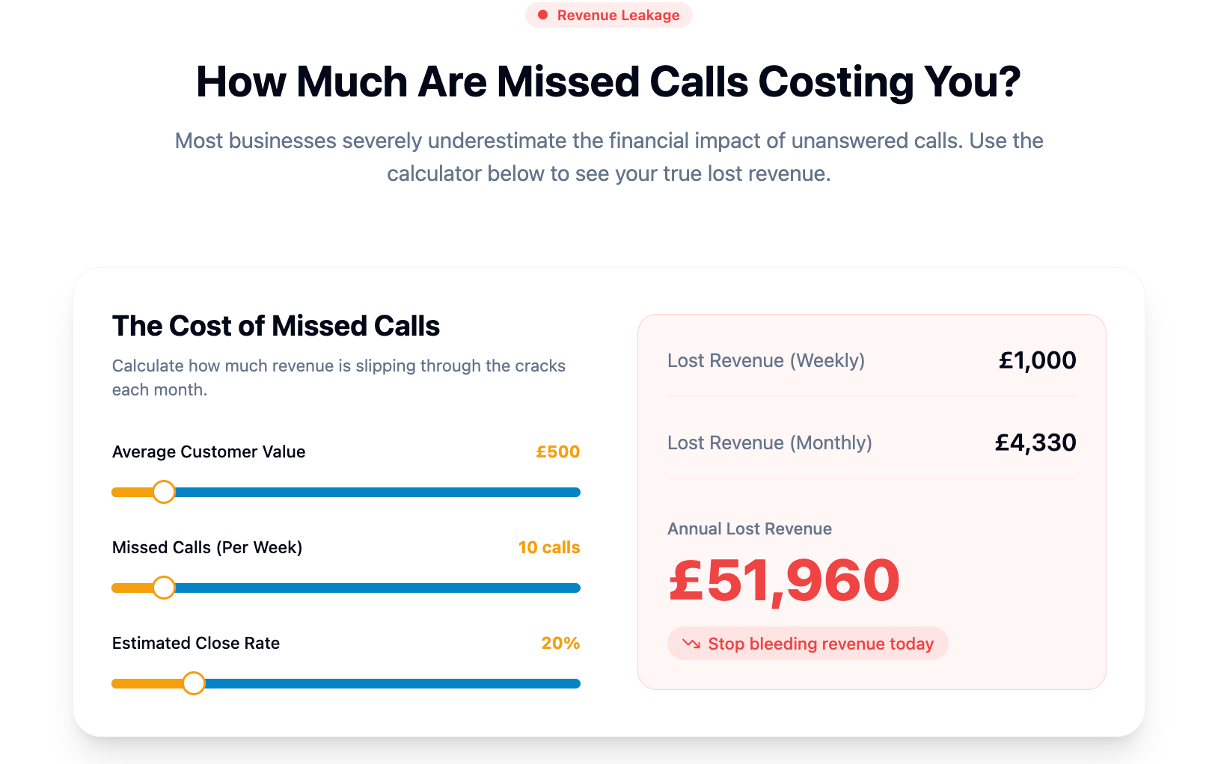
Talk2Aiva is built to be the always-on front desk your portfolio doesn't currently have, without hiring another person to cover evenings and weekends. It answers calls, texts, website chat and social messages the moment they land, qualifies the enquiry, and books straight into your calendar.
Here's what's included:
- 24/7 AI receptionist across phone, SMS, website chat and social media
- Calendar sync so viewings and callbacks get booked automatically
- Automated follow-up sequences for enquiries that don't convert first time
- A unified inbox so nothing is scattered across five different apps
- Ongoing reporting to track response times and enquiry volume
Setup is done-for-you: onboarding, AI training on your specific listings and processes, workflow building, and a live launch, followed by ongoing optimisation and technical support included in the subscription. You're not left configuring a chatbot alone. If missed evening enquiries are costing you lettings, book a demo with Talk2Aiva and see how the setup would work for your portfolio.
Frequently asked questions
What are the main 24/7 property enquiry benefits for landlords? Fewer missed leads, faster turns between tenancies, and audit trails that make disputes over access or maintenance far easier to resolve.
Does 24/7 access help tenants as much as landlords? Yes. Tenants get instant answers to practical questions and can check maintenance status, invoices and inspection reports without phoning during office hours.
Is a 24/7 AI receptionist secure enough for tenant data? It should be, provided the vendor uses encryption, role-based access and automatic credential expiry. Always ask these questions before signing a contract.
How quickly can a property business set up 24/7 enquiry handling? Modern integrations with CRMs and calendars can go live within days, though full training on your specific listings and processes takes a little longer.
Is 24/7 enquiry access worth it for a single rental property? Often not immediately. It tends to pay off fastest for higher-turnover portfolios, holiday lets, or single managers handling too many enquiries alone.
Sources
- What Digital Access Control Changes in Property Operations | RemoteLock
- Property management access control systems
- 247 Property Services Lettings Client Hub